


It took me a while to get into the swing of Rune Factory: Guardians of Azuma. I’m told that’s common with this series, but I still couldn’t shake the feeling I was playing it incorrectly. That’s partly on me for being a relative newbie to Rune Factory, but also partly on Marvelous (XSEED) for creating a game that assumes players know more about it than some will.
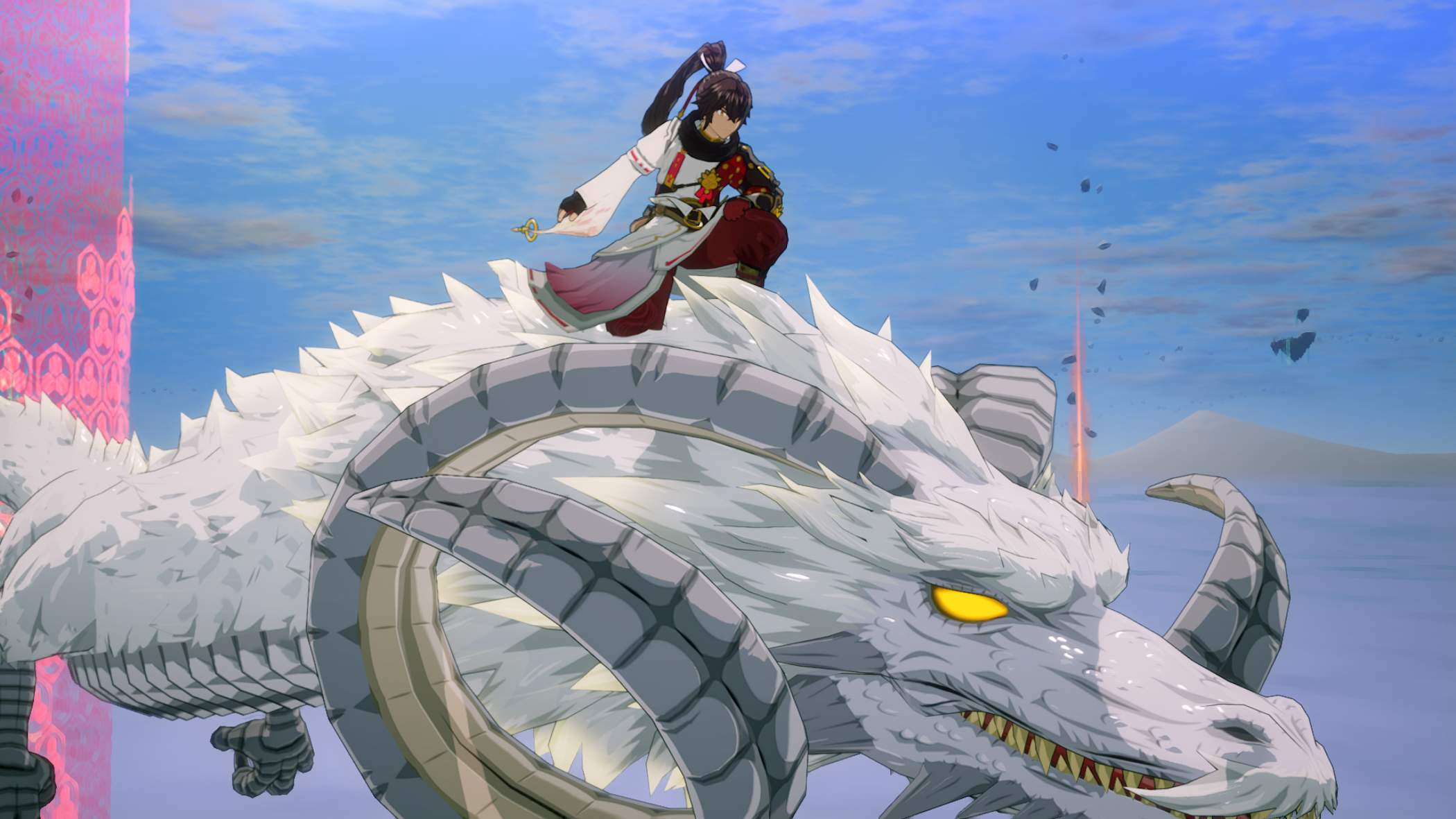
But let’s not start there. Let’s start at the beginning where you pick the male or female version of your hero (Subaru or Kaguya, respectfully). In a unique twist, you’re then thrust into a dragon-riding battle against the hero you didn’t pick. Instant intrigue!
Your hero (Subaru, in my case, so I’ll refer to him throughout the review) then awakens from this apparent dream to find himself in the village where he’s been living for the past six months. Of course, he has no memory, but the villagers were kind enough to take him in after he crashed through the roof of a shrine. It helps that Subaru is an Earth Dancer capable of restoring life to the dying village. It also helps that he has a flying companion, Woolby, to help him figure things out.
That setup will consume the first couple dozen hours in Guardians of Azuma. Subaru or Kaguyua will explore the landscape, vanquishing enemies and restoring life along the way. Outside the villages, restoring life is a simple matter of performing the Earth Dance when near blighted items such as dying trees. Inside, however, it’s an entirely different thing.
Certain areas of the villages are set aside for farming. This is a simple matter of preparing the land, planting seeds that do well in a particular village’s environment, and keeping them watered. The twist this time is that you don’t have to do this yourself after the initial setup. Rather than managing the farm, you’re managing the residents of the village. Subaru is appointed chief, and therefore has to build up the villages so they’ll be able to recruit and accommodate people who can then be assigned to various tasks. They all have their own skillsets, and therefore may be better at farming, logging, commerce, etc. Villagers can be moved to other villages where there’s a greater need for their skillset.
It’s quite a bit to manage, especially considering you have to create and lay out the these areas of the villages. Stores, farms, gardens, barns—pretty much everything is built by the player, and there’s not much to guide you at the start. It was easy enough for me to get the materials needed for construction—minerals, lumber, seeds, and such are all clearly marked on the in-game map. But I’m no city planner, and probably agonized too long over where to place a house and where to place a salt forge. How close does a scarecrow have to be to the plants to be effective? How do all of the decorations affect output, and do their effects stack? Can someone please teach me how to fish?!

But the thing is, you don’t really have to worry about this too much. My layouts weren’t optimal (at least not initially), but the villagers did their job anyway. As long as I was giving them a place to live, they were working, and that allowed me to focus on the actual meat of the game: exploring.
You’ll eventually unlock four villages in Rune Factory: Guardians of Azuma; one for each season. They all introduce new characters who offer unique challenges and push the story along. You’re initially tasked with releasing the villages’ god, but there’s so much to do beyond that. Each day is filled with tasks and missions to fulfill between sunrise and midnight, and this is where I was playing the game incorrectly. I raced through each day trying to accomplish all that I could, but the Rune Factory would rather you be chill. There may be an urgent matter at hand, but it’s OK to spend a day or two uncovering secret hot springs, capturing animals for your farm, or just chatting up the locals. Relationships are important, of course, and advancing those is often key to advancing the story…and your love life.
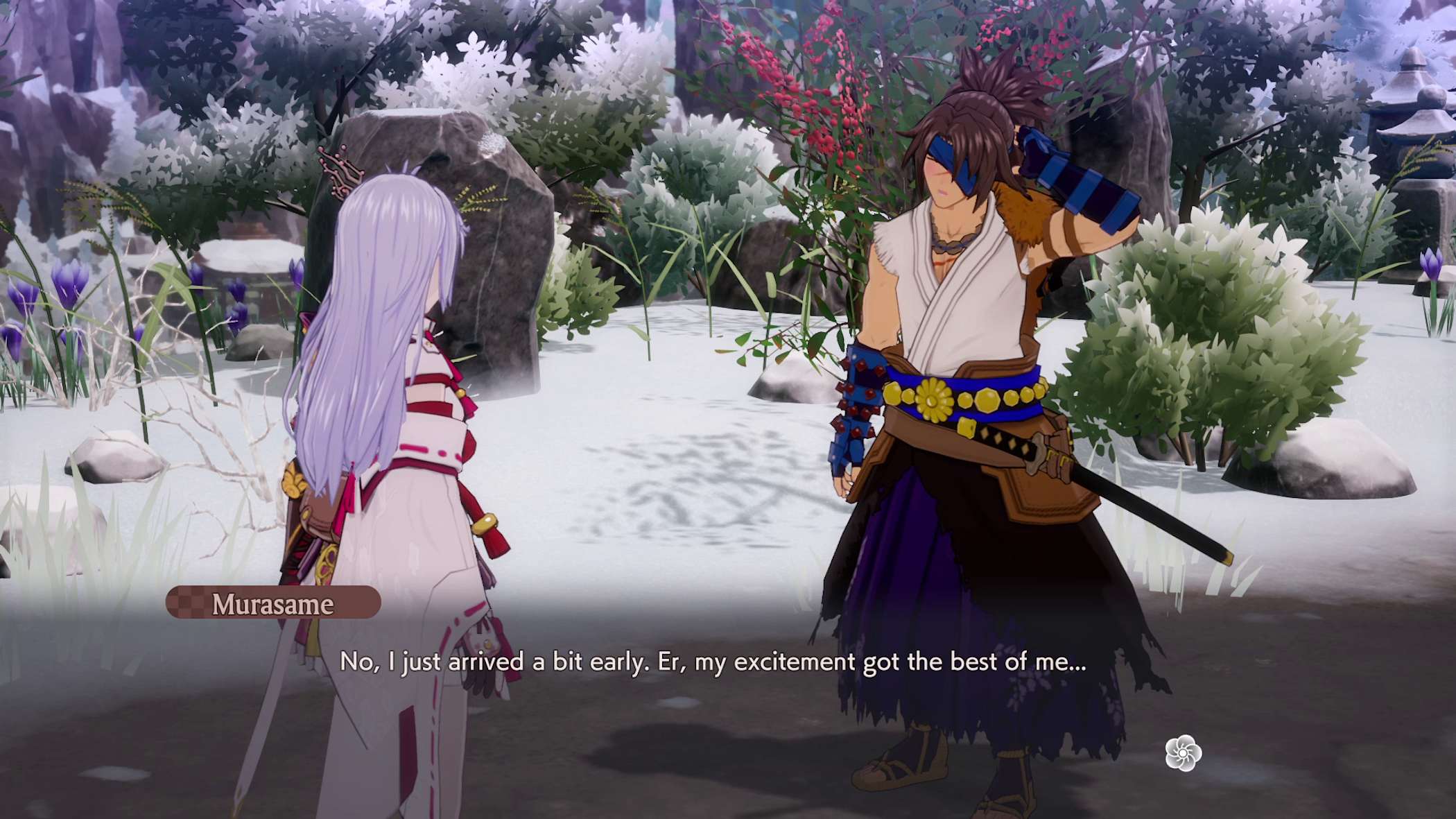
You have a choice when visiting with someone to just chat or to engage in an activity. The further along your relationship, the more activities you can do. You’ll need to learn their interests, however, as asking them to do the wrong thing will not advance their affection for you. I have to admit it’s kind of fun for riz skills to be an RPG element. In addition to upgrading your strength, vitality, armor, etc., you have to assign skill points to your social graces in order to make progress with your love interests. I’ve played (and complained about) many RPGs that have forced unnecessary romance gameplay into the action, but that’s not the case here; relationships are integral to the experience.
Of course, Rune Factory fans surely already know that. What they may not know is just how important exploration is with Guardians of Azuma. The game gives you plenty to discover and collect as you’re out in the field—frog statues to dance for, hidden targets to shoot, people in holes to provide with onigiri (never change, Japan). You can see these tasks on the map, but you may not be able to get to them right away, allowing each village and its outskirts to be worth exploring throughout the duration of the game.

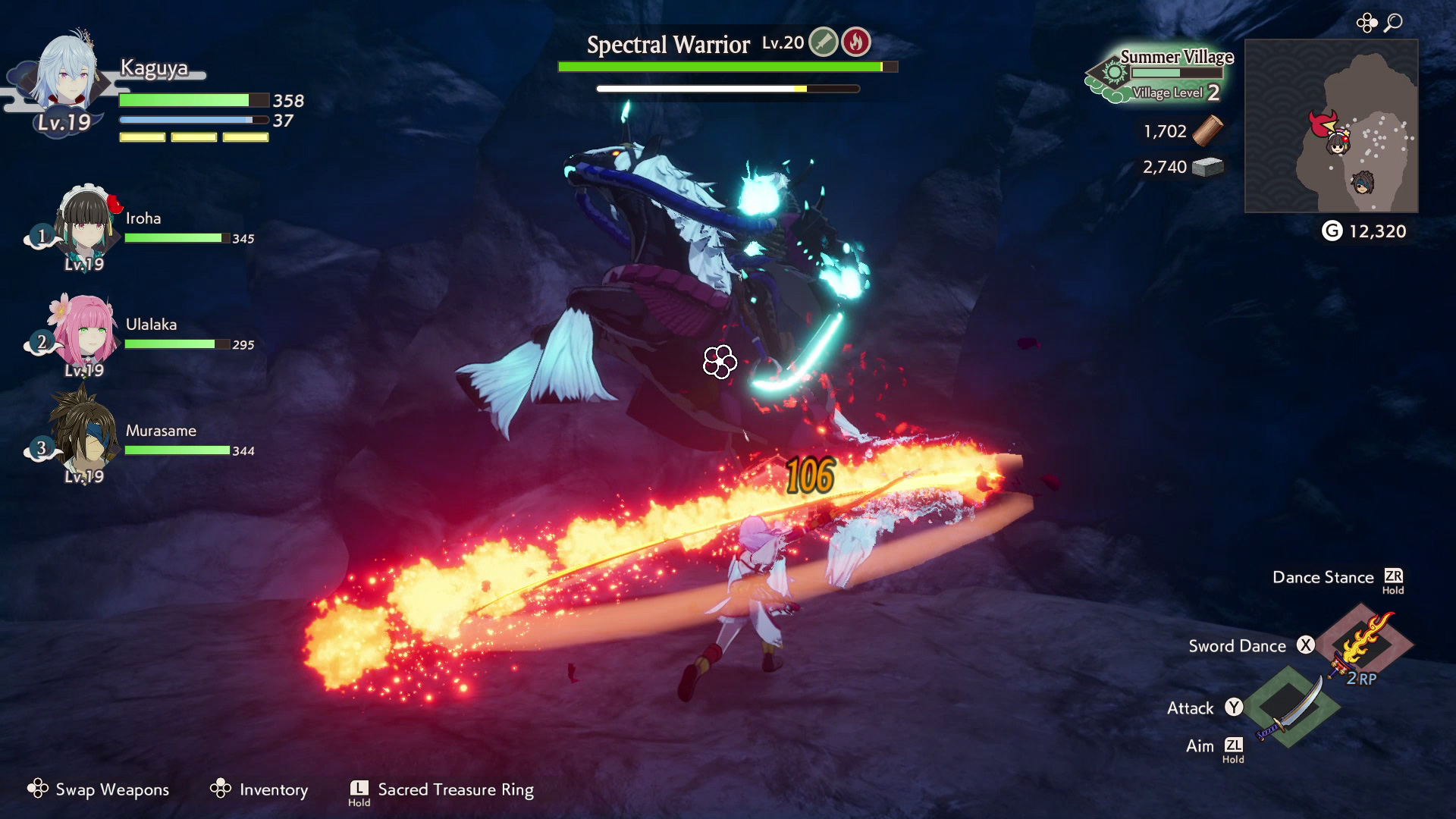
There’ll be plenty of monsters to fight, too. Combat is never that challenging, though, as you have a limited number of attacks and a single dodge to worry about. Rather, your ability to effectively take down enemies relies on your preparation with the various weapon types. The more you use a specific weapon, the more you’ll be able to do with it. But although sword skill points (for example) can only unlock sword skills, you also get generic skill points that can be assigned to anything. This allows you to quickly level up items you may have been neglecting. Be sure to keep up on your ranged attack weapons; you’re going to need them.
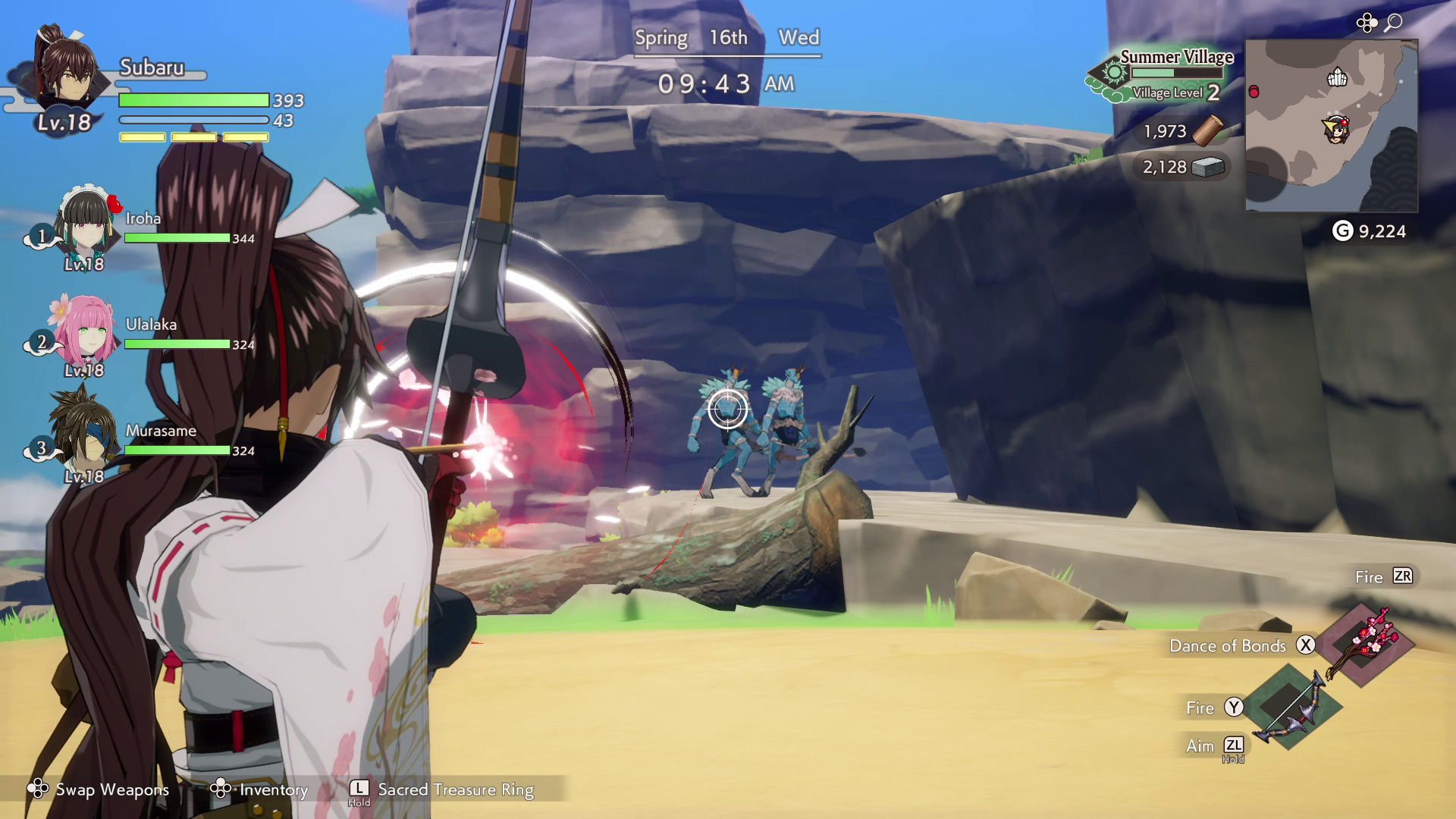
Also be sure you don’t neglect your potential party members. Most of the people you meet can be taken into battle with you, each with a specific skillset: attacker, defender, buffer, etc. They’re all AI controlled, so it’s just a matter of setting up a party that complements your specific setup. They do level up quickly if they’ve fallen too far behind, but I wish the healers and buffers were as helpful as the attackers.
Thankfully, you’ll get plenty of opportunities to keep everyone in action. Combat and resource collection aren’t confined to the ground; you’re able to ride your dragon companion up to numerous floating islands in the sky. Sound familiar? Finding and exploring these islands is sometimes mission-based, but mostly it’s just another opportunity to take in the scenery when you otherwise would’ve been tending to the farm.
All of this is presented with the anime style visuals we’ve come to know and love on the Switch. Detail is sacrificed for color and splendor, but in a very clean and inviting way. I can’t wait to see how it’ll look on the Switch 2 via the upgrade pack.
Finally, it’s a testament to the developers that they were able to contain all of this in a story that’s compelling and—once it kicks into gear—quite exciting. It takes a long time for things to really get moving, but there were numerous moments where I set aside tasks I should’ve been completing because I wanted to hurry toward the next chapter. That’s a rarity amongst the open-world adventures of late.
So, once I was able to work past my standard JRPG inclinations and not fret too much over the efficiencies of my villages, I really, really had a great time with Rune Factory: Guardians of Azuma. If this is the direction of future entries, I’ll have my short sword and terra tiller ready.
