If ever there was one developer considered the master of making sequels, Sucker Punch would have a strong case for the accolade. With Sly 2: Band of Thieves and inFAMOUS 2 already in its back catalogue, the Bellevue studio has upped its game all over again for Ghost of Yotei.
Five years of expanding and improving upon Ghost of Tsushima has produced the strongest of evolutionary follow-ups and the team’s greatest achievement to date.
It’s a sequel that doubles down on everything the original got right, works to address its pitfalls, and then leans into discovery and freedom by loosening the reins on its new open world. Ghost of Yotei is not the kind of game that will turn detractors of its predecessor into converts — it’s a better Ghost of Tsushima updating the framework of the 2020 title. While familiar, the result is a first-class and rewarding example of current open world design.
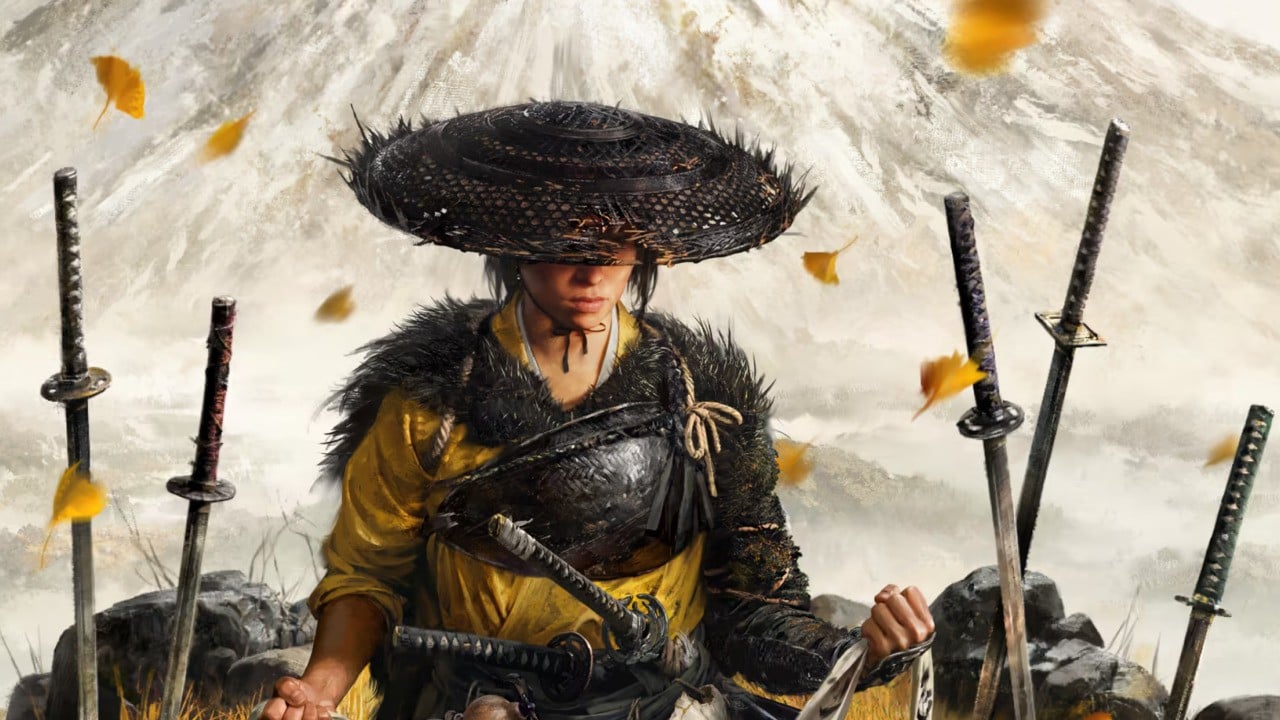
This has been achieved by moving over 300 years through history to the northern island of Japan surrounding Mount Yōtei. In 1603, former protagonist Jin Sakai is a mere figment of the past. Taking his place is Atsu, an Onryō seeking revenge for the murder of her parents. The quest makes each member of the Yōtei Six a target, as Atsu works to discover their locations and exert retribution. With shades of The Last of Us Part II, it’s a thirst for vengeance that runs deep.
Atsu has waited 16 years to exact revenge, allowing her plenty of time to reflect on that night and the events leading up to it. Key pieces of context and reveals are drip-fed throughout the campaign in playable flashbacks that flesh out the story and tease a degree of mystery.
Concurrently, the two timelines play off one another to provide understanding of both the past and present, and why Atsu may feel a certain way about things. She meets her supporters, critics, and many in between during the narrative, setting up emotional and interesting beats that expand the plot beyond its origins.
Retribution against the Yōtei Six remains the overall goal of the title, though, and it gives you some degree of freedom to hunt them down while still telling a crafted, linear tale. The map opens up in stages, so there’s a pre-determined structure and order to the campaign.
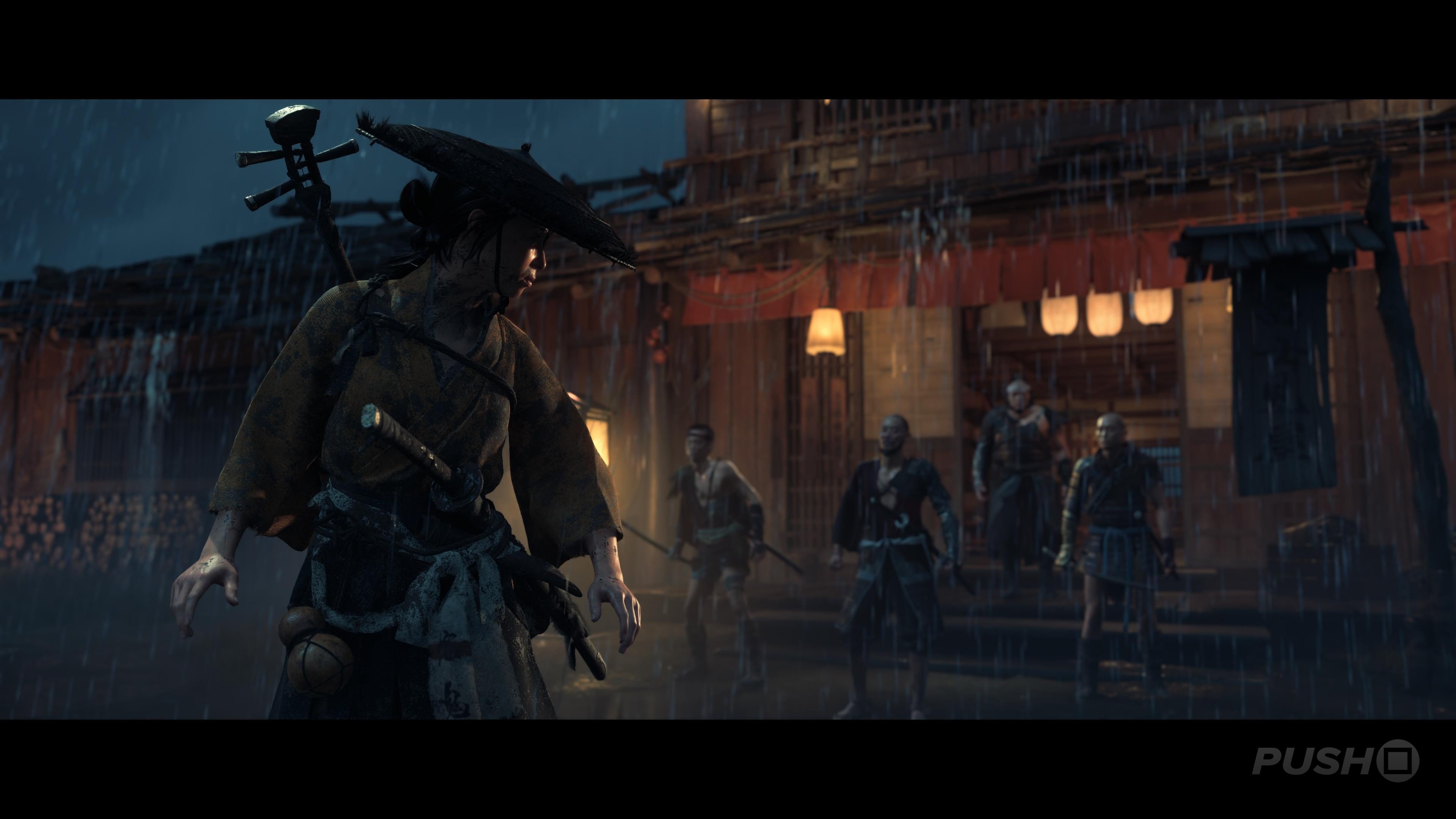
Unlike Assassin’s Creed Shadows, which gave you almost complete freedom to pursue every antagonist of its revenge story at once, Sucker Punch still has control in Ghost of Yotei. This is to its benefit, providing a worthwhile account of Atsu’s journey that’s full of suspense and thrills.
All of this plays out across the open world of Ezo, a playspace similar in size to Ghost of Tsushima. This time, the developer has embraced freedom by stripping back the features that would typically guide you towards landmarks, side content, and missions. The wind will once again direct you towards markers you place on the map, but Ezo has been designed in a way to incite curiosity.
Quests aren’t spoon-fed to you; instead, objectives are earned by helping NPCs and interrogating enemies. A fog of war covers the entire map, meaning it won’t have any markers on it until you literally visit the landmarks and discover the side activities. Even after identifying places of interest through your spyglass, they are scribbled on the map like rumours rather than confirmed locations.
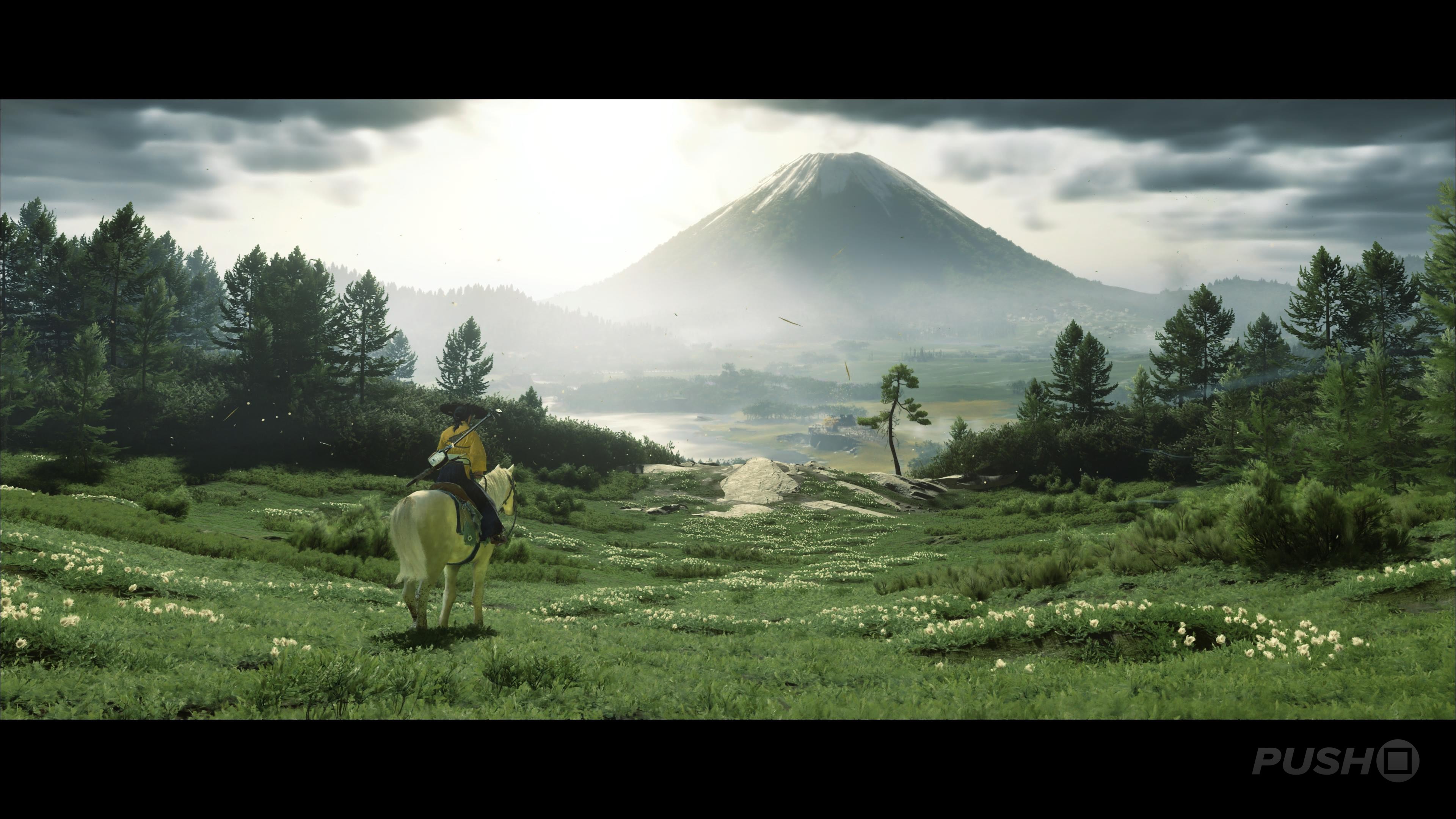
This allows the open world to be vast enough without feeling overwhelming. Missions and side quests are tracked through a new clues system, charting where to go thousands of metres away. However, in the moment, the open world only feels as big as far as the eye can see.
You feel compelled to check in on the villages off to the side, search for loot, and complete optional activities — confident in the fact it’ll be a worthwhile endeavour.
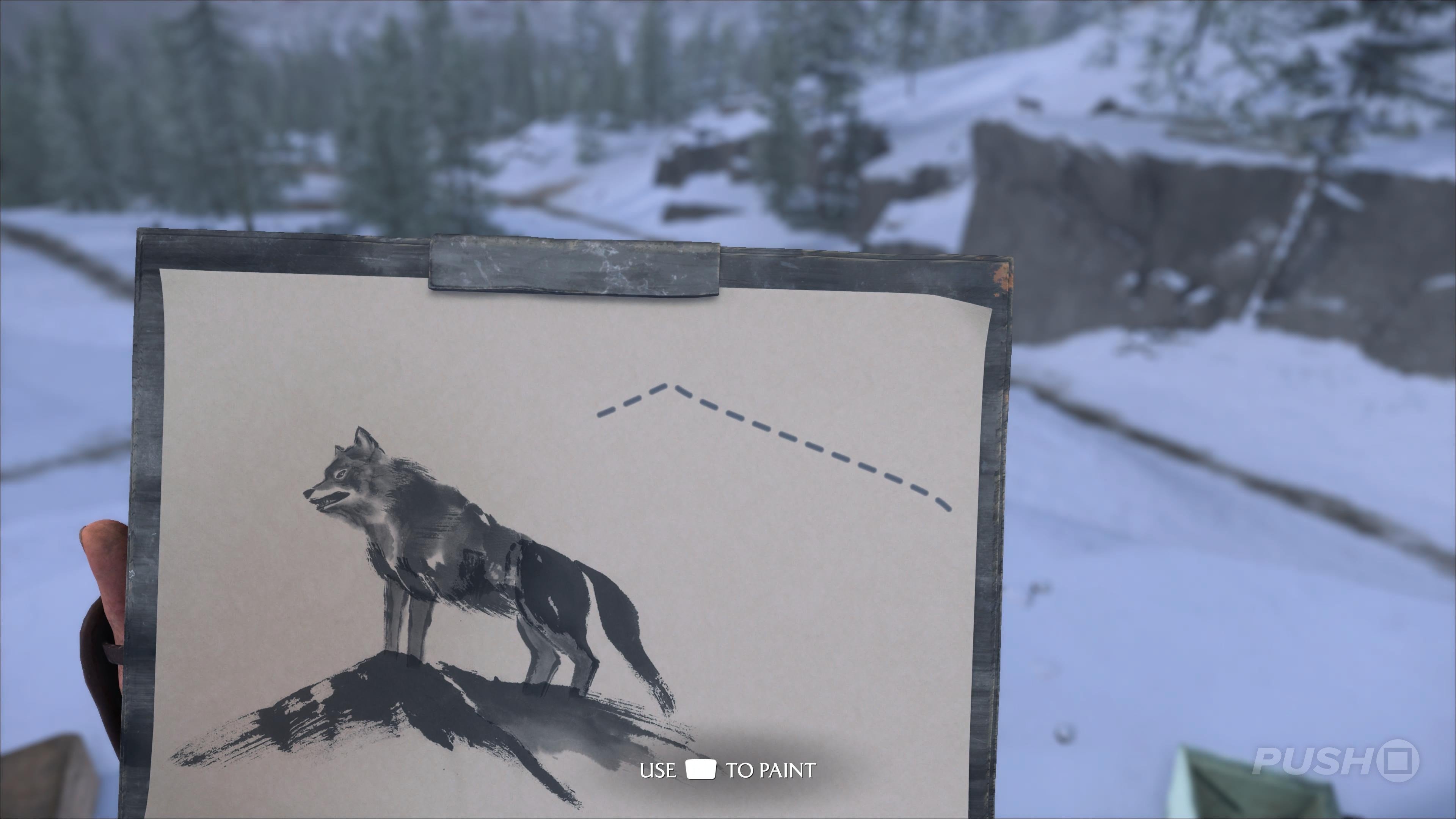
Ghost of Yotei brings back the bamboo strikes, fox dens, hot springs, and shrines from the first game, and adds to the range of pursuits with Sumi-E paintings, wolf dens, enemy camps, and bounties. The game is reserved and deliberate in its positioning of these activities across the map to ensure you don’t tire of a particular type.
New gear and upgrades are among the rewards for ticking each one off, and they funnel into an open world loop of pleasing exploration and progress. Because there’s no fixed way of picking up a lead on a Yōtei Six target, sometimes the best thing to do is simply search the environment. There’ll always be some kind of opportunity waiting, like an enemy soldier to force information out of or a new charm to enhance your stats.
The hub for all that story-based knowledge is the Wolf Pack menu on the pause screen. Here, the important characters you meet throughout the journey alert you to new items they’re selling or quest updates. In addition, when making camp out in the valleys of Ezo, members of your Wolf Pack can visit and bring those resources directly to you.
However, it’s rendered almost completely redundant by other features and options in the game. Instead of crafting new arrows and ammunition under the night sky, you can easily keep your stocks topped up by looting the enemy camps you’re already visiting. Then, fast travel is near instant, so you can just visit the vendor you need instead of hoping they appear at camp.
One mechanic exclusive to the camp is the ability to cook food, but the boosts they offer to offence and defence are temporary and quite minimal. The Wolf Pack menu and the idea of camping are two features we eventually skipped entirely, as there are better and more immediate ways of sourcing the information and enhancements they provide.
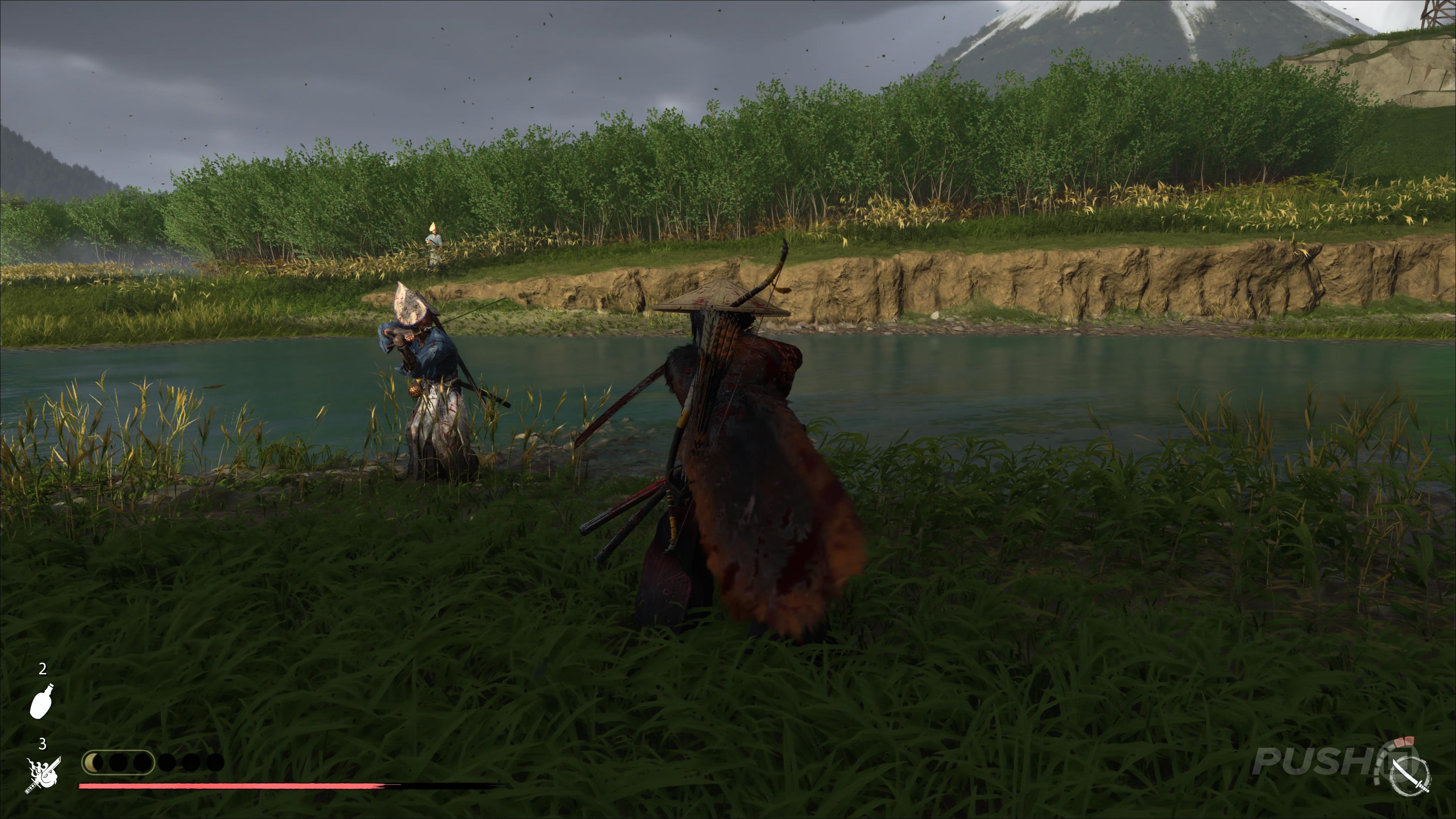
Even then, no matter how many upgrades you have stacked on top of Atsu, combat poses a worthy challenge throughout the whole campaign. In place of the stance system from the original title are more weapons to use in specific situations. The single katana works best against other sword wielders, and the dual katanas overwhelm polearm users. Then, the huge odachi is meant to take down larger enemies, Atsu’s own spear works best against dual wielders, and the kusarigama breaks shields.
While you could stick to a single weapon type if you really wanted, the idea is to adapt your offence to whatever foe is in front of you. By the end of the game, you’ll have five main weapons to choose from, and it can be difficult remembering the pros and cons of each one in the moment, as you quickly switch between targets in a battle.
They still prove an effective evolution of the combat system from Ghost of Tsushima, however. Atsu can then utilise ranged weapons like a bow and arrow and the new flintlock rifle, as well as a range of tools such as cloaking mist, throwable bombs, and the ability to set her blade on fire.
It’s an impressive arsenal that can be upgraded through various skill trees that unlock new moves and improve current ones. Recycling the Spirit system from the original to trigger special attacks, Atsu can kill her enemies in style. Adding to that is the ability to disarm enemies and throw their weapon back at them for an easy kill.
Stealth remains an option, particularly as you infiltrate an enemy camp sight unseen. However, there’s less of an emphasis on this style of approach in the sequel.
Yet another feature new to Ghost of Yotei is the wolf. Pre-release footage may have given you the impression it’s a constant companion you can rely upon, but this isn’t the case. Instead, the wolf is more like a random event that happens during combat. You can upgrade it by completing wolf dens across the open world, which makes it appear more frequently. However, it’s not an animal you can simply call upon like your horse. It’s a nice bonus to have, as it can kill enemies and distract others — just don’t expect it to be there every time you need it.
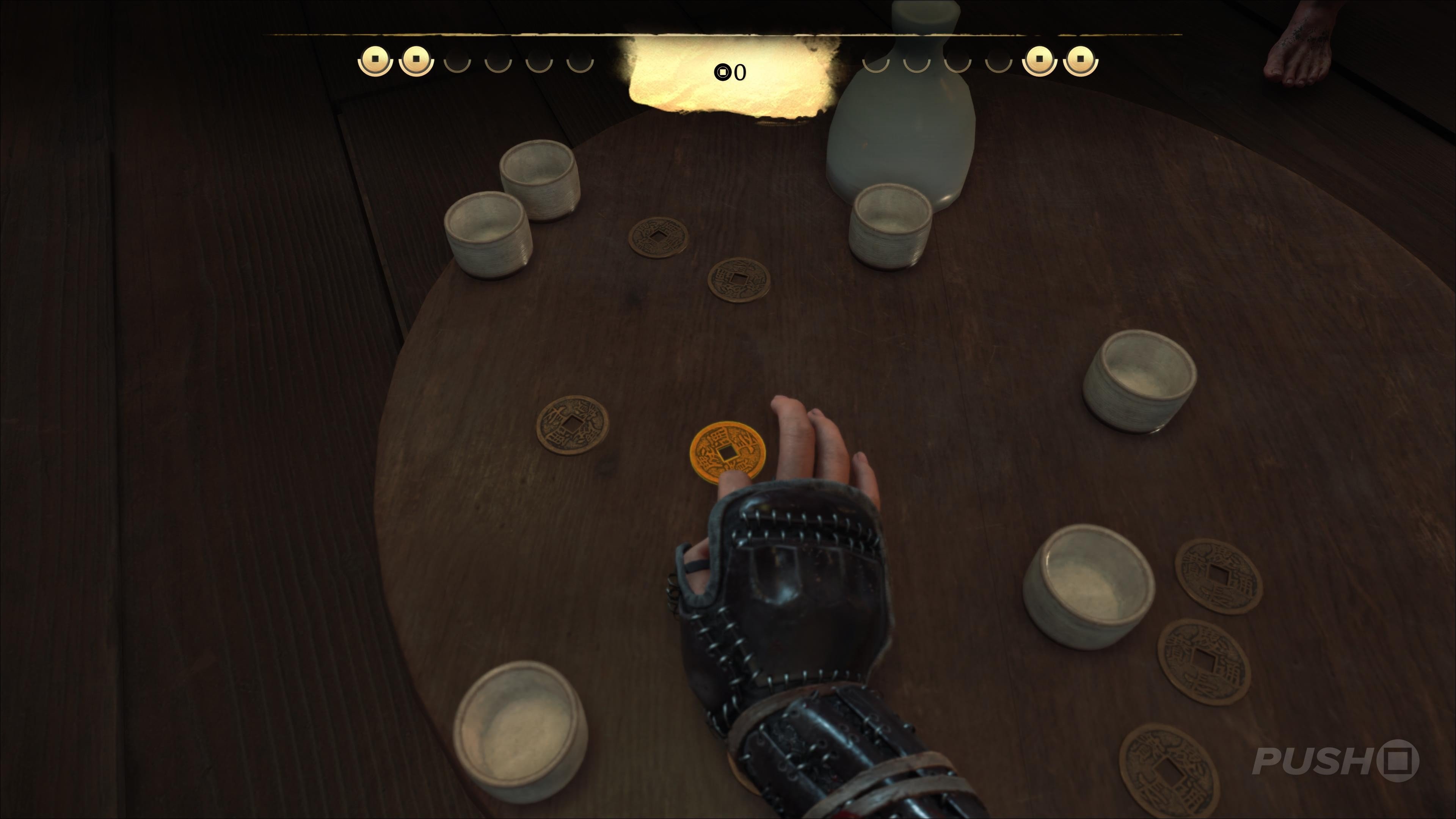
With so many combat options at your disposal, along with a meaningful open world full of discovery, Sucker Punch has crafted an experience full of variety. The way you can go from Sumi-E painting to clearing enemy camps, all with a shrine climb and a fox den in between, is refreshing. It’s a rewarding and engaging loop of samurai simulation from all angles.
You can look good while doing it too, via an extensive amount of customisation options. Weapon kits give your blades a new look and colour, while upgrading armour hands it fresh visuals and accessories. Combined with charms that let you come up with your own character build, you can make your Atsu look vastly different to anyone else’s.
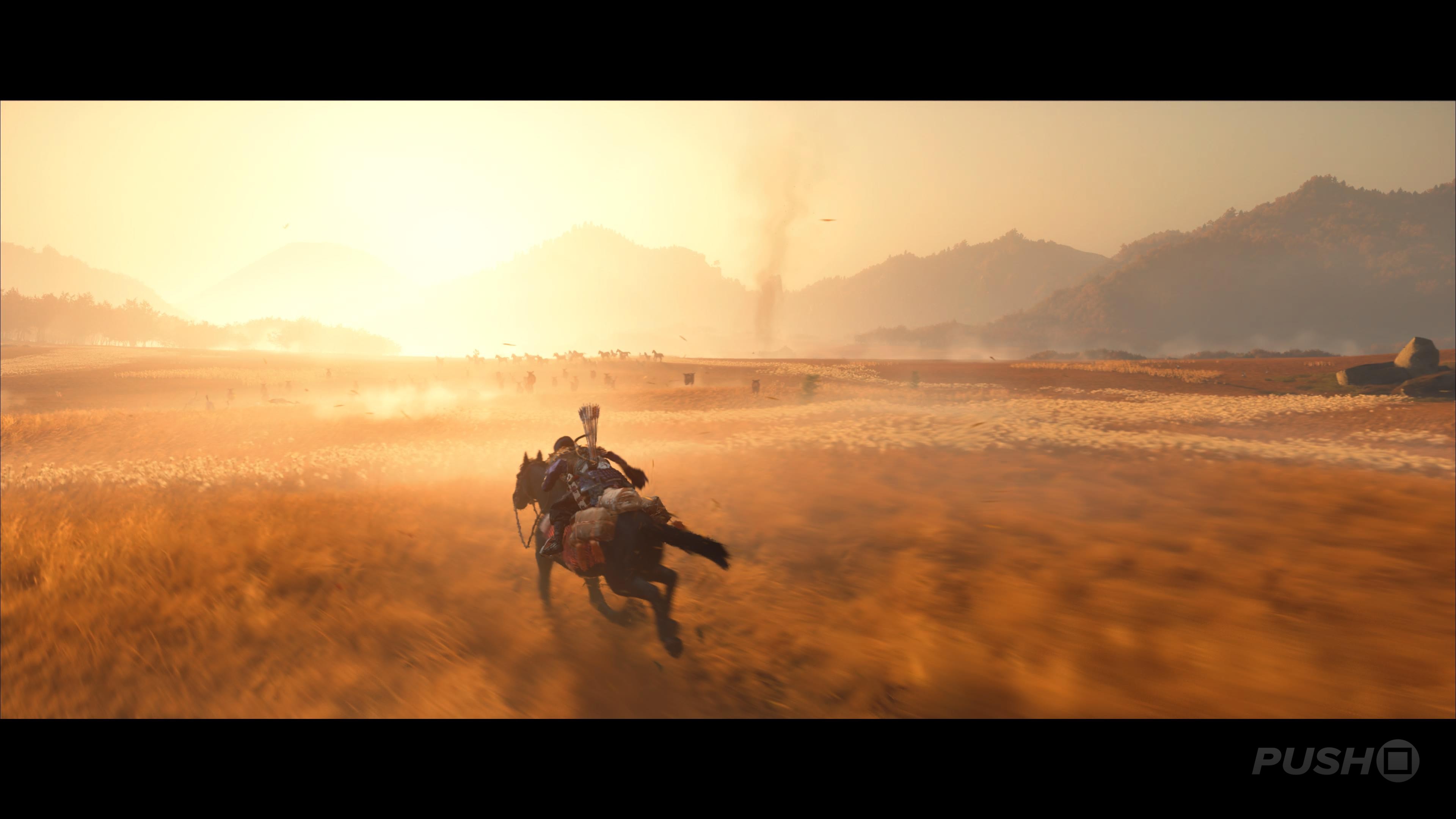
In fact, Ghost of Yotei is an industry leader in most graphical facets. Just like how the first game closed the PS4 generation with stunning vistas and scenery, the sequel does the same on PS5. Now in the fields and mountains surrounding Mount Yōtei, it enchants with beautiful landscapes and pretty villages of the Edo period. It’s comfortably one of the most striking games on PS5 at a distance, but it suffers slightly in close-ups.
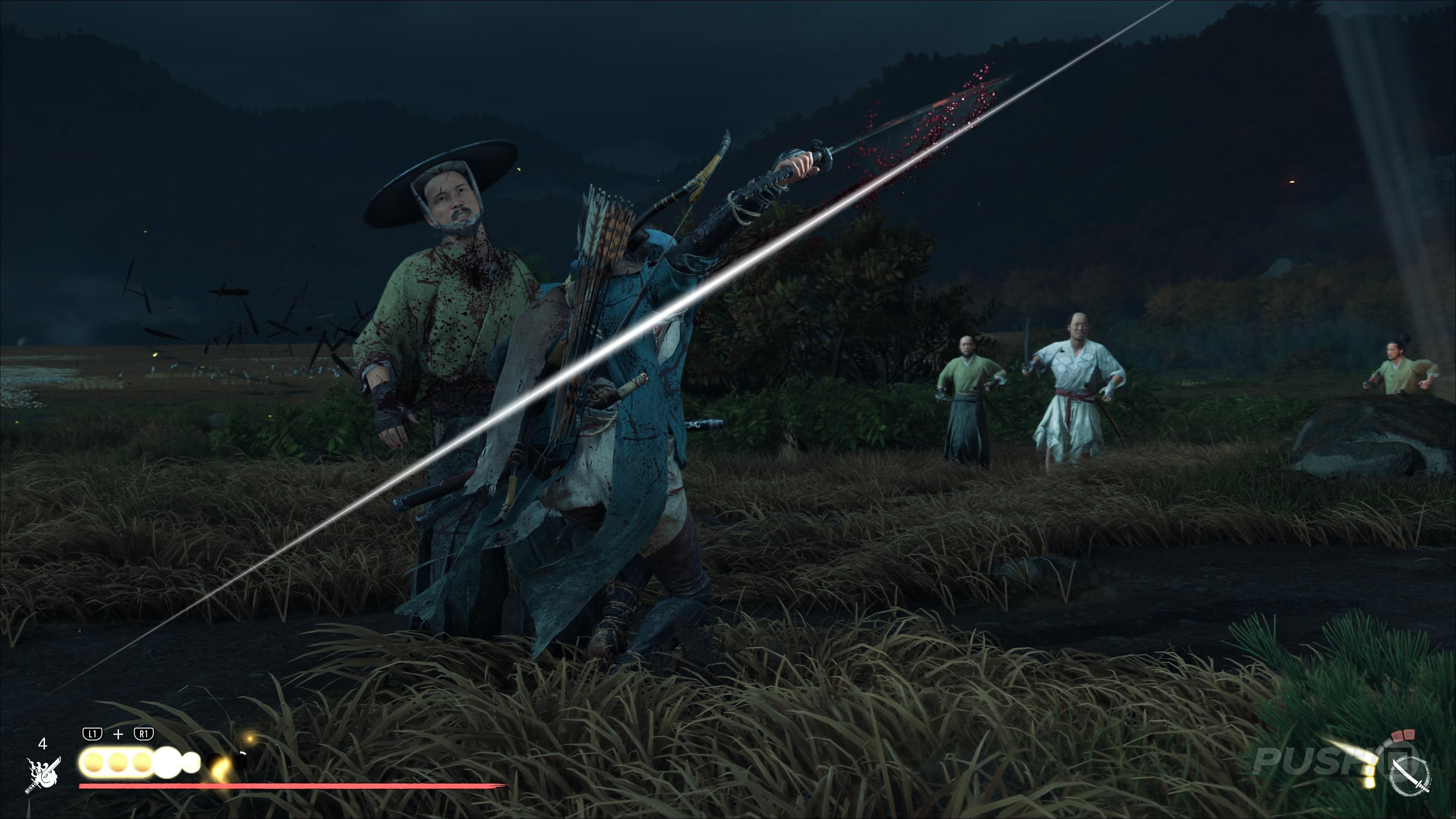
Some minor characters in the background of a scene and random NPCs walking about town look especially poor against the gorgeous backdrop of the overall title. Their faces in particular lack detail, and even Atsu can fall victim to the variation in quality. While she looks outstanding in cutscenes, there’s a notable drop in standards if you bring her in shot during open world traversal. It’s a minor blemish overall, though, as the game often stuns on PS5 Pro.
Sucker Punch has also put some admirable work into utilising the PS5 DualSense controller at every opportunity. You’ve got the usual use of adaptive triggers and haptic feedback, but the developer then goes above and beyond to incorporate the touchpad.
On the central button, you can swipe in four directions to follow the wind, play a musical instrument, bow, and either draw or put your weapon away. It’s then also used to replicate Sumi-E painting and the plucking of strings on your Shamisen instrument. The game even employs light motion controls to replicate the striking of a hammer on steel as you upgrade weapons at the forge, and to cook food on a campfire.
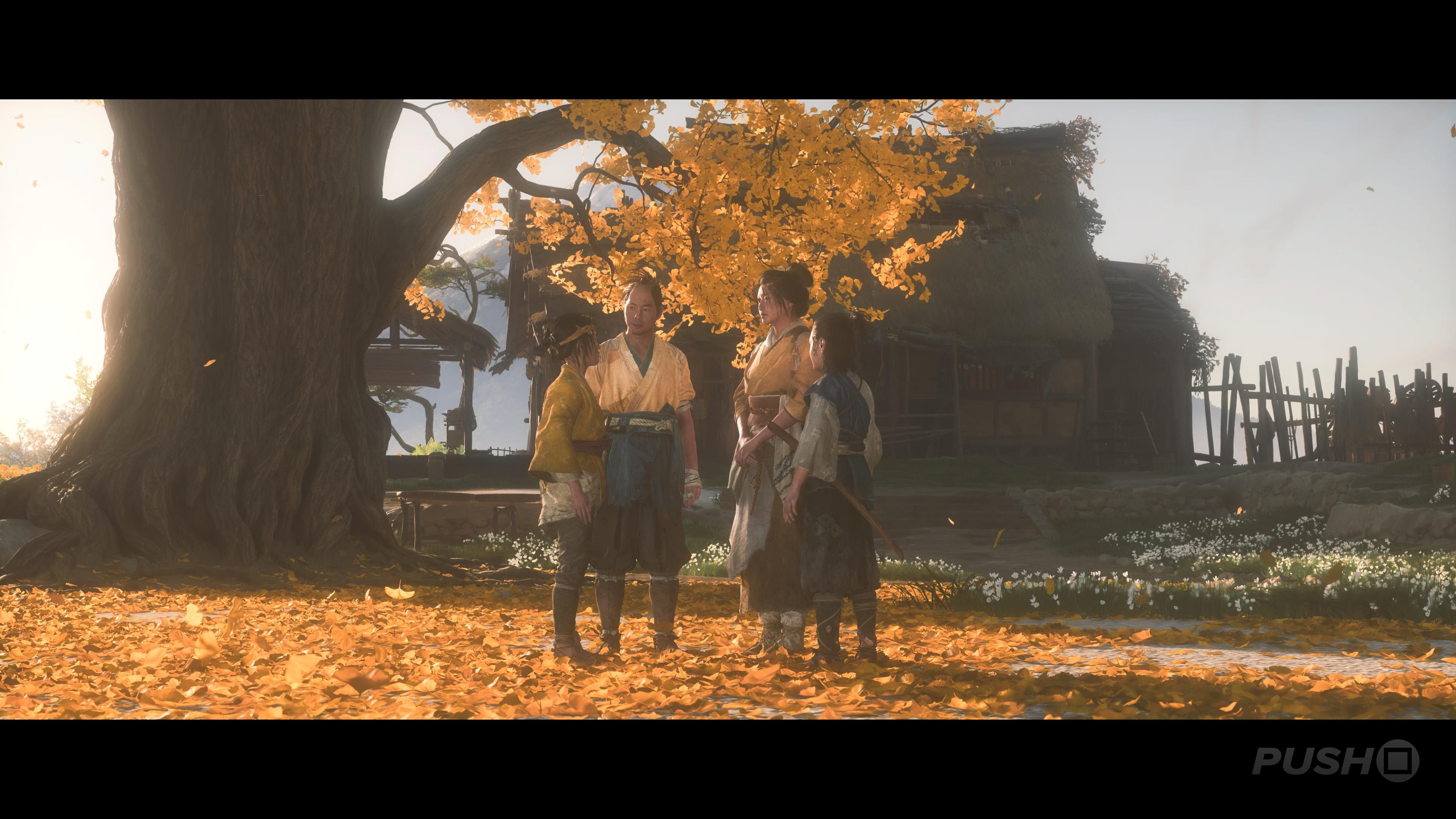
This might be the most comprehensive use of the entire PS5 controller to date — an impressive feat from the studio and a strong example of what can be accomplished with enough effort.
Equally, the sequel’s range of graphics modes is just as robust. There are three available on base PS5 and a fourth for PS5 Pro owners. Quality Mode offers 30fps at a “higher resolution”, Performance Mode targets 60fps at a “lower resolution”, and a specific Ray Tracing Mode enables the lighting feature and targets 30fps. For those on PS5 Pro, you can opt for a Ray Tracing Pro mode that targets 60fps at an “intermediate resolution”.
For our entire 50-hour playthrough, we used the Ray Tracing Pro setting and found it an incredible way to experience the game. With no signs of bugs or glitches, Ghost of Yotei feels like a truly premium release. As far as the eye can see, the PS5 game remains steady throughout and looks gorgeous doing it.
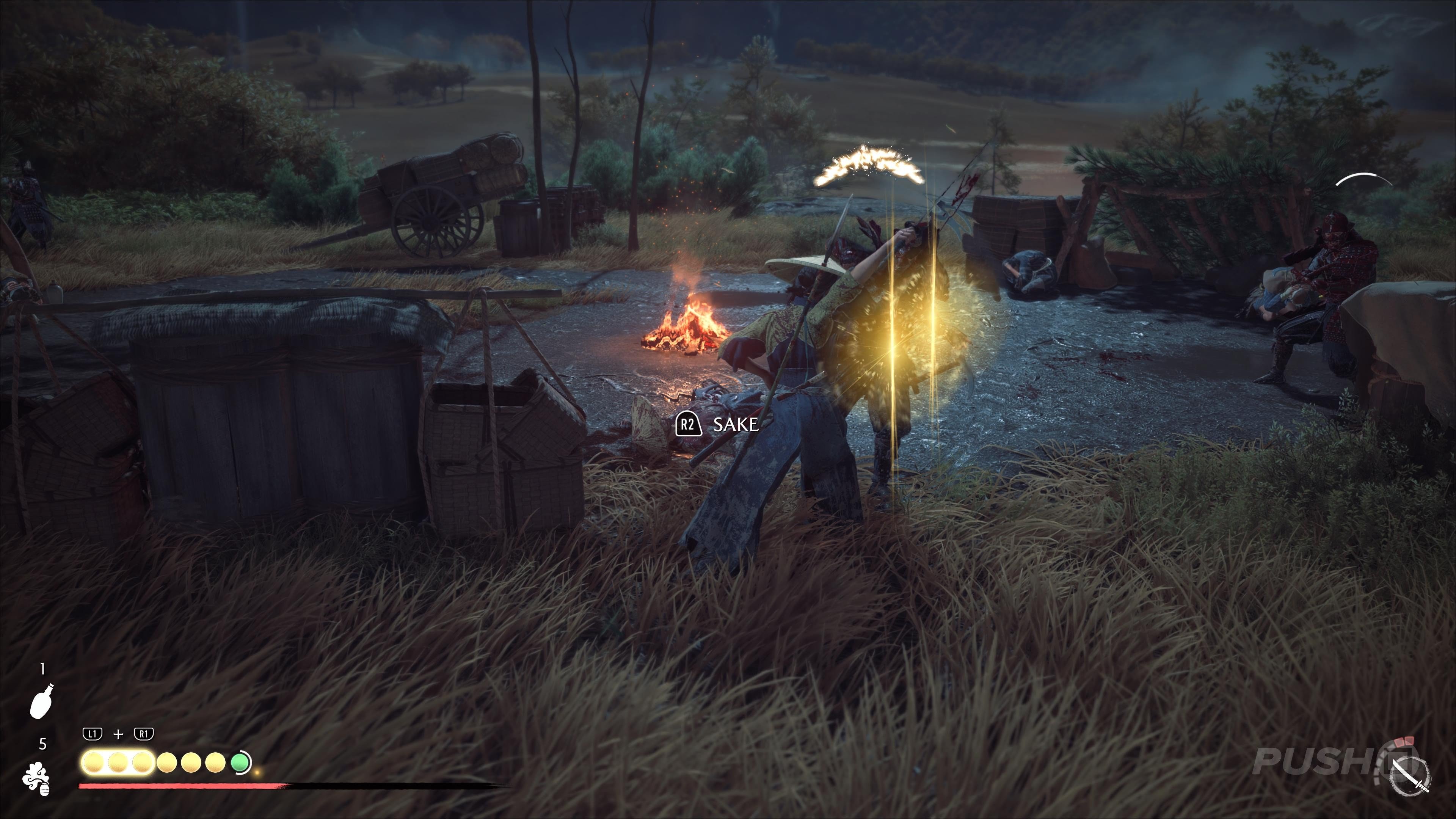
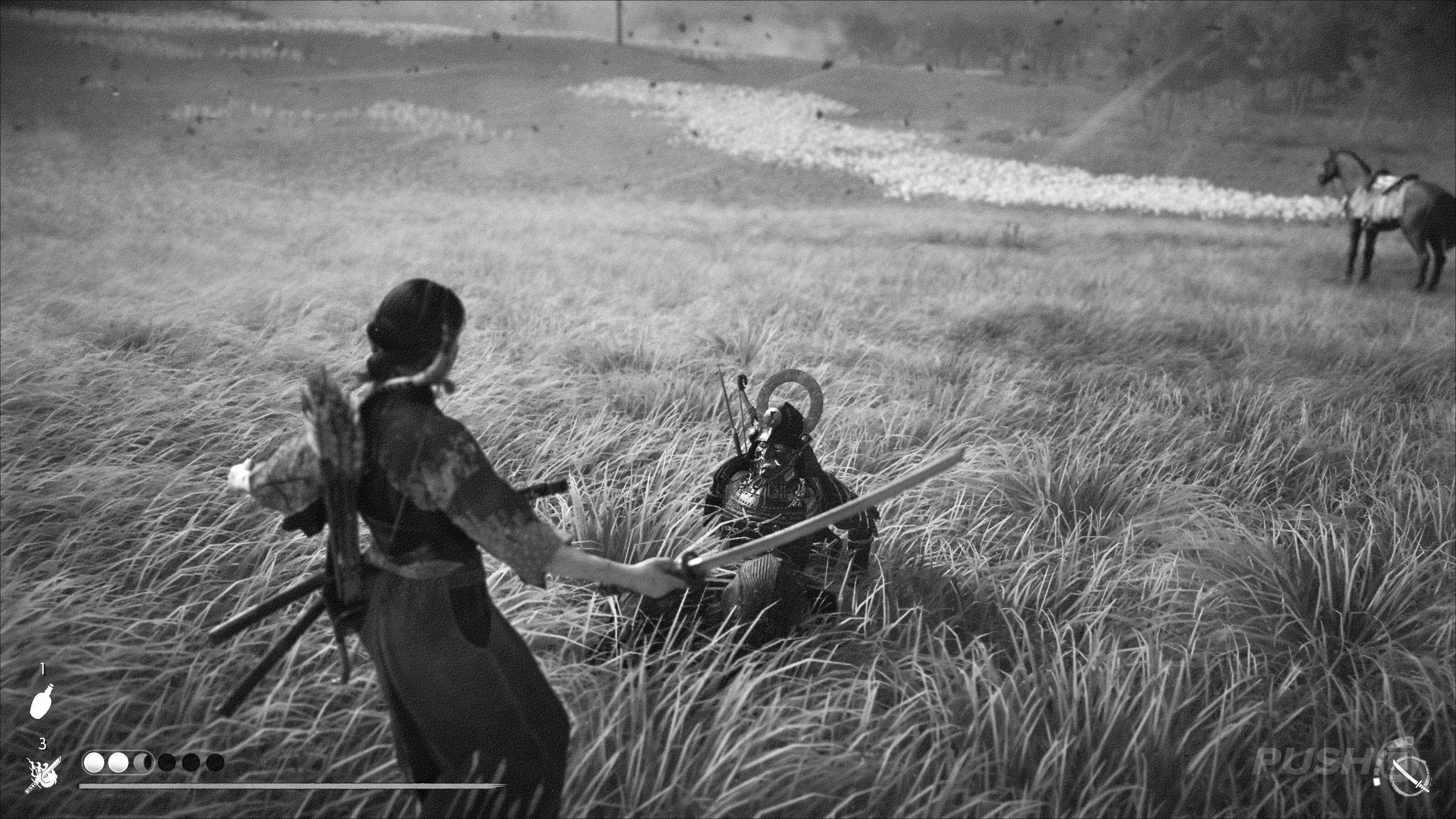
The team rounds out its suite of options with three bonus modes similar in style to what it had in the original. Kurosawa mode, with its black and white visuals inspired by Akira Kurosawa, returns alongside two new ones: Miike mode and Watanabe mode. The former, through the influence of Takasha Miike, increases the amount of blood and dirt, and tightens the camera to more of an over-the-shoulder perspective. The latter is based on the work of Shinichirō Watanabe and adds lo-fi beats and music over the gameplay and menus.
None of these options feel appropriate for your first playthrough, but they feed into the ideas and thoughts powering the experience: a celebration of Japanese culture and samurai. That is exactly what Ghost of Yotei is.