


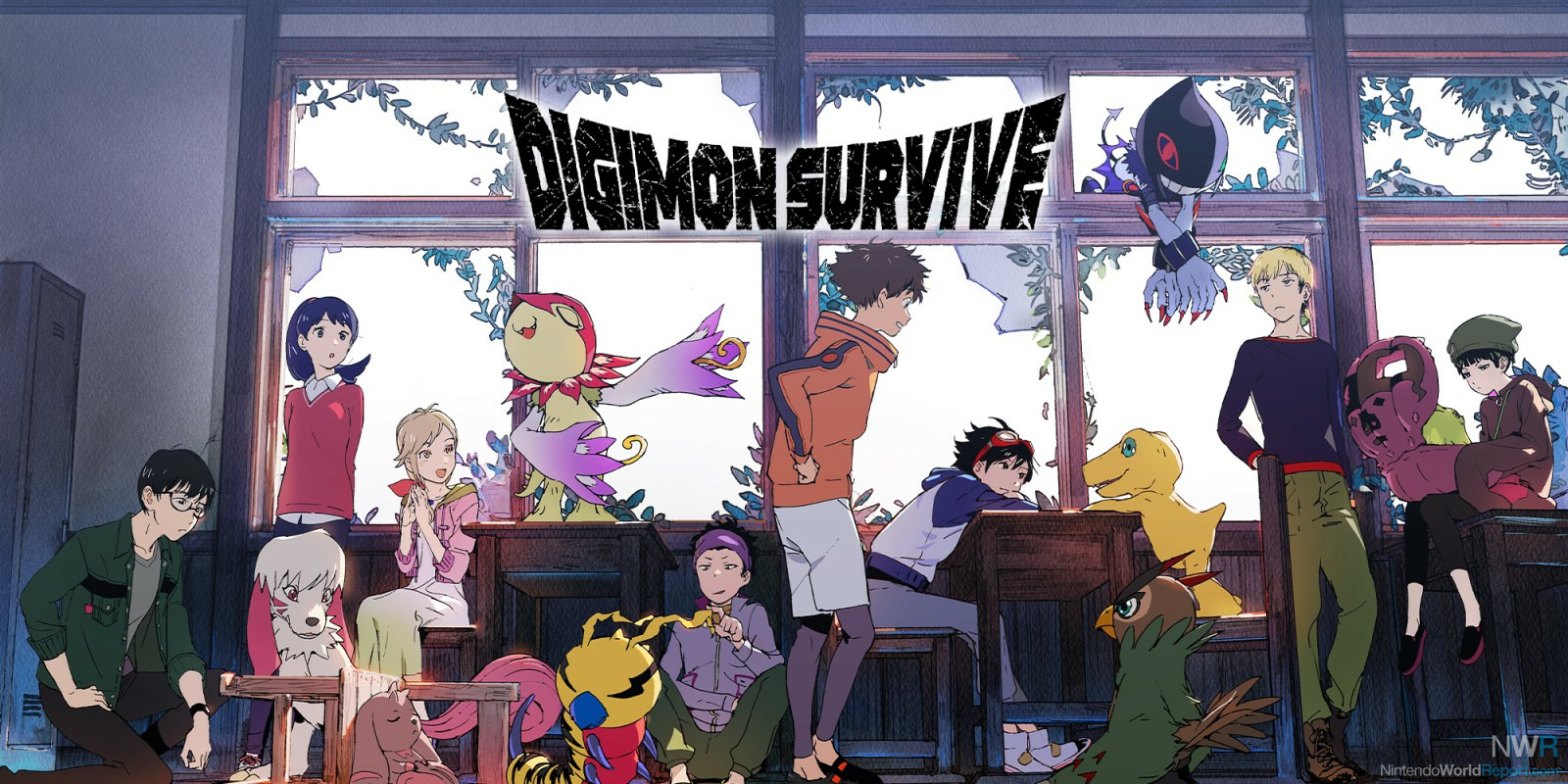
Digimon, digital novel.
Celebrating Digimon’s 25th anniversary in style, Bandai Namco has released Digimon Survive. This is somewhat of a reboot and restyling of the usual Digimon video game formula. This time, the genre has been changed to a visual novel hybrid that incorporates tactical RPG elements everywhere. A new direction that at first seemed strange given the nature of Digimon, usually a monster collecting and turn-based battle style, taking risks with a different approach. I was a little disappointed when I heard it was going to be a visual novel. Because this is not a genre that I am generally drawn to.
The title screen, promotional materials, character design, and so on, the level of perfection of Digimon has suddenly risen. The language used, visuals, story themes such as death (yes, actual death!) are much darker than previous installments. Digimon has always been seen as an edgy Pokémon, but it still had a childish charm and target audience. Definitely aimed at a more mature audience.
You play as Takuma Momozuka, who is on a school trip with his classmates. He and a group of other students and locals get lost and find themselves transported to a world similar to their own, with the big difference being the ferocious creatures known as Digimon, for better or worse. It is important to emphasize that Agumon and co. In Digimon Survive, they are never called Digimon or Digital Monsters. These don’t have any Digivices that assume the “Digi Fate” they use. The Digimon in this world are as real as Takuma’s.
How Digimon Survive is set up makes it one of the most accessible Digimon games ever for newcomers to the franchise or those who have never heard of Digimon. You don’t need to know anything about Digimon itself to immerse yourself in this story and characters. For Digimon veterans and fans of the series, it’s nice to know that nearly every Season 1 original, such as Agumon, Tentomon, and Patamon, exists and can be obtained in some way. However, some of the popular second season/movie digimon are not – most notably his Veemon and Terriermon.
Most of my time in Digimon Survive has been in the visual novel aspect, with a split of about 70/30 in favor of visual novels. Lots to read and immerse yourself in a really great story and great characters. His first hour or so is entirely text-based, and he’s the catalyst for the main story, where he establishes relationships with his characters, builds the world, and then spends the next 25+ hours. Each character in Digimon Survive is unique and interesting. own habits and personality. No single character feels two-dimensional or removed from the plot, so you can tell there was a lot of thought put into each one, and good writers were on staff. Everyone goes through some form of character formation, and you come to really care about them all.
The story is divided into 12 chapters and branches at about three-quarters of the way through depending on your karma rating (morality, anger, harmony). That means there are three different endings you can play through, and a secret fourth route of his that you can unlock once you complete any of the previous three paths. This 25+ hour run is much longer if you want to see it all.
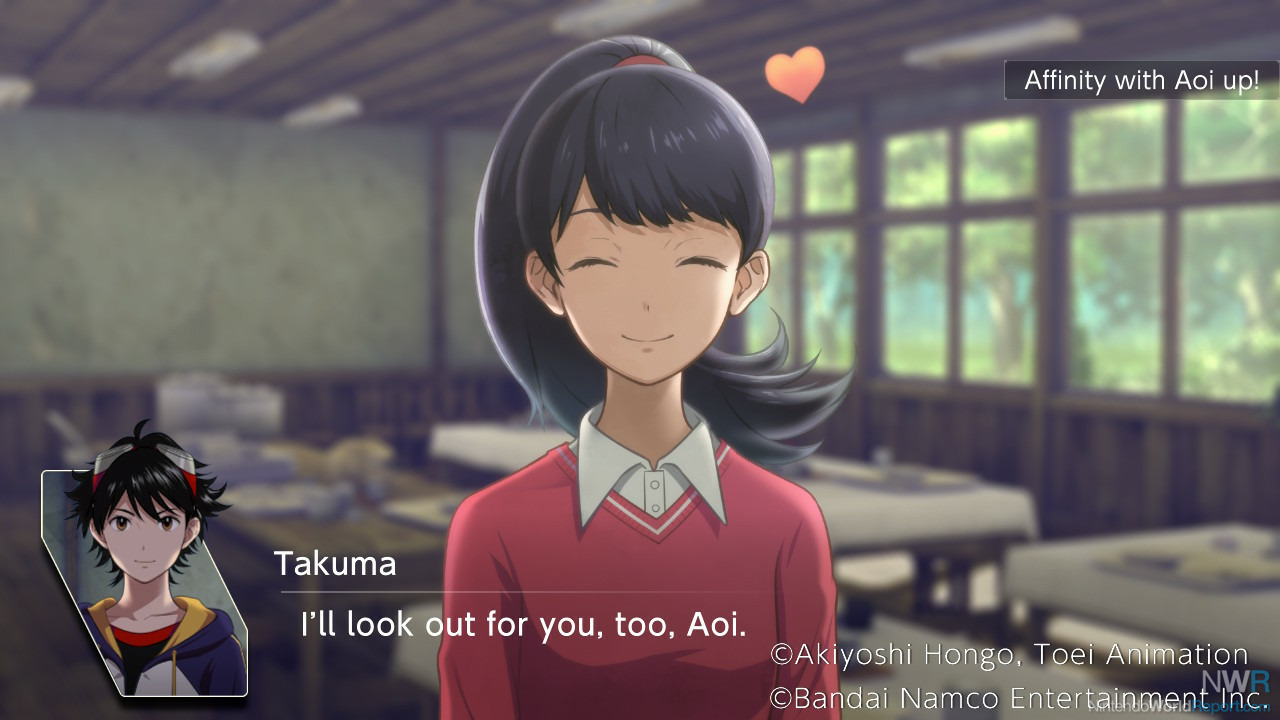
Your narrative choices not only affect your karma, but also your affinities and relationships with other characters in Digimon Survive. This is important because the more intimacy you can raise, the more boosts you’ll get in battle from them and their partner digimon. Your karma also plays a role in defining what your partner Digimon Agumon evolves into.
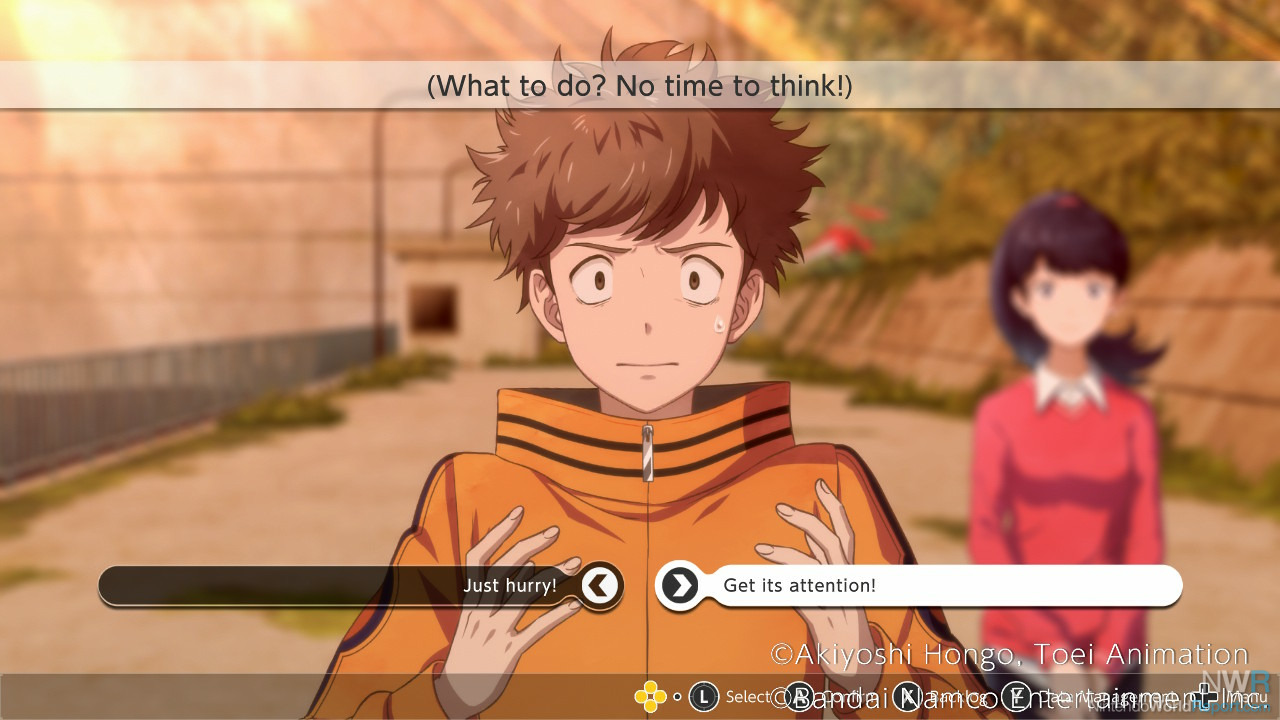
My big concern was pacing. The split between reading and combat seemed so distant, with little in between, that the start time or so felt much longer than it actually was. Digimon Survive’s action is usually saved for the later stages of each chapter.
When you’re not reading or listening to Digimon Survive’s lines and stories, you’ll find yourself in battle against your Digimon enemies. The battle system takes place on an isometric grid, choosing your party at the start of each battle. This usually includes certain members of the team (who the current plot is focused on) by default, as well as anyone you choose to include. A fixed amount specified at the start. In this grid you can perform several actions with each Digimon. The fastest on the battlefield goes first. They can become enemies.
Action choices in combat include move, attack, item, talk, evolve, and end turn. Digimon can move a certain number of squares according to their movement attributes. Naturally, the higher the attribute, the farther you can fly in one turn. All Digimon have basic and special attacks. Each special move consumes SP, so you need to be careful about when to use special moves such as Agumon’s Pepper Breath and when not to use them. I didn’t realize I was running out of SP for using moves. But the mechanics of evolution almost ran me out. In evolution (the game doesn’t call this Digivolution), the partner Digimon is always in its basic rookie form and must physically choose how it evolves during battle. Evolving them to higher levels (Champion, Ultimate, Mega) consumes more SP each turn as a result of their actions. You can stop evolving on another turn if you want to reserve SP. This adds a nice tactical layer as you may want to save your stronger forms for when it really matters. need. .
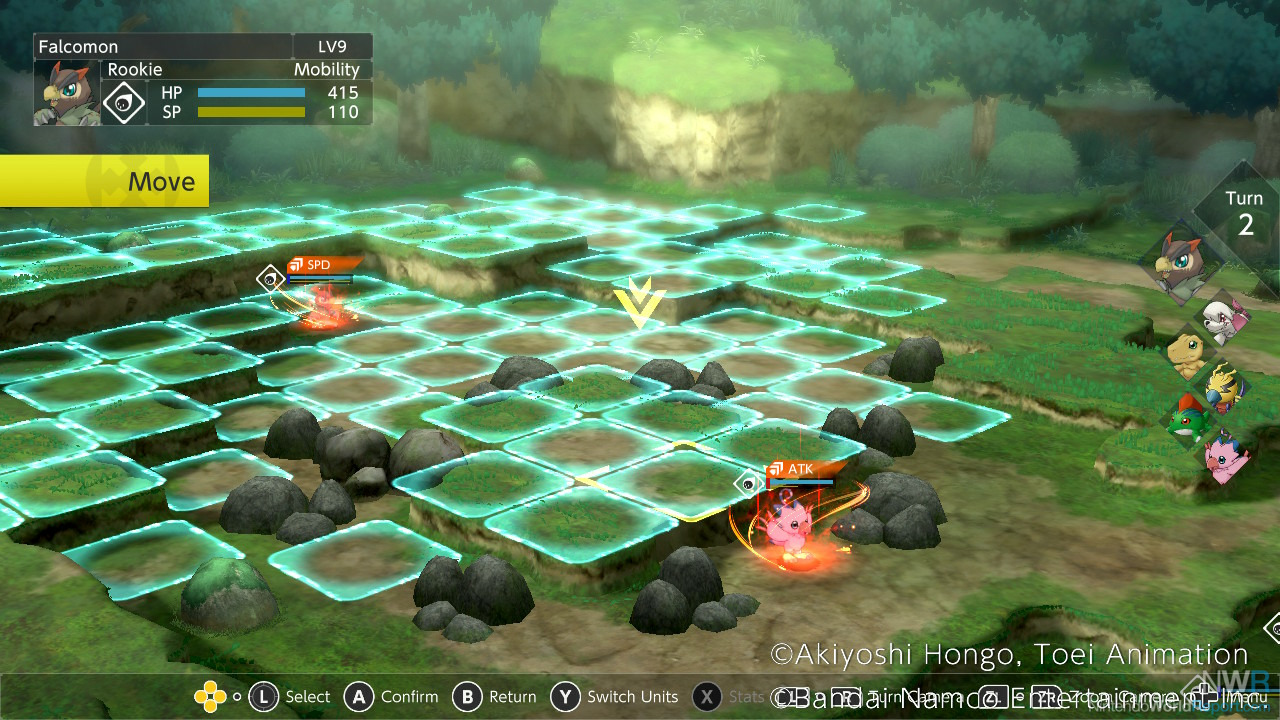
The talk feature is the most fun and useful action in Digimon Survive. Certain allies have special abilities that can raise their stats, maximize movement, or heal other Digimon. When you talk to each other or your own partner Digimon, these benefits affect them, and these buffs usually last throughout the battle! Conversely, if you talk to the selected Digimon, you can “persuade” it and invite it to join you! Please try to answer these questions correctly. If you don’t, you’ll piss them off and all their stats will increase. This feature is great because it gives every Digimon a personality, even what can be considered a minor grunt.
The combat system is great overall. I do wish it had a deeper mechanic, as I feel it’s a bit light on the “tactical” side. On top of this, the combat animation is pretty slow, but thankfully this can be sped up by holding A or permanently speeding it up in the settings menu.
In the moments between the core story and combat, you can explore the current environment to progress the story and interact with characters to increase your sense of familiarity. There is also a place for free battles. In this area you can participate in battles with random opponents. There, you can smash your team to level up, or recruit enemies to boost your unit count. QUICK TIP – If you want to maximize combat speed in the settings and crush faster, select Auto Combat in the Start He menu during Free Battle. Free Battle Digimon are usually pretty weak, so there’s no risk to your team.
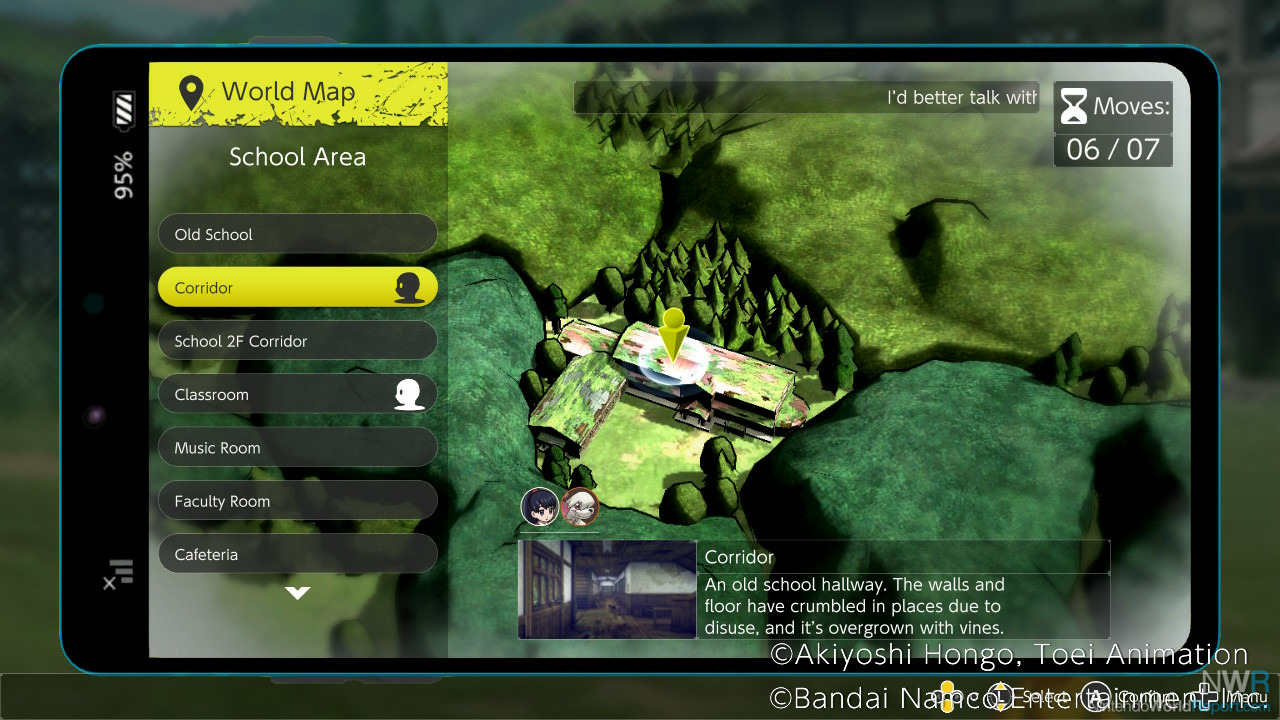
In this exploration mode, you may be asked to use your smartphone’s camera to discover unseen items and clues. These are represented as glitches – similar to weak signals in video calls. These glitches feel like the only remnants of Digimon’s “digital” side, and are typically used to discover useful items or advance the story.
Since most of the time is spent on the visual novel aspect of the game, I was initially concerned that it could be very boring and repetitive visually. I couldn’t be further from the truth! Both character designs and Digimon sprites are beautifully designed. The expressions and reactions of each character are abundant, and they are all lively and perfect for the dialogue. They transition seamlessly into each other, and my visual novel experience is lighter than some, but when every visual novel character is designed as vivid, complete, and unique as Takuma and co. Let’s try it!
On the other hand, I was a little disappointed with the Tactical Battle sprite design. It looks great, it’s a little bitchy version of the characters and digimon, but it misses an opportunity for better visuals and animations. Additional HD animations and cutscenes would be nice if they did their final moves, evolved into their mega form, or landed critical hits. It feels a little bland at times, which is weird.
There are fully animated cutscenes scattered throughout Digimon Survive that look like they were taken from a high-budget anime. To do. If Digimon Survive’s characters and stories were adapted into a full series or movie, I would be one of the first to do so. If that were to happen, they would already have a wonderful composer named Tomomi Miyoshi.
Digimon Survive took risks with its gameplay, presentation, and narrative, but it paid off for me. I really feel the arrival of a new era of Digimon. A more mature, darker, ferocious Digimon that could see the beginning of a truly great visual novel RPG hybrid series. But if Digimon is your jam or visual novel and you have plenty of time to sit back and immerse yourself in this wonderfully written story, then you probably hit gold with Digimon Survive.
