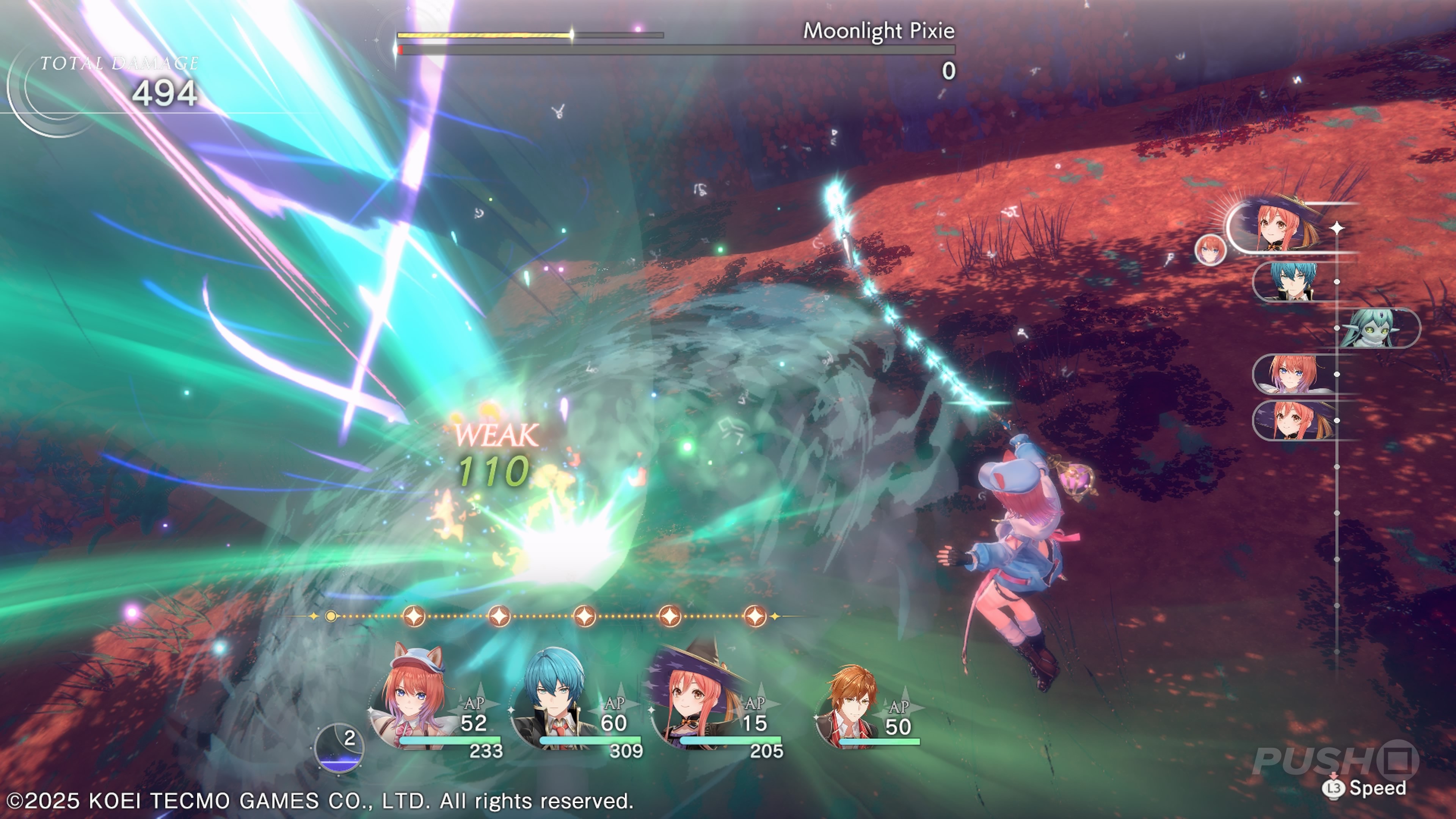
The gameplay structure of Atelier Resleriana: The Red Alchemist & the White Guardian feels a bit like a recipe, with intertwining elements that each contribute to the sum of its parts.
This is fitting, we suppose, because the game is all about brewing concoctions as an alchemist to both aid you in turn-based combat and – crucially – flog in your shop. More on that shortly.
This latest effort from long-time developer Gust – the second all-new Atelier title this year, and that’s ignoring the trio of Ryza remasters due out in November – inserts itself into the timeline of shuttered gacha game Atelier Resleriana: Forgotten Alchemy & the Polar Night Liberator.
But don’t worry if you’ve never touched the mobile spin-off – its service ended for a reason, after all – because dual protagonists Rias and Slade are newcomers, and you don’t really need to know much about the backstory of returnees like Resna to follow the plot.

The story centres on the town of Hallfein, which befell a tragic disaster, rendering it abandoned and derelict. Picture it as any current UK high street, and you’ll be roughly on the right track.
The twist is that Atelier Resleriana has characters who actively want to change the fortunes of Hallfein, rather than leave it to rot.
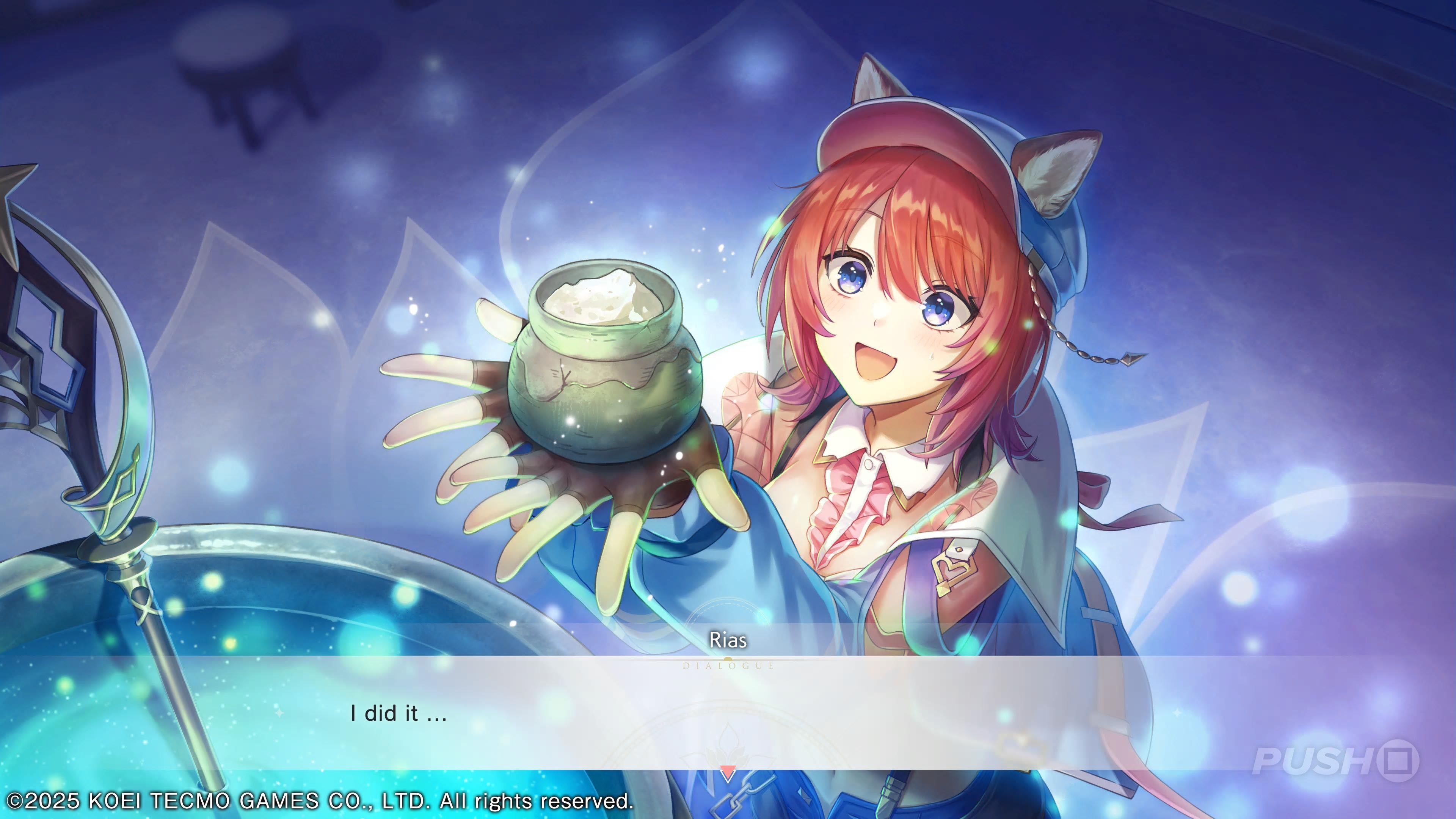
And that’s where you, as a fledgling alchemist, enter the equation; as wannabe VTuber Rias you’ll use your newfound skills to concoct items that will both assist you in combat and bring wealth back to your hometown.
The loop is multilayered but fairly straightforward: you explore and engage in battles to find materials which can be crafted to create items you can then use in combat or sell in your store.
Mistletoe Miscellaneous, or in simpler terms Your Shop, is a big feature in this game: you can stock any items in your inventory at your store, and then flog them to accumulate income and level up Hallfein.
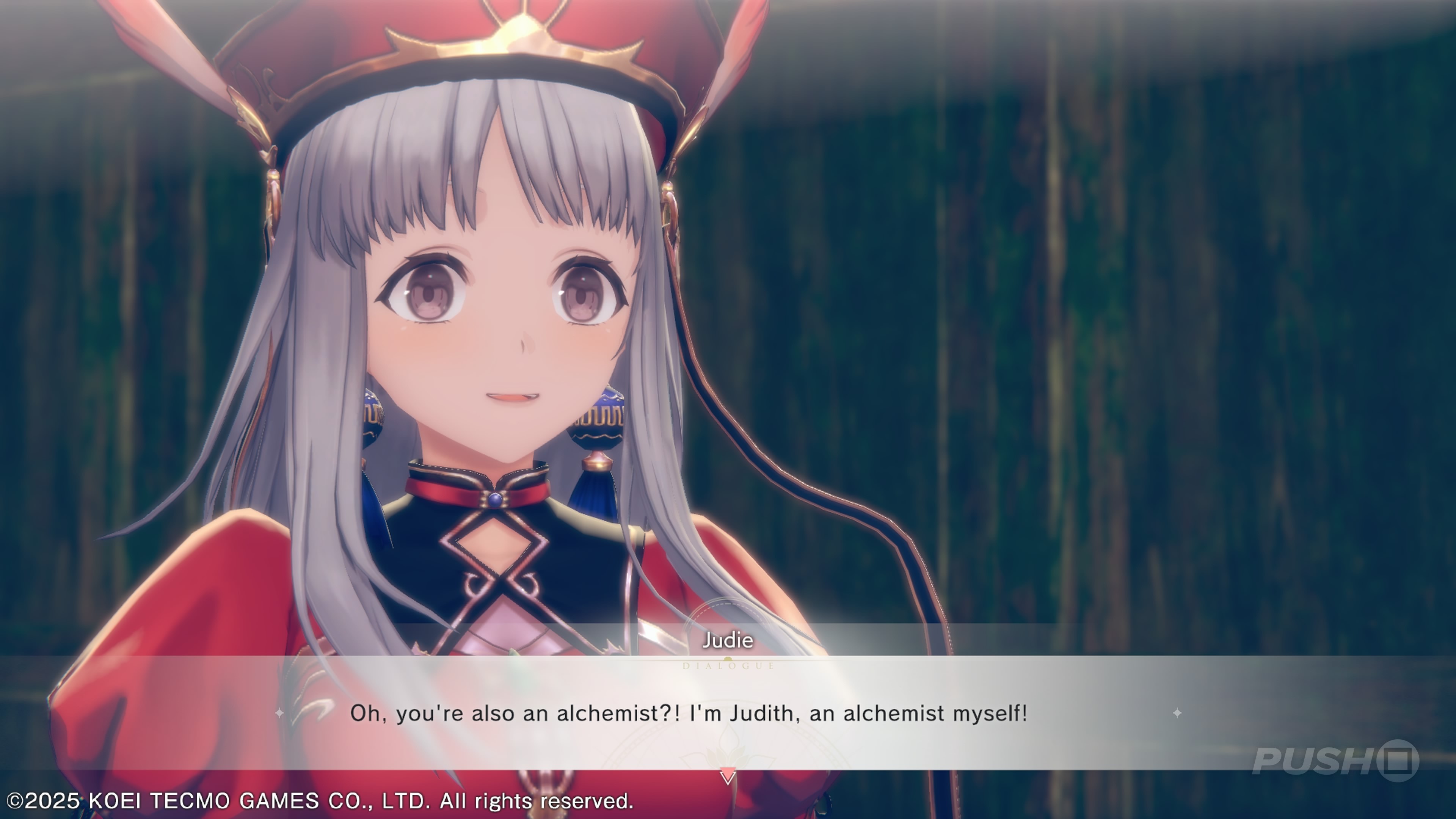
As you sell increasingly valuable products, you’ll attract more customers to the area, which in turn will encourage more merchants to set up their own shops. You can then purchase new crafting recipes and items from said vendors, allowing you to forge even rarer items, which feeds the overall loop.
It’s a satisfying cycle which has a visual impact on your surroundings; Hallfein is derelict and abandoned at the start of the adventure, but you’ll watch it transform into a bustling metropolis as you progress.
There’s much more to the tycoon elements than our rudimentary explanation lets on, including the ability to invest into certain specialties and even send allies out on extraction missions, but it’s that underlying sense of gradual progression that makes the whole thing sing.
Unfortunately, the game does like to stop you from actually playing it at times, with an overabundance of irritatingly chipper dialogue interspersing every quest you complete. There are times, particularly early in the campaign, where you’ll wish everyone would just shut up so you can enjoy the game. Mercifully, you can fast-forward or even skip some dialogue if your patience is running thin.
We should also mention the combat system which is a more traditional take on the series than the recent Atelier Yumia. The more traditional turn-based combat system has some interesting wrinkles involving turn order, team-ups, and multi-action commands which add a strategic layer to the action.
Specifically, we like how the effects of items you’ve synthesised can be combined to unleash powerful additional attacks, or how you can insert party members from your back line to change up the formation of your front row and earn the upper-hand.
While combat is a common gameplay aspect when you’re out exploring, it also factors heavily into the Dimensional Paths, which are randomly generated dungeons designed for grinding, where the difficulty determines the rarity of the items you discover.
While there are some antiquated elements to its design, given the complexity of some of the alchemical combinations, we actually think the UI is fairly well honed overall. It can still become a cluster of objects and statistics at times, but the game generally does a good job of making such an absurd amount of information accessible.
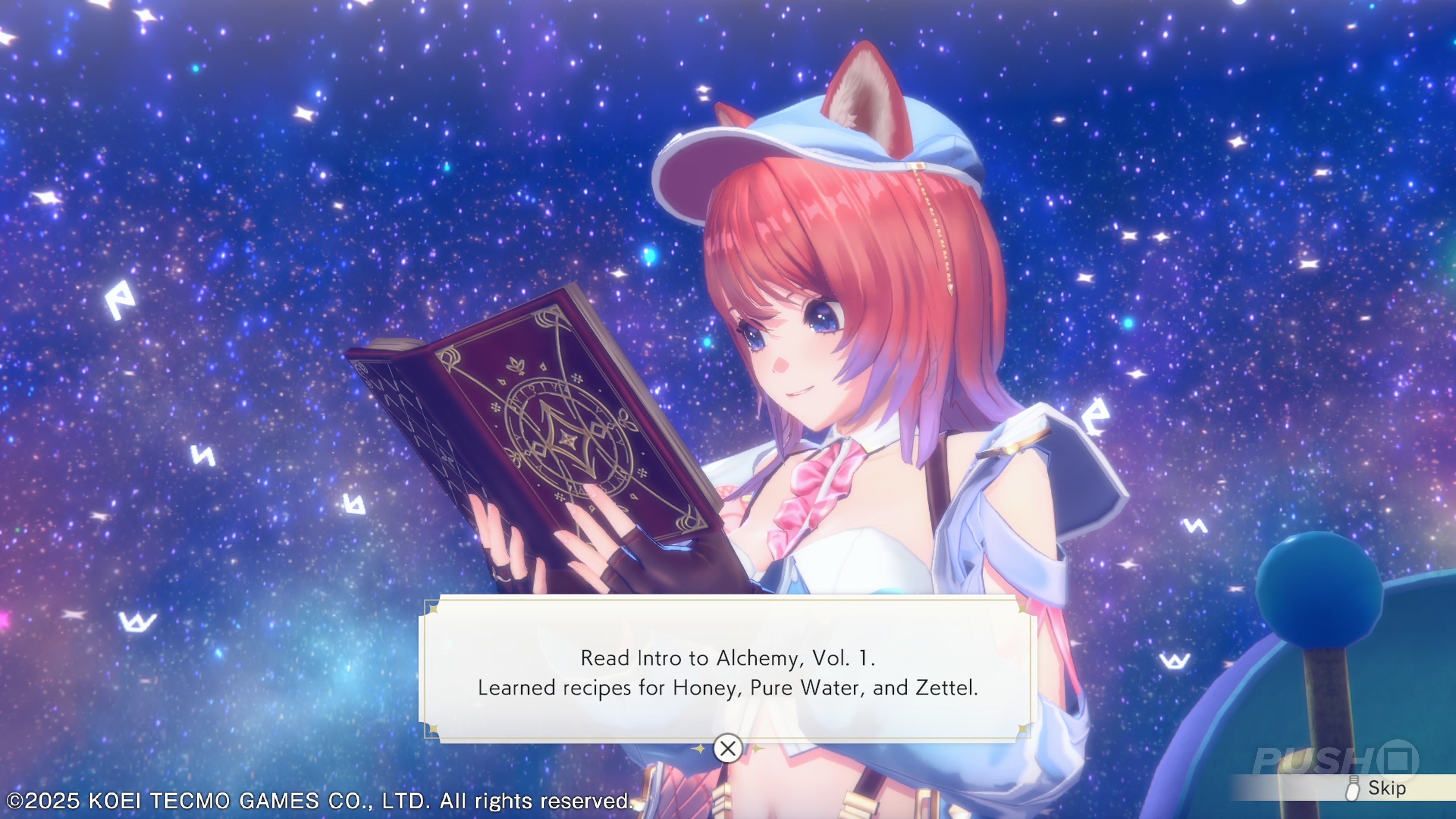
It looks nice, too, although some of the character designs may prove an acquired taste. Rias’ dumb ears and New Era cap eventually grew on us, but we can’t argue with anyone who’s turned off the entire title just by her appearance alone. At least it all runs smoothly and looks presentable and vibrant on a base PS5.
Conclusion
Atelier Resleriana: The Red Alchemist & the White Guardian succeeds through the strength of the sum of its parts. Its story and dialogue are a bit obtrusive at points, but the simple loop of fashioning items to flog them to forge even better ones is compelling. With strategic turn-based combat and breezy presentation, this is an overall enjoyable RPG time sink – even if its character designs and anime tropes may immediately turn some players away.