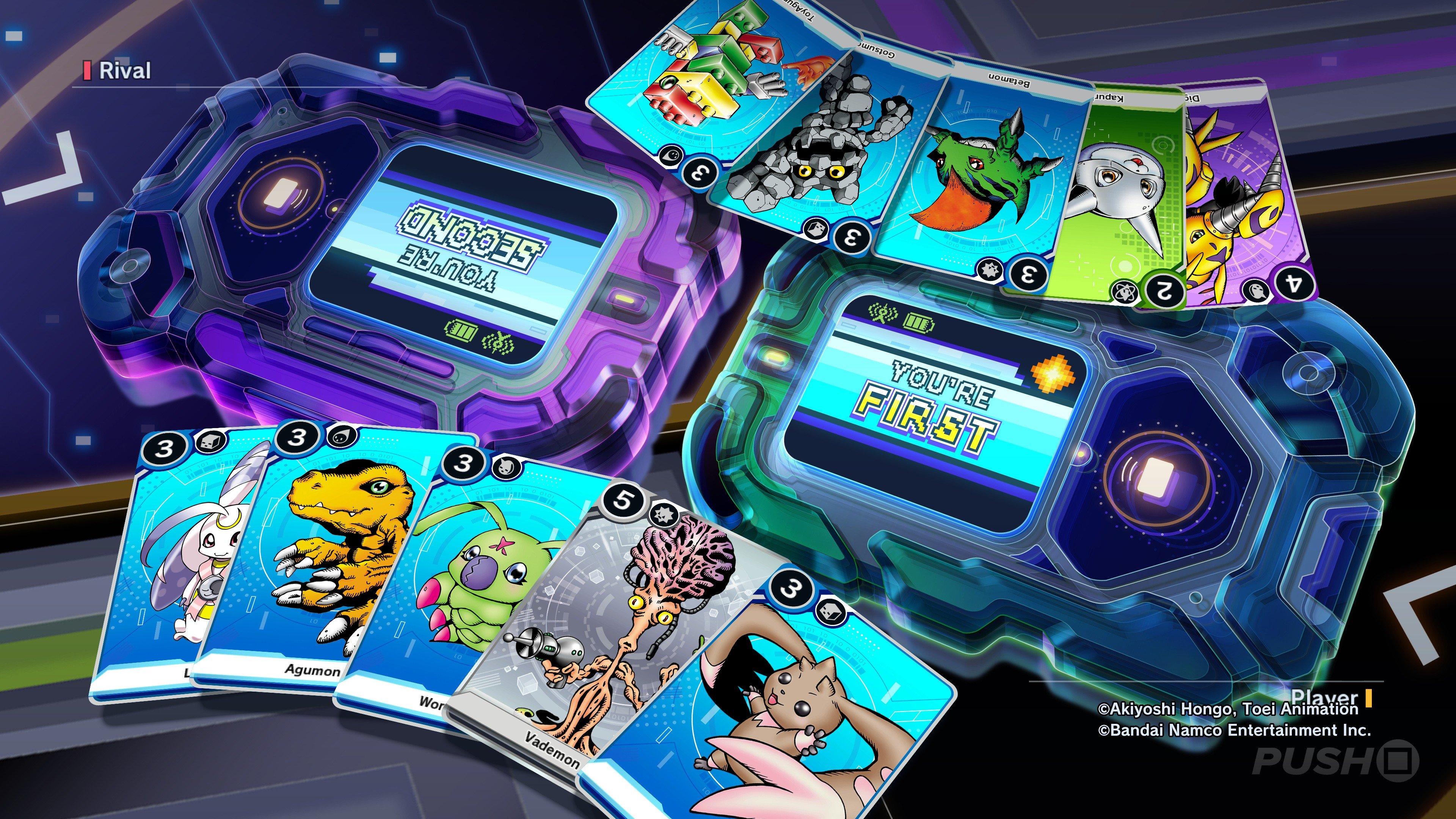
The core of Digimon Story Time Stranger is fantastic.
As is the case with the Digimon Story Cyber Sleuth games, the underlying system of discovering, raising, and evolving your Digimon is where this long-awaited RPG excels.
However, all too often, Time Stranger stands in its own way, sidelining its brilliantly addictive gameplay loop in favour of a linear, story-driven structure that consistently limits your freedom.
You play as an Agent, a specially trained member of a secret organisation that deals with ‘anomalies’. Basically, whenever unexplained phenomena occurs, it’s your job to check it out and report upon the disturbance.
The game opens as you’re investigating one such anomaly in downtown Tokyo, which just happens to have been the site of a sizeable strangeness years earlier. It’s an intriguing intro, and it isn’t long until you’re face to face with the mysterious Digimon themselves.
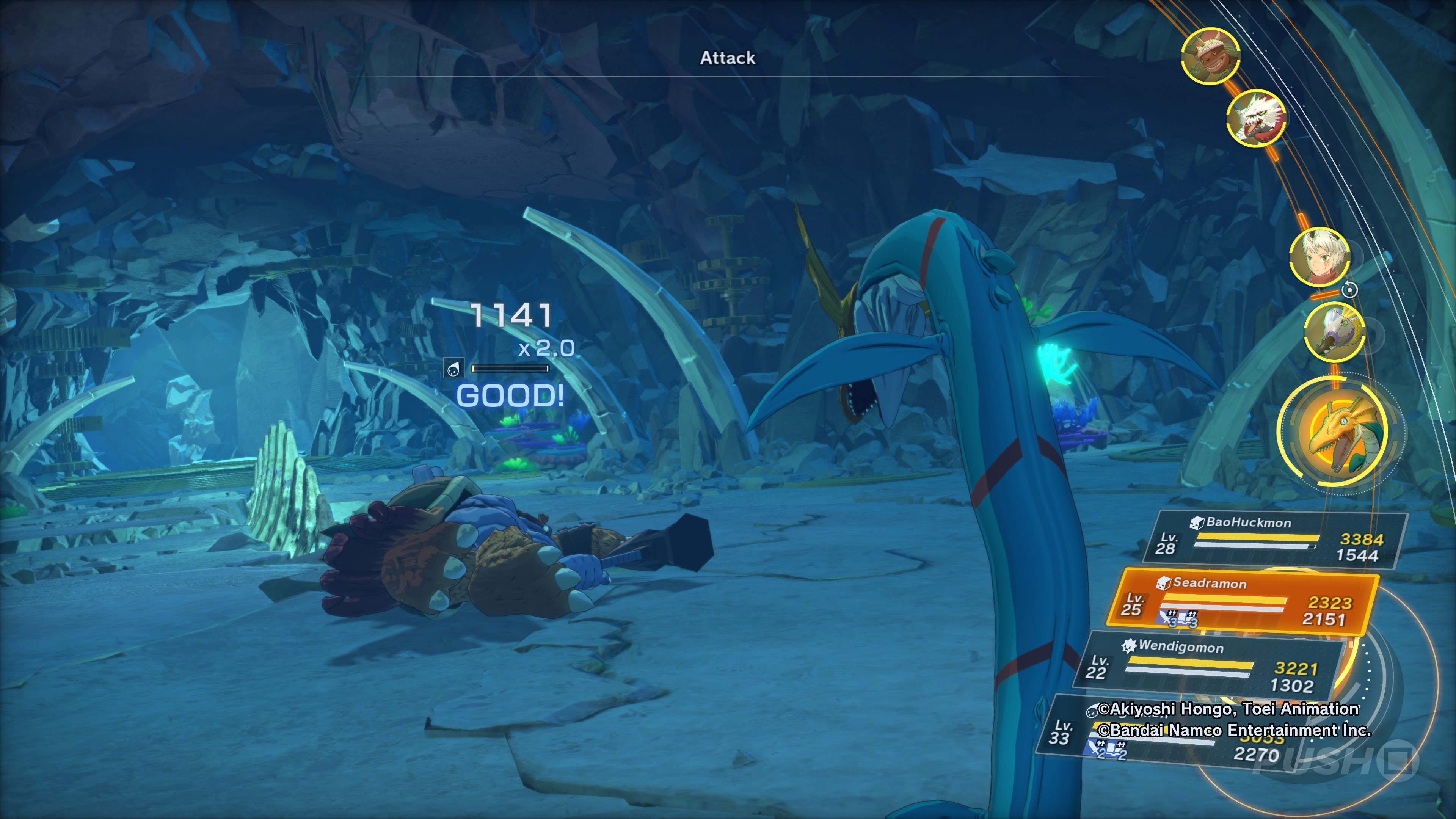
As the name Time Stranger suggests, the plot that follows involves hopping across timelines, pretty much at the mercy of the ongoing anomalies. And while time travel can be a tricky narrative hook to get right, the game does offer up some cool twists and turns — eventually.
Before you even hit the title card, you’ll be subjected to around ten hours of uninspired detective work, as you walk the streets — and sewers — of Tokyo. Predictable story beats and tiresome, poorly presented side quests will have you questioning the game’s intentions.
All the while, you’ll be building up a party of allied Digimon for use in turn-based battles. Again, the desire to simply grind levels and experiment with the powers of your new partners is strong, but beyond a single sewer environment that you revisit way too often, you’re given no room to play around with any of the title’s RPG mechanics.

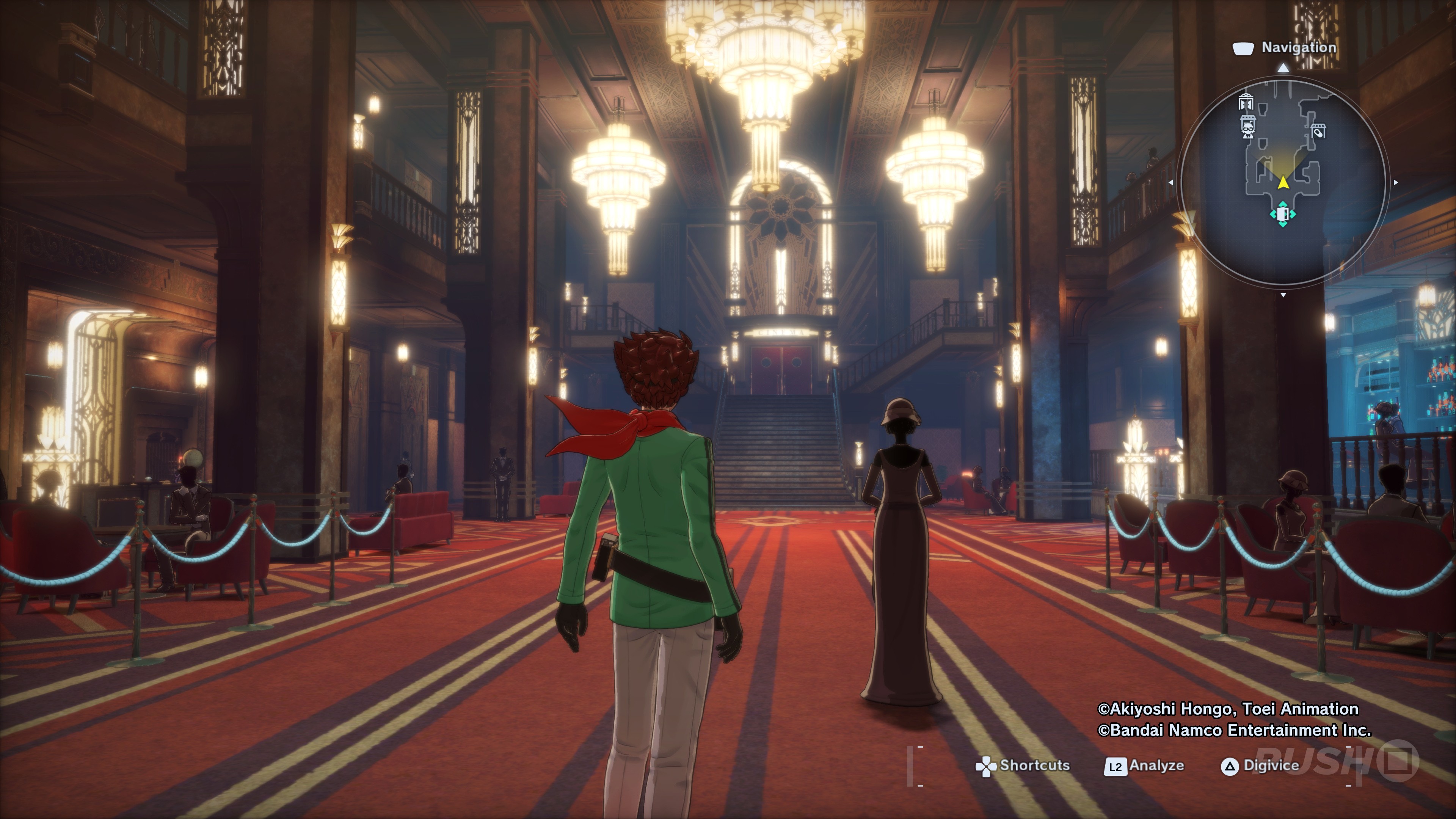
Fortunately, things take a turn for the better once you reach the Digital World. Unlike the game’s repetitive recreation of our own reality, the home of Digimon is wonderfully well realised. These locations are packed with all kinds of creatures and odd architecture, resulting in what is possibly the most convincing depiction of the Digital World in any Digimon game to date.
Arriving in these areas for the first time is a genuine highlight, and Time Stranger finally feels like it’s finding its footing. What’s more, a plethora of new Digimon are introduced, and your party-building potential skyrockets.
Indeed, there are over 450 ‘mon to collect throughout the game, and so your options almost feel endless. But to see even half of these Digimon, you’ll need to take full advantage of Digivolution — that is, levelling up, evolving, and also de-evolving your partners.
There are constant choices to consider. Each ‘mon has its own evolutionary tree, which branches off in loads of different directions depending on the current stats of said monster. And so the grind begins — but it’s an enjoyable grind, thanks to the sheer amount of freedom that the Digivolution system presents.
There’s always something new to discover, and as mentioned, that’s the real joy of Time Stranger.
But the frustration sets in when the game so rarely offers opportunities to actually engage with the aforementioned grind. Stunted, story-driven dungeon design is a huge obstacle here, as running back and forth to reset enemy spawns is an unnecessarily tedious process.
Time Stranger is begging for some kind of randomised dungeon — like Persona 5’s Mementos — where you can really get stuck into the mechanical side of the experience. Instead, you’ve got to make do with a series of short-lived corridors that barely accommodate the growth of your main Digimon party — never mind the hundreds of creatures that you can carry around as back up.

Moving on, the turn-based combat is solid but a bit unspectacular. It revolves around Digimon’s usual rock-paper-scissors weakness system, but depth is added through extra elemental weaknesses, temporary buffs, and status effects.
Naturally, the key is to form a party that covers most bases, across both Digimon types and their available abilities. You’ll need to think about stuff like stat distribution as well, since a highly defensive foe, for example, will be able to shrug off physical damage — and so you’ll need an ally that’s proficient in magic skills to bring it down.
There can be a lot of moving parts to Time Stranger’s battles, and that’s typically why it’s a good idea to raise a small army of Digimon. However, boss fights in particular can be a major sticking point.
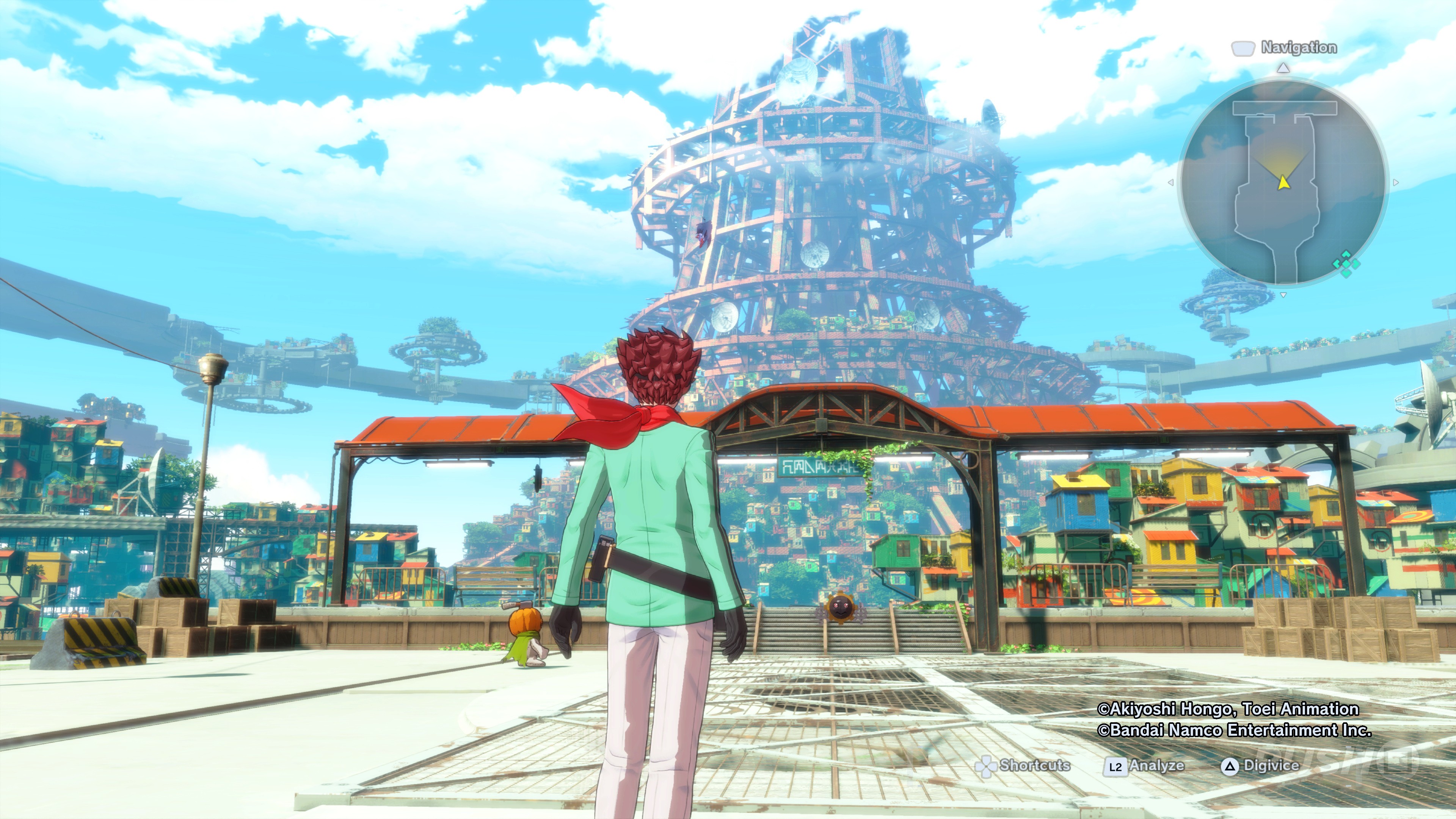
Generally speaking, it feels like bosses have way too much health on the game’s normal difficulty setting. Although unique mechanics do sometimes break these battles down into more manageable phases, they can still seriously test your patience.
The overarching problem here is that if you don’t have a team built specifically to deal with the opponent, then you’re in for a slog of epic proportions. There were numerous times throughout the campaign where we were essentially stonewalled by a boss because we hadn’t brought a very specific type of Digimon with us.
At that point, you’re either burning through healing items in a war of attrition or you’re knocking the difficulty down to easy. Or, you’re loading up an older save so that you can rejig your party — but that’s going to require some grinding, and as we’ve already established, the game’s design is always pushing back against such a notion.
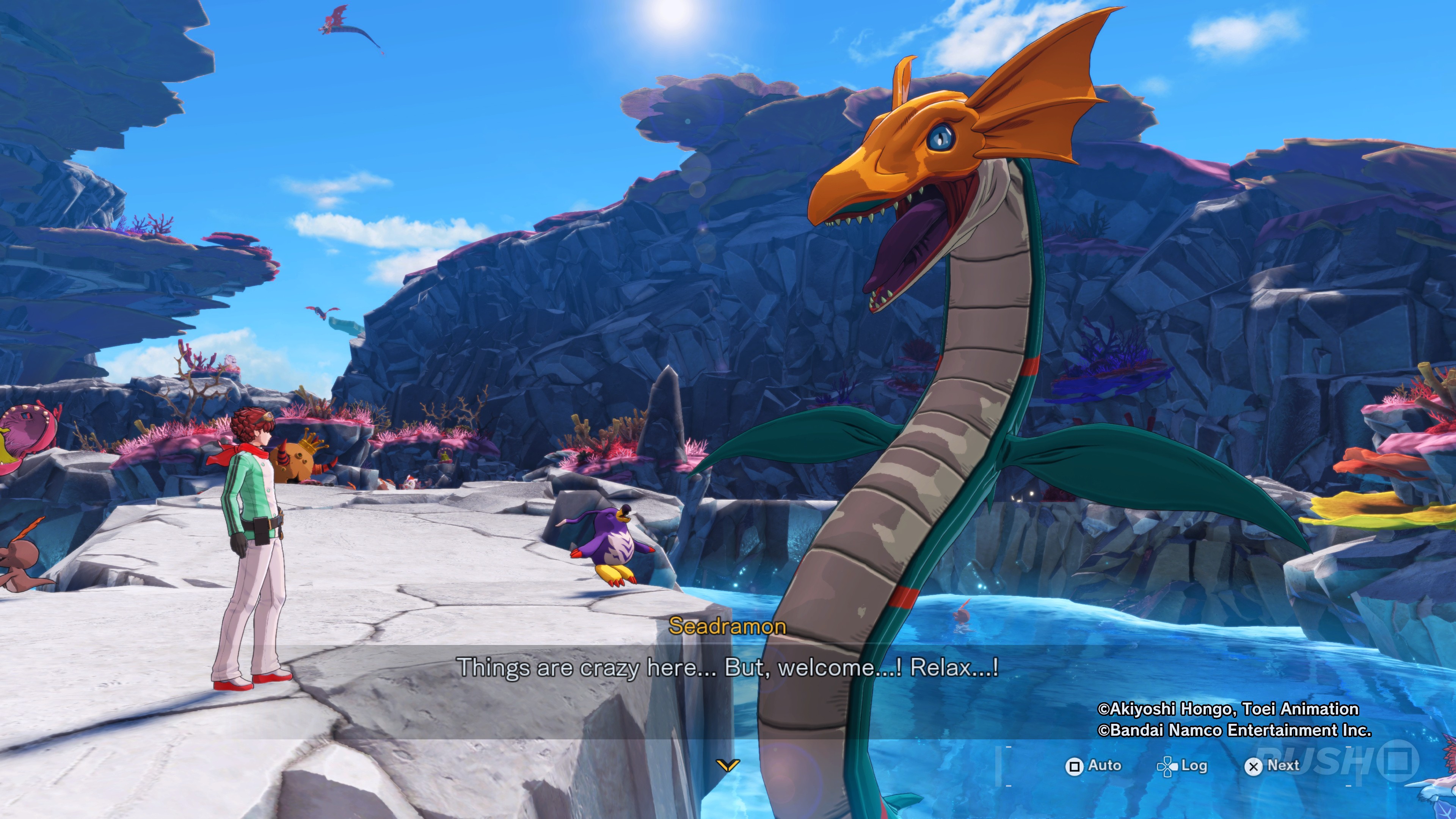
You’re probably thinking that Time Stranger sounds like an absolute chore, but as we’ve touched upon, it does get a lot of things right. It’s just an almighty shame that many of these elements aren’t given the attention that they deserve.
And speaking of deserving things, PS5 players deserve better technical performance. Bafflingly, Time Stranger is capped at just 30 frames-per-second on PS5 and PS5 Pro.
That’s not necessarily a deal breaker given that this is a turn-based RPG, but for some mad reason, additional frame rate drops are abundant. The title struggles to maintain its 30fps target outside of battle, and although performance never completely tanks, the dips make for a disappointingly stutter-ridden adventure.