Having played through the first two episodes of Dispatch for the purposes of this Review in Progress, we can safely say that this interactive adventure has serious potential.
However, with six more episodes in the pipeline — to be released over the next three weeks — we’re a little hesitant to give it our full recommendation.
That’s because we’re not entirely sure how much of a game Dispatch actually is. There are dialogue choices and there are minigames; the rest of the experience is basically just watching an animated TV show.
We won’t know how much your decisions — and minigame skills — really matter until consequences occur in later episodes. And based on just how high quality Dispatch tends to be in terms of production, we find ourselves questioning whether there’s scope for the story to truly deviate.
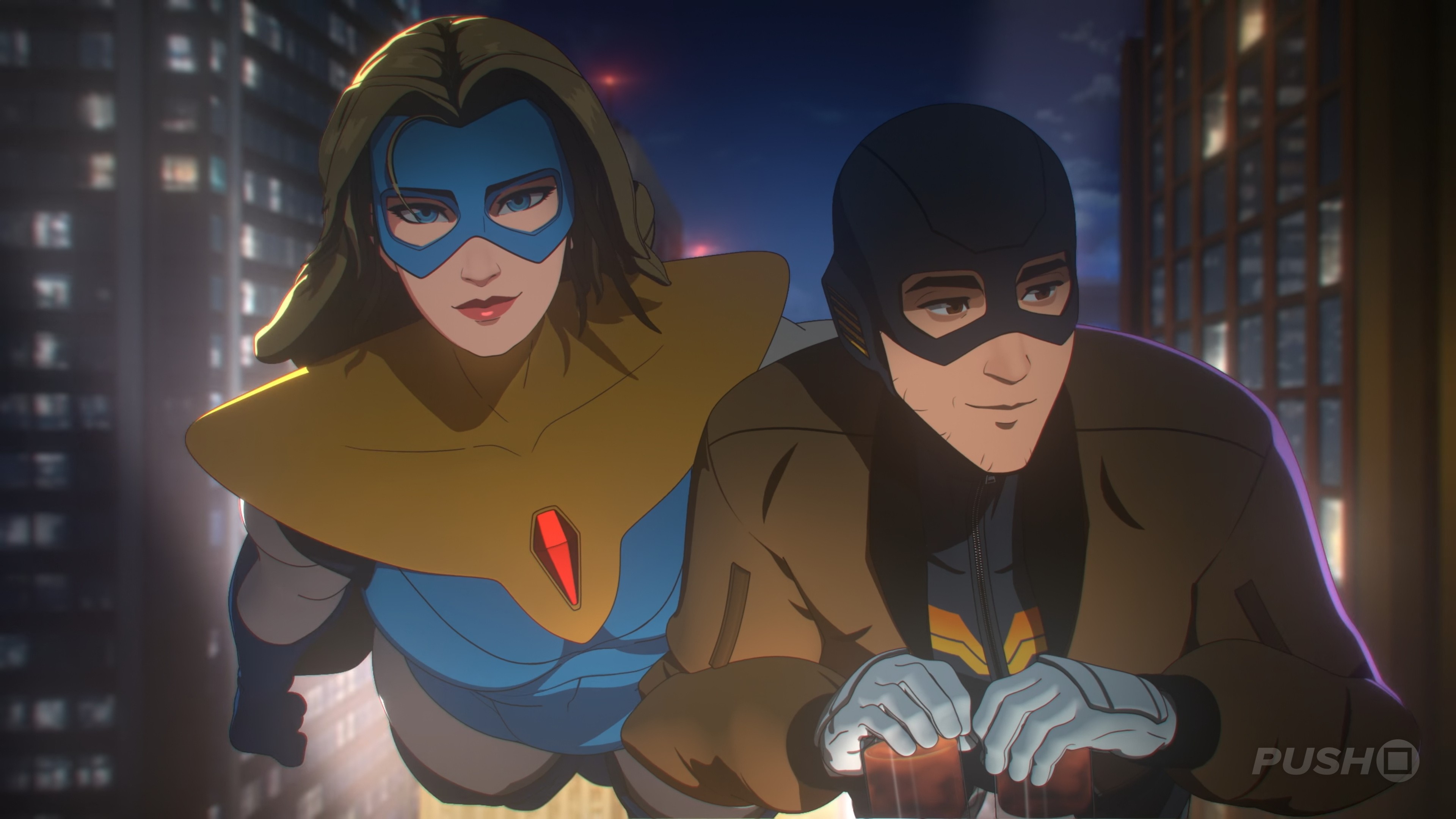
Indeed, Dispatch’s level of presentation is off the charts. It’s expertly animated and effortlessly directed, hitting heights that are usually reserved for big budget projects from major streaming platforms — except you’ve got a say in how scenes progress.
In these initial episodes, your choices during conversations usually boil down to relatively minor changes in the script — but the game does give you those little ‘[Character] will remember that’ messages that The Walking Dead developer Telltale popularised.
Again, we don’t yet know if this feedback holds any genuine weight, but we’re still interested in seeing how Dispatch’s plot progresses.
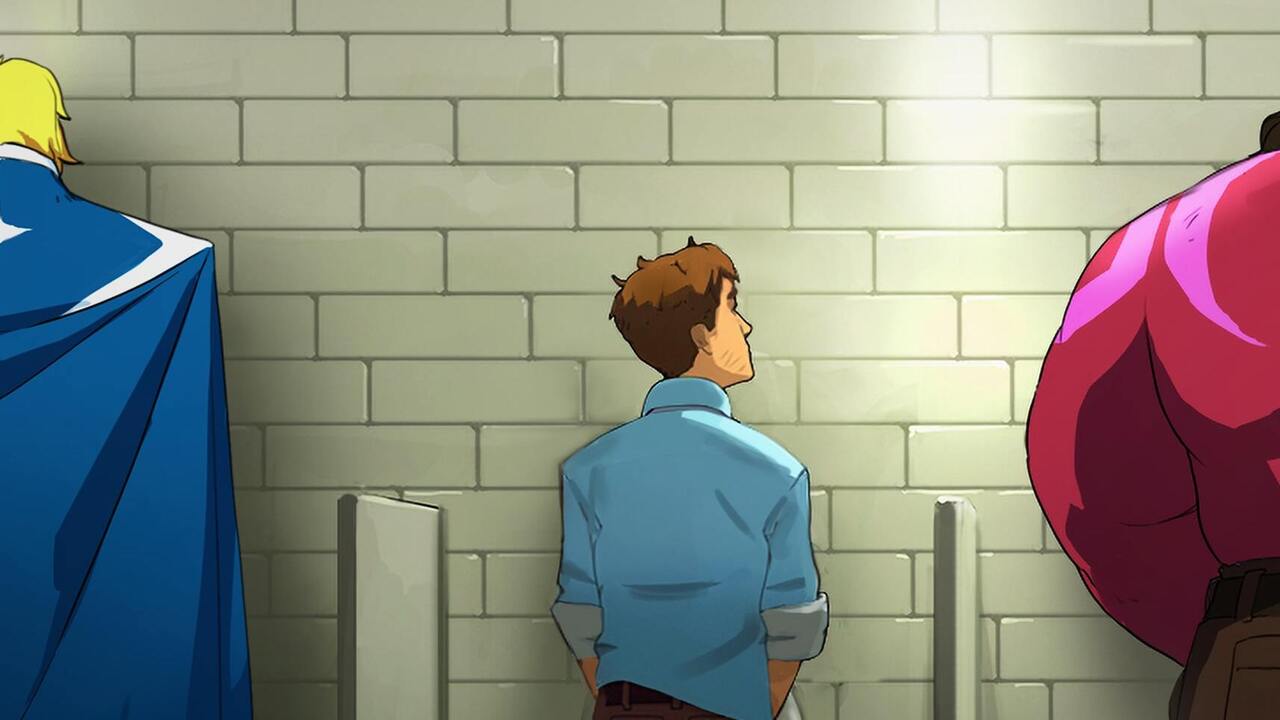
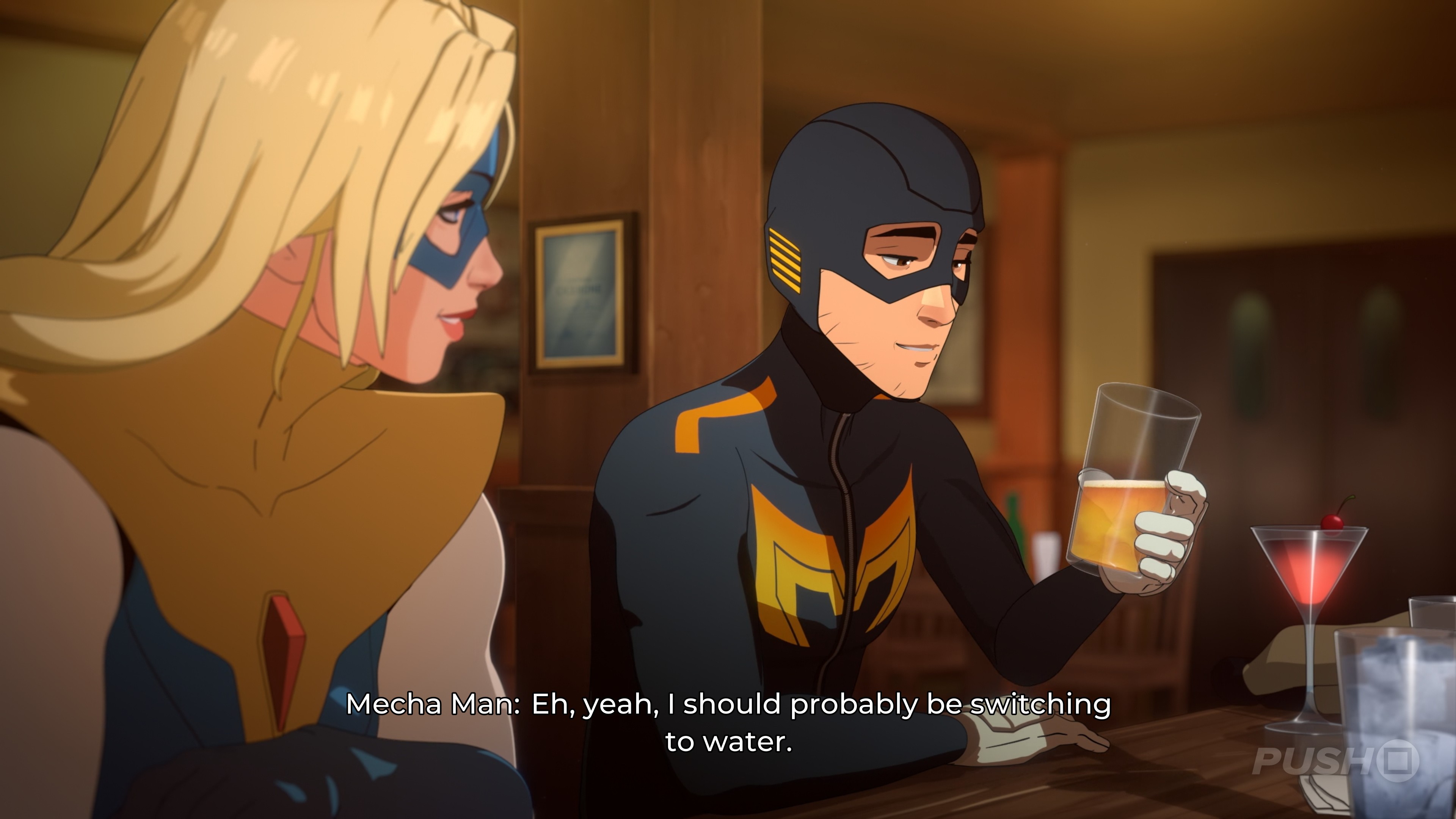
You take on the role of Robert, a down-on-his-luck superhero in a city full of cape-wearing wannabes. Dispatch is a comical, often cynical take on the whole superhero genre, and thanks to some incredibly snappy writing, it works rather well.
Robert ends up striking a deal with the Superhero Dispatch Network, or SDN, which promises to fund his return to stardom in exchange for his help in coordinating a team of dysfunctional ex-villains.
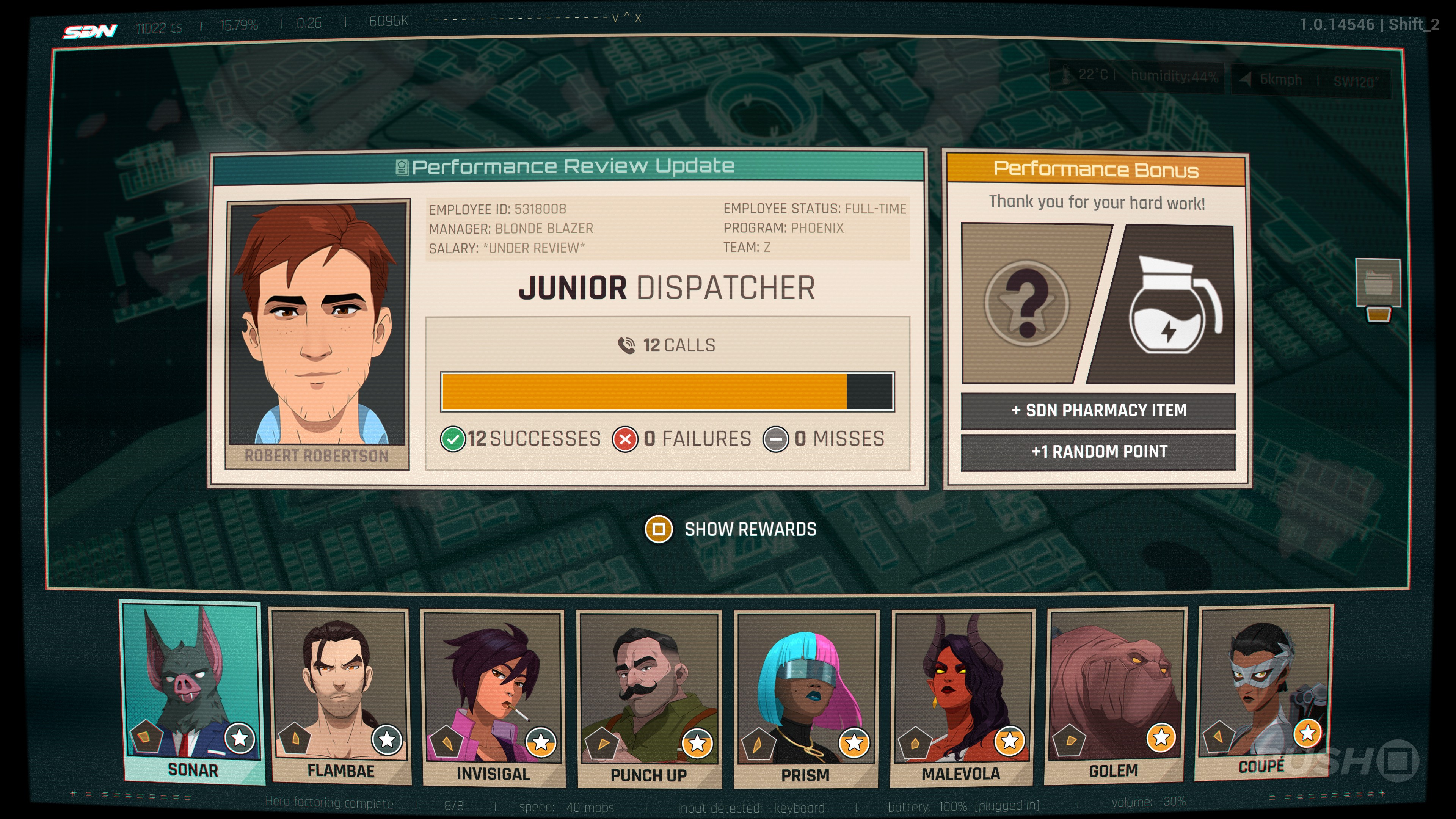
Acting as their operator, Robert dispatches his newfound allies across the city in response to emergency calls from the public — and this is where one of the title’s key gameplay elements is introduced.
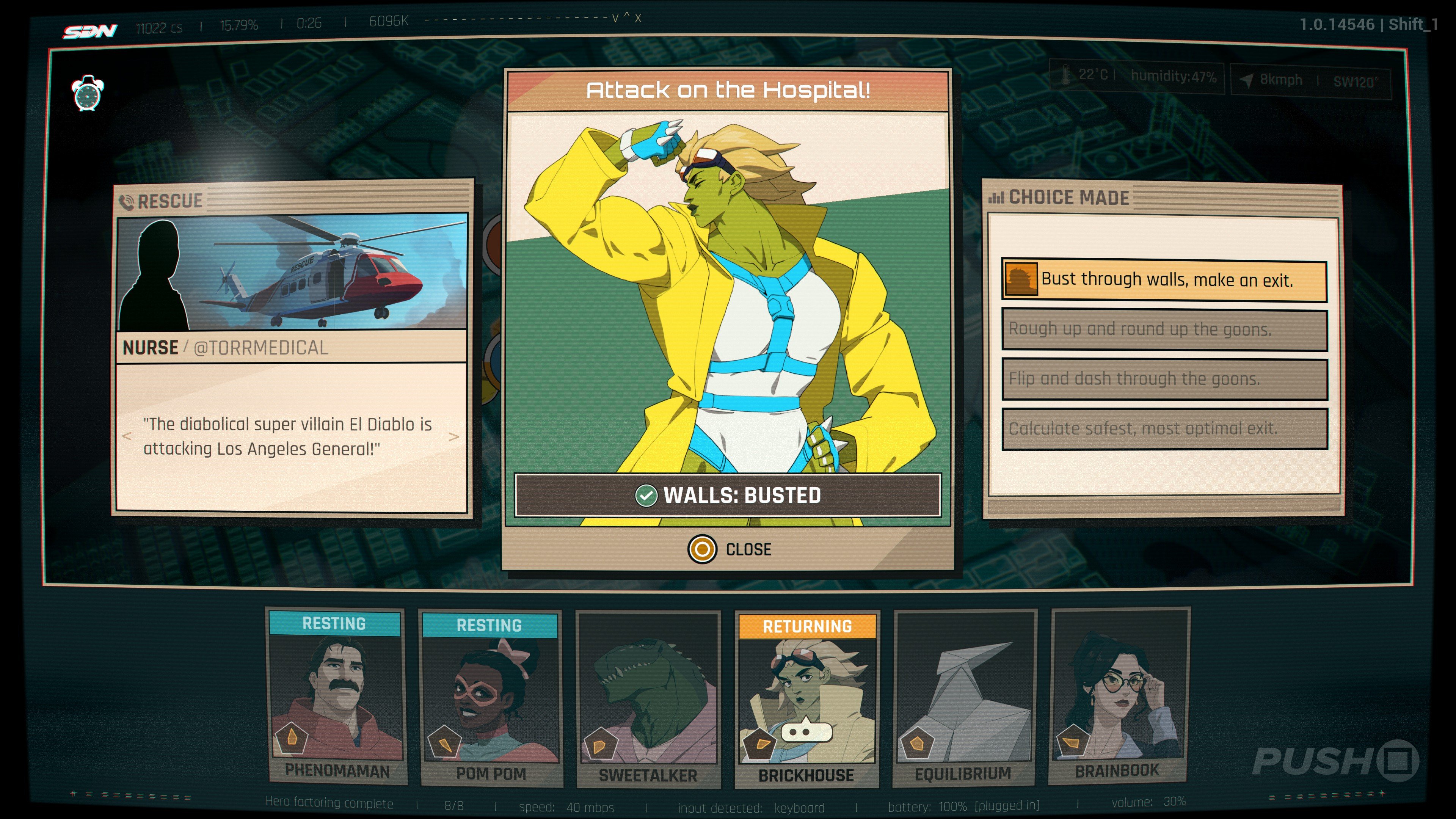
In both of the currently available episodes, there are lengthy sections where you’re tasked with sending members of your team out to a series of missions. It’s all done across a map screen; each mission has a time limit, and your job is to choose the right superhero for the job.
Each of your allies has their own quirks and base stats. Some are great in a fight, while others are perfect for talking their way out of trouble. So, if a mission’s objectives demand someone who’s fast on their feet, you’ll consider the likes of Invisigal — a foulmouthed young woman who excels in covert ops because of her ability to… well, turn invisible.
Go with a superhero who’s suited to the task, and your chance of success skyrockets. However, after finishing a mission, your team members will need to take a rest, and so the real challenge lies in being able to properly manage your roster.
There are some enjoyable wrinkles to the SDN system, too. Your superheroes will gain experience and level up as they complete jobs, allowing you to increase their stats with skill points and eventually unlock additional perks.
To begin with, you may feel as though gawking at the SDN screen kills Dispatch’s momentum — at least from a storytelling perspective. But we can already see this aspect of the release becoming highly addictive, especially as Robert gets to know his team better.
We think these relationships are going to be crucial to the wider game. Outside of a few key characters, the first two episodes don’t give much screentime to our ragtag band of weirdos, but the potential is clear to see.
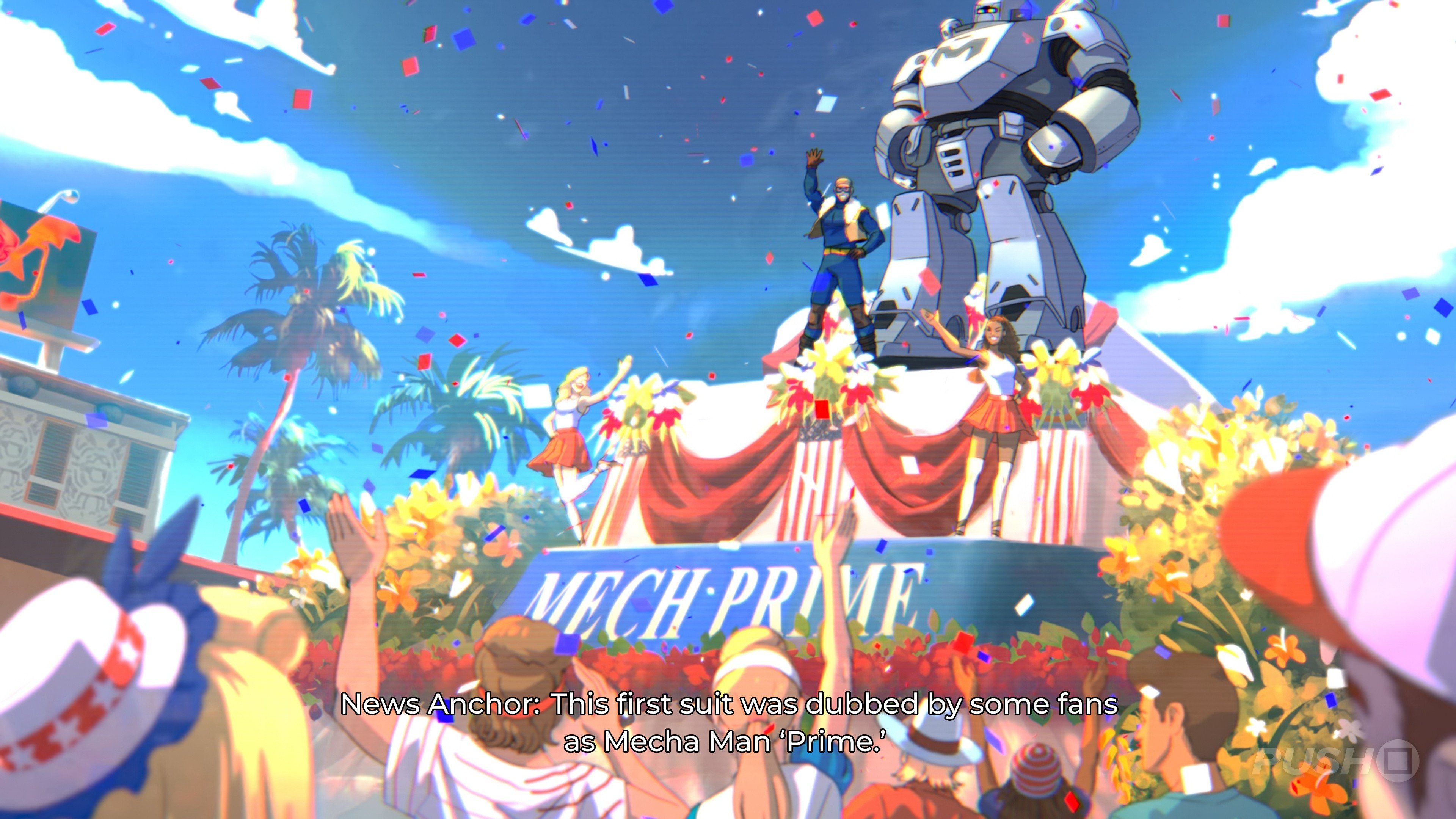
But let’s face it, comedy is such a subjective thing. If you’re not a fan of copious amounts of swearing and constant references to current cultural trends, you’ll probably bounce off Dispatch within a matter of minutes — it won’t matter if the characters strike a chord or not. It’s very American and it’s very quippy, and that certainly won’t be to everyone’s tastes.
Fortunately, we do find that the voice acting saves the script more often than not. There are some cringe-inducing lines here and there that are completely carried by superb voicework. In particular, Breaking Bad’s Aaron Paul keeps Robert nice and grounded, despite the sheer amount of cheese that’s on display.
Conclusion
Dispatch could be something quite special, but it all depends on how much your choices actually matter in the long run. These first two episodes are packed with personality, wit, and flair. The script can be a bit too cute, and the style of comedy won’t appeal to everyone — but we find ourselves eagerly awaiting what’s to come.