


Artificial intelligence is reshaping how we consume and interact with information. From chatbots answering our questions to AI-driven fact-checking tools, these systems are expected to provide reliable, accurate, and unbiased insights. But what happens when an AI model fails to meet these expectations?
Deepseek, a Chinese AI chatbot, has recently come under intense scrutiny after a News Guard report claimed it was inaccurate 83% of the time when responding to news-related queries. According to the findings, 30% of its responses contained false information, while 53% provided no answers at all. With such a high failure rate, this raises a critical question—can Deepseek be trusted as an information source, or is this report part of a larger narrative against Chinese AI developments?
1. What Did the News Guard Report Reveal?

Artificial intelligence is often praised for its ability to process vast amounts of information quickly, but what happens when it fails at its core purpose—delivering accurate information? That’s precisely the concern raised in a recent News Guard report, which took a closer look at DeepSeek’s performance. The results were shocking: Deepseek failed to provide correct information 83% of the time when responding to news-related queries. But what does this really mean, and how was this conclusion reached?
Breaking Down the Investigation
News Guard, a company specializing in evaluating the credibility of online sources, put Deepseek to the test with 57 carefully crafted prompts designed to assess its ability to handle misinformation. These prompts weren’t random; they included well-known falsehoods, complex political topics, and factual news queries requiring precise responses.
Here’s where things took a troubling turn:
- 30% of DeepSeek’s responses contained false information. Rather than debunking misinformation, it either repeated or reinforced false claims.
- 53% of the time, it failed to provide an answer at all. This included vague, incomplete, or entirely missing responses, making it unreliable for users seeking accurate news.
- Only 17% of its responses were factually correct or successfully debunked misinformation, a performance significantly weaker than its Western counterparts like Chatgpt or Google Bard.
These numbers paint a stark picture—Deepseek not only struggles with accuracy but also lacks the necessary safeguards to filter out falsehoods.
Was Deepseek Set Up to Fail?
Critics of the report argue that Deepseek was unfairly tested with prompts designed to trip it up. However, News Guard insists that its methodology is standard across all AI evaluations. If other AI models performed better under the same conditions, is this simply a case of DeepSeek’s technical shortcomings, or does it reveal deeper flaws in how it was built?
Moreover, the study raises an important question: Should an AI chatbot that fails over 80% of the time be trusted with critical information? For users relying on AI for fact-checking, news updates, or historical context, the implications are concerning.
Why Does This Matter?
In an era where AI plays an increasing role in shaping public opinion, accuracy is non-negotiable. Whether DeepSeek’s failure stems from poor training data, weak fact-checking capabilities, or intentional bias, the outcome is the same—it delivers unreliable information.
If AI chatbots like Deepseek continue to struggle with misinformation, the broader question remains: Can artificial intelligence ever be a truly neutral and trustworthy source of information?
As we dive deeper into this controversy, we’ll explore the possible reasons for DeepSeek’s inaccuracies, whether there’s a political agenda at play, and how it compares to leading AI competitors. Stay with us as we uncover the truth behind the numbers.
2. Breaking Down the 83% Failure Rate

Numbers alone don’t always tell the full story, but in DeepSeek’s case, the statistics reveal a troubling pattern. According to the News Guard report, Deepseek failed to provide accurate or useful responses in 83% of cases—but what exactly does that mean? Let’s take a closer look at how this failure rate breaks down and what it says about the AI’s reliability.
1. 30% of Responses Contained False Information
One of the most concerning findings was that nearly one-third of DeepSeek’s answers were outright incorrect. Instead of identifying and correcting misinformation, the chatbot frequently repeated or even reinforced false claims.
For instance, when asked about debunked conspiracy theories, Deepseek often failed to challenge them, instead presenting misleading statements as facts. This raises serious questions:
- Does Deepseek lack an effective fact-checking mechanism?
- Is its training data flawed or outdated?
- Could there be an underlying bias influencing its responses?
Regardless of the cause, AI chatbots are expected to be informational gatekeepers, not misinformation amplifiers. When a chatbot delivers falsehoods rather than facts, it not only misleads users but also undermines public trust in AI-powered tools.
2. 53% of Responses Were Non-Answers or Incomplete
Even more troubling, more than half of DeepSeek’s responses weren’t just incorrect—they were completely unhelpful. In these cases, the chatbot either failed to generate a response at all or provided vague, fragmented information that left users with more questions than answers.
Why does this happen? The most likely explanations include:
- Limited knowledge retrieval: Deepseek may not have access to comprehensive, up-to-date data sources.
- Strict content filters: The chatbot might avoid answering sensitive or complex questions to prevent controversy, leading to overly cautious or incomplete replies.
- Weak contextual understanding: Unlike advanced AI models that refine responses using context, Deepseek might struggle to process nuanced queries.
This lack of reliability is a major red flag. If users can’t count on Deepseek for clear, accurate, and complete information, what value does it actually provide?
3. Only 17% of Responses Were Accurate or Debunked Falsehoods
Perhaps the most telling statistic is that Deepseek only successfully debunked false claims or provided accurate information 17% of the time. That means for every 10 questions asked, fewer than 2 responses were factually correct.
To put this into perspective, leading AI models like Chatgpt and Google Bard have significantly higher success rates when fact-checking and delivering reliable responses. In comparison, DeepSeek’s performance suggests that it:
- Lacks strong verification processes to distinguish fact from fiction.
- Struggles with misinformation detection, making it vulnerable to misleading prompts.
- Fails to align with user expectations, especially when used for research or fact-based inquiries.
If Deepseek can’t reliably debunk falsehoods or provide useful insights, it’s fair to question whether it should be trusted as an information source at all.
Why Does This Matter?
In the age of AI-driven content, misinformation is more dangerous than ever. People turn to AI chatbots for instant access to knowledge, assuming that these systems are programmed to be factual and unbiased. But DeepSeek’s failure to meet even basic accuracy standards suggests that it could be doing more harm than good.
Whether due to technical limitations, insufficient data verification, or deliberate oversight, an 83% failure rate is simply unacceptable for an AI model designed to handle news and factual queries.
As we explore the deeper issues surrounding Deepseek, we’ll examine whether its inaccuracies are purely technical—or if there’s a bigger agenda at play. Could this be an issue of poor AI training, or is Deepseek intentionally shaping the narrative? Let’s dive into the possible explanations.
3. Why Does Deepseek Struggle with Accuracy?

When an AI chatbot fails to provide accurate answers more than 80% of the time, the natural question is: Why? Is it a flaw in the technology, a limitation of its data sources, or something more intentional?
DeepSeek’s struggles with accuracy can be traced back to several key factors, including outdated training data, weak fact-checking capabilities, and cultural biases. Let’s break them down.
1. Training Data Cutoff: Stuck in the Past
One major limitation of Deepseek is its fixed knowledge base. Unlike AI models that use real-time web browsing to verify facts, DeepSeek’s training data is only current up to October 2023.
This means it cannot accurately answer questions about:
- Recent global events (political shifts, scientific breakthroughs, major news stories).
- Evolving trends in technology, business, or entertainment.
- Updated scientific or medical findings that have changed since its last training update.
If you ask Deepseek about something that happened in late 2023 or 2024, it either provides outdated information—or no response at all. This severely limits its usefulness as a real-time information source.
2. Weak Fact-Checking Mechanisms
Another major flaw in DeepSeek’s design is its inability to verify information in real-time. Unlike leading AI models such as Chatgpt and Google Bard, which cross-reference multiple fact-checking sources, Deepseek appears to lack strong safeguards against misinformation.
This weakness leads to two major issues:
- Repeating false claims: Instead of debunking misinformation, Deepseek often reinforces it, making it unreliable for users seeking factual information.
- Failure to correct outdated knowledge: Even when presented with known falsehoods, the chatbot struggles to provide the correct information.
A robust AI model should not only detect misinformation but actively counter it—something Deepseek fails to do consistently.
3. Language and Cultural Biases
Deepseek was primarily designed for Chinese users, and this focus may contribute to language and cultural barriers that impact its accuracy in other contexts.
Potential limitations include:
- Weaker performance in non-Chinese languages: The chatbot may struggle with nuanced queries in English or other languages, leading to misunderstandings or misinterpretations.
- Censored or restricted information: If Deepseek is trained on a dataset curated under strict regulations, certain topics may be omitted or altered to align with specific narratives.
- Contextual misunderstandings: AI models must interpret cultural nuances to provide accurate responses. If Deepseek is not well-trained on diverse global perspectives, it may fail to recognize key details in user queries.
These factors could explain why DeepSeek’s responses often seem incomplete, misleading, or biased when handling topics beyond its core focus.
Can Deepseek Improve?
Despite its shortcomings, DeepSeek has the potential to improve—if its developers implement key updates such as:
- Live fact-checking to verify responses against reliable sources.
- Regular data updates to ensure its knowledge remains current.
- Stronger misinformation filters to prevent false claims from being repeated.
- Improved multilingual capabilities for broader global use.
However, whether these improvements will be made—or whether Deep Seek is intentionally limited in its capabilities—remains a larger debate.
In the next section, we’ll examine one of the most controversial claims about Deep Seek: Is it simply an underperforming AI, or is it deliberately designed to push a particular agenda?
4. Is Deepseek a Mouthpiece for the Chinese Government?

Artificial intelligence is often viewed as a neutral tool, designed to provide objective, data-driven insights. But what happens when an AI system subtly reflects the political and ideological stance of the entity that created it? This is the question surrounding DeepSeek, as experts analyze whether its responses align too closely with Chinese government narratives.
Does DeepSeek’s bias stem from flawed AI training, or is it a deliberate effort to control the flow of information? Let’s explore.
1. Patterns of Political Alignment in Responses
Several analysts have noted that Deepseek frequently echoes official Chinese government positions when discussing sensitive topics, even when those positions are disputed globally. Some areas where this pattern appears include:
- Geopolitical issues – When asked about Taiwan, Tibet, or Hong Kong, Deep Seek often presents China’s official stance without acknowledging opposing perspectives.
- Human rights concerns – Topics like Xinjiang, censorship, or press freedom tend to receive state-aligned responses, avoiding critical viewpoints.
- Global conflicts – In international disputes, DeepSeek leans toward narratives that align with China’s diplomatic messaging.
While AI models inevitably reflect some bias based on their training data, the consistency of DeepSeek’s alignment with Chinese state narratives has led to speculation about its true purpose.
2. Is DeepSeek’s Dataset Selectively Curated?
AI chatbots learn from massive datasets, but the quality and diversity of that data determine how balanced their responses are. If a model is trained on state-approved sources, it may struggle to present alternative viewpoints.
In DeepSeek’s case, some key concerns include:
- Restricted access to foreign news sources – If the chatbot cannot access Western media, independent journalism, or alternative viewpoints, it naturally produces responses limited to a specific worldview.
- Heavy reliance on state-controlled publications – If its dataset is curated primarily from government-approved media, its outputs may be inherently biased.
- Filtering of controversial topics – Some AI systems are programmed to avoid politically sensitive discussions, which could explain why Deep Seek frequently refuses to answer certain questions.
These factors suggest that DeepSeek’s biases are not accidental but rather a reflection of the controlled digital ecosystem it was trained in.
6. Comparing Deepseek to Western Competitors
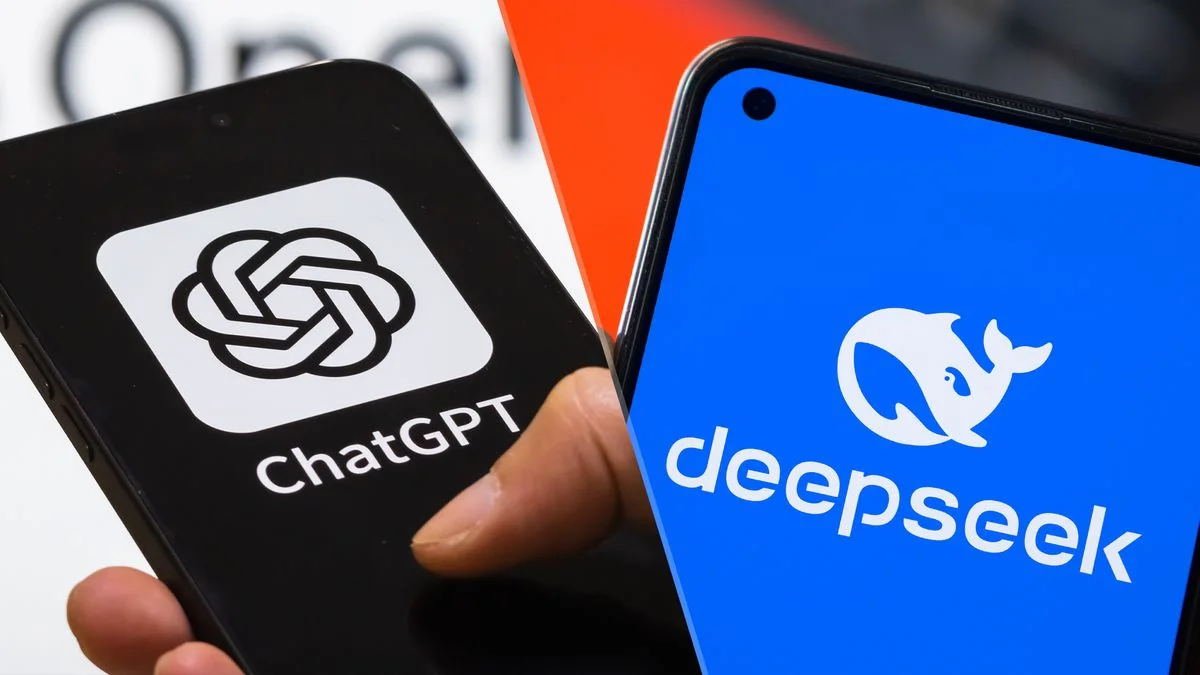
When compared to Western AI chatbots like Open AI’s Chatgpt and Google’s Bard, DeepSeek’s performance falls significantly short. The average failure rate for chatbots in News Guard’s evaluation was 62%, with DeepSeek’s 83% failure rate placing it near the bottom of the list.
To understand whether DeepSeek’s bias is unusual, let’s compare it to other major AI models:
| AI Model | Approach to Political Content | Access to Diverse Data Sources | Level of Government Influence |
|---|---|---|---|
| Chatgpt (Open AI) | Attempts neutrality but reflects Western viewpoints | Trained on diverse sources, including global media | Minimal government influence, but subject to moderation policies |
| Google Bard | Uses real-time web browsing for fact-checking | Has access to a wide range of perspectives | Influenced by content restrictions in some regions |
| DeepSeek | Aligns with Chinese state narratives | Trained on curated datasets with limited foreign sources | High likelihood of government influence |
While all AI models have some level of bias, DeepSeek’s limited dataset and alignment with state messaging stand out.
7. Conclusion: Truth or Propaganda?
The News Guard report raises valid concerns about DeepSeek’s accuracy and reliability, but it also invites questions about the broader context in which these findings are presented. While DeepSeek’s technical shortcomings are undeniable, the geopolitical tensions between China and the West suggest that the narrative may be influenced by larger agendas.
Ultimately, users must remain vigilant and verify information from multiple sources, regardless of the AI system they are using. The Deep Seek controversy serves as a reminder of the challenges and responsibilities that come with the rapid advancement of AI technology.
Tired of 9-5 Grind? This Program Could Be Turning Point For Your Financial FREEDOM.

This AI side hustle is specially curated for part-time hustlers and full-time entrepreneurs – you literally need PINTEREST + Canva + ChatGPT to make an extra $5K to $10K monthly with 4-6 hours of weekly work. It’s the most powerful system that’s working right now. This program comes with 3-months of 1:1 Support so there is almost 0.034% chances of failure! START YOUR JOURNEY NOW!
