


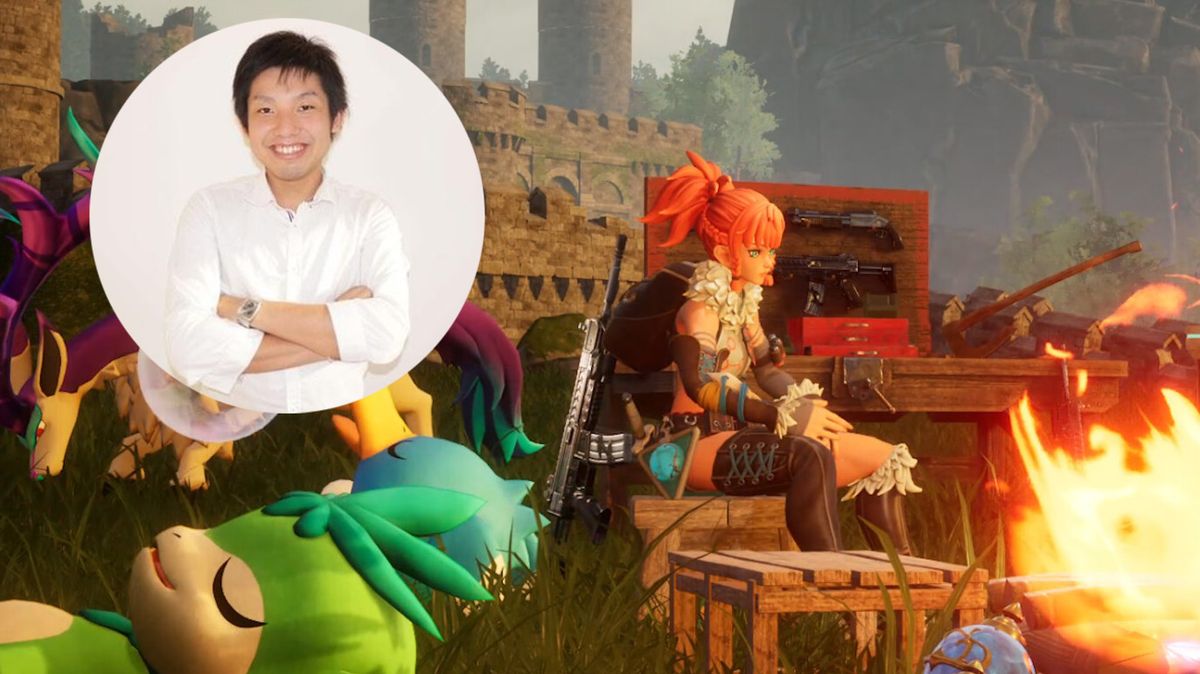
You could make a convincing argument that Steam sensation Palworld shouldn’t exist, but you don’t have to—the game’s creator has already made that argument himself. Not because it’s controversial, though it is that—the bizarre mash-up of sandbox survival and perverse reimagining of catching ‘em all has been accused of copying Pokémon models and using AI art. Even PETA provided a statement to Insider Gaming regarding players’ ability to devour their Pals after using them for hard labor (unsurprisingly, the group doesn’t seem thrilled by the idea.)
But before all that, a few days prior to launch, the head of Palworld developer Pocketpair wrote a lengthy blog post about everything that went wrong during its extremely unmethodical development. From the lack of a concrete budget to a completely inexperienced team, the game’s completion and successful launch are mind-boggling.
I translated the most surprising anecdotes from Pocketpair CEO / Palworld producer Takuro Mizobe, who called Palworld’s creation “the antithesis of proper game development.”
Palworld had no budget and the producer still doesn’t know exactly how much it cost to make
“No sane company would start developing a game without a budget,” Takuro Mizobe said. “But Pocketpair is not a sane company.”
Before the small Tokyo-based developer began work on Palworld in earnest, it first spent three months developing a trailer. “If the response to the trailer was poor, it wouldn’t be worth making the game in the first place. That’s why we didn’t even bother making a budget to start.
Initially, I intended to make Palworld in one year. I didn’t have any intention to make a major title, and I had no desire to spend years working on the same thing. But with only 10 of us on the team to start, I began to realize how impossible that would be.
“So I started asking myself—what’s the budget? When the balance in our bank account reached zero, we could always just borrow money or release money just before the company went bankrupt. We had about two years of runway. I decided to just keep working without stressing about the budget because all I was worried about was getting it done as fast as possible.”
No one on the team knew how to animate characters
Although Palworld introduces over 100 unique monsters, or Pals, developers lacked the skills they needed to animate them, with many having no experience in 3D modeling:
“I casually started designing Parlworld as a 3D monster collecting action game. Then I realized that it took me an entire month to make just one 3D model alone. When we worked on Craftopia, we’d just purchased pre-made assets. We had never designed our own before.
“As more Pals came to be, I realized with horror that the skeletons for each monster were totally different. They all needed around 20 unique animations, things like walking, running, jumping, attacking…the industry average time it takes to animate a single motion is one day. One hundred monsters times 20 animations equals 2,000 days of work. We only realized this about six months into development.
“A staffing agency set us up with a veteran motion designer named Ryohei Adachi. The first day he came in, he saw that we hadn’t even done any rigging. (I didn’t even know what game rigging was at that point.) Creating animations for 100 unique monsters without rigging would be like building a pyramid without using heavy machinery. It just wasn’t possible, he told us. Adachi was really the one who completed Palworld. He was the only veteran we had on the team.”
All code had to be scrapped when the company switched from Unity to Unreal Engine 4—and no one on the team had any UE4 experience
Unreal Engine has surged in popularity in recent years thanks to lowered royalties and is broadly considered a better choice for 3D games and advanced graphics than Unity. This led the team at Pocketpair to make the leap to Unreal Engine 4 following the development of Palworld’s first trailer. But migrating from one engine to another isn’t simple, and the vast majority of what had been developed had to be rebuilt from scratch.
“The only things that we could salvage were the 3D models. But even then, we couldn’t use most of the assets we had bought.”
Just before releasing the first Palworld trailer, Mizobe received an email from a freelance engineer named Hiroto Matsutani completely out of the blue. Boasting 10 years of experience, the team decided to take a chance on a stranger.
“We took a chance and hired him. After that, we brought on five more engineers to work on the project, but none of them had UE experience. I let Matsutani train them, and he did an incredible job.
“This is just another miracle that led to Palworld becoming reality.”
The dev team turned down their future star artist when she first applied to the company

The woman behind Palworld’s creature designs didn’t make it through the vetting process when first applying to work for the company. While Mizobe liked her portfolio, he worried that she wasn’t a good fit based on the uniqueness of her designs.
“I thought, if she comes to work with us, she won’t be able to make the most of her talents, so I rejected her. Three months later, she sent me a DM. I was amazed that she would be so bold after I had rejected her so recently, so I read her messages. In the end, I hired her, and she drew the majority of Palworld’s characters.
“She had applied to nearly 100 companies and been rejected by all of them. She’s a genius, if I can use that word. She draws ridiculously fast, she makes corrections instantly, and she’s current on what’s popular abroad. I can’t imagine what we would have done without her.”
Palworld is an amalgamation of happy accidents and pure luck. The fates aligned to see this eccentric game brought into existence, and although it’s already sold seven million copies in five days, more polish during early access might see another few million drawn into this wacky world of base building, animal cruelty, and black market deals.
