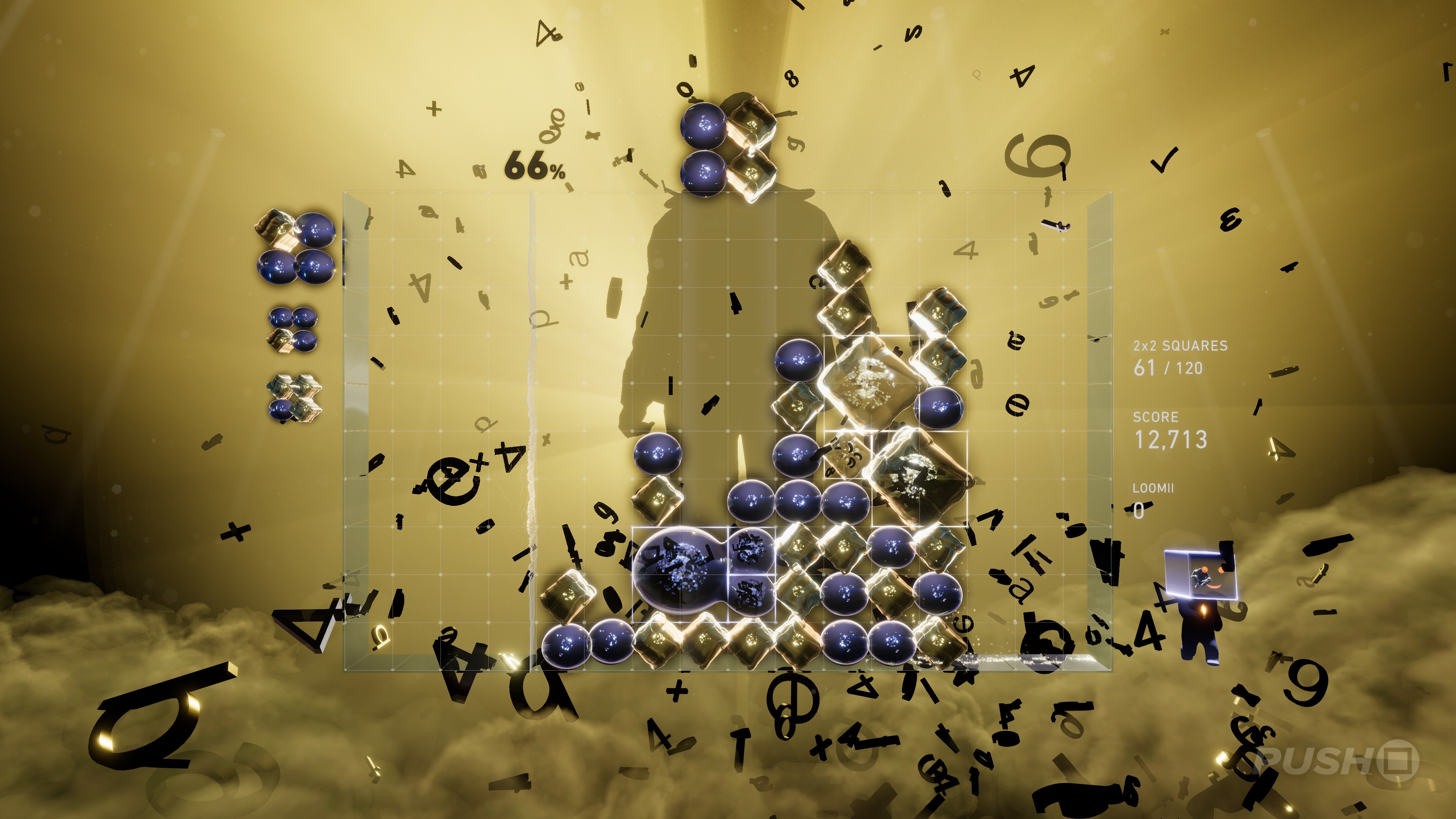
In many ways, Lumines Arise represents the series reclaiming its own legacy.
Tetris Effect is fantastic, of course, but its fancy lights and catchy music can be traced all the way back to 2004, when the original Lumines gave the PSP a puzzle game to rival the timeless classic.
Lumines Arise, then, adopts a similar style and flow to Tetris Effect, but it feels right at home here, the game’s core design fitting perfectly with the emphasis on light, colour, and sound.
Developers Enhance and Monstars not only pull off the same trick, they do so to even greater success, with stunning visuals and an excellent soundtrack combining to create the best realisation of what Lumines has always strived to be.
The focal point of this musical puzzler is Journey mode, which will be very familiar to any Tetris Effect fans.
It’s here that you’ll play through several sets of stages, each one of them providing a unique look and vibe as you drop blocks into the grid.
Whether it’s the stuff going on in the background or the blocks themselves, each stage contributes an entirely different energy.
You’ll be watching astronauts dancing in zero gravity, slicing up fruit and vegetables, raving with chameleons, riding train tracks at full speed, and so much more.
With more elaborate scenes and visual flair than Tetris Effect, Enhance has outdone itself — the presentation is excellent, and playing through Journey is every bit as enjoyable here as in its spiritual predecessor.
If anything, there are rare occasions where the visual stimulus can be a tad too much, but fortunately, the game features many accessibility options that allow you to tune the experience, reducing the effects and animations for less potent, more straightforward presentation.
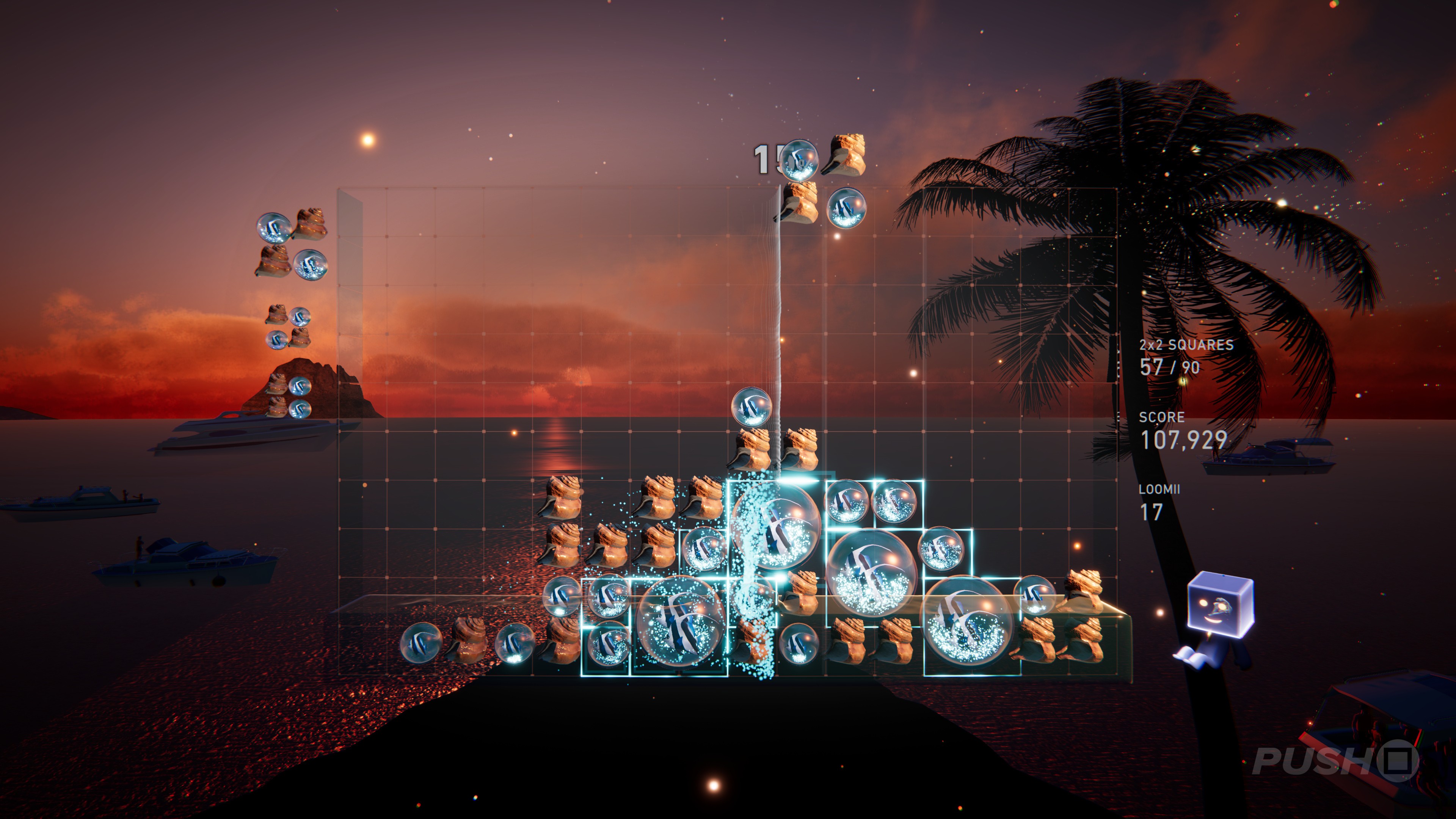
For those that don’t know, Lumines is all about forming 2×2 squares with matching colours or patterns, which are then cleared away when the timeline passes over them.
The timeline is synced up to the tempo of whatever music is playing at the time, meaning every stage has a different speed and intensity dictated by the soundtrack.
Just like Tetris, the fundamentals are easy to understand, but there’s a high skill ceiling that means dedicated players can utilise advanced techniques, and make the most of incremental combo multipliers and building larger shapes with well-positioned drops.
The new Burst mechanic is a great addition that literally levels the playing field. Once you’ve built up enough Burst, represented as a percentage above the timeline, you can trigger it, temporarily stoping matched squares from being cleared.

What this does is allow you to build a huge, screen-filling Burst combo of a single colour, with the opposing blocks flying above the grid. Once your Burst is cleared, all those floating blocks fall back down, creating another massive combo.
Not only does it score you a lot of points, it’s very effective in clearing the grid if you’re running out of room. It’s incredibly satisfying.
Anybody intimidated by learning a new puzzle game needn’t worry, because Lumines Arise has a seriously robust list of training modules in Missions mode.
Beyond the basic tutorial, there are dozens of lessons that teach you how to stack blocks efficiently to get the most from each scenario. It’s about as comprehensive as you could hope for.
Once you’ve cleared Journey mode, you unlock Survival mode and Challenges.

The former tasks you with playing through every Journey stage with no breaks. This is similar to what’s known as the Basic Challenge in past Lumines titles, and represents a pretty stern test of skill; keeping things going for 36 stages is a tall order.
The latter is located in Missions, and gives you a big list of entirely different ways to play.
For example, Growth starts you off with three-quarter blocks, and over time the block shape grows larger and larger. Hatch has you clearing squares adjacent to an egg in order to break it open.
To the Beat is a challenge where blocks fall right on the beat of the music, whereas Chains focuses on using chain blocks to carve paths through the playfield.
Much like the Effect modes in Tetris Effect, there are so many inventive Challenges here, each giving you a fresh way to engage with the core mechanics. It’s quite comfortably the most complete set of single player features ever compiled for Lumines.

On top of all that, though, is the multiplayer hub, which contains even more stuff to do.
The headline multiplayer mode is Burst Battle, a one-on-one competitive mode in which clearing squares and building combos will send garbage blocks to your opponent. You can use the Burst mechanic as both an offensive and defensive manoeuvre.
Relying on skill-based matchmaking to pit you against similarly ranked players, you’re getting a decent match more often than not. It’s easily the best multiplayer option Lumines has had to date.
You don’t have to play ranked, either. You can create custom rooms where you can play locally, invite friends for private games, or compete against the AI.
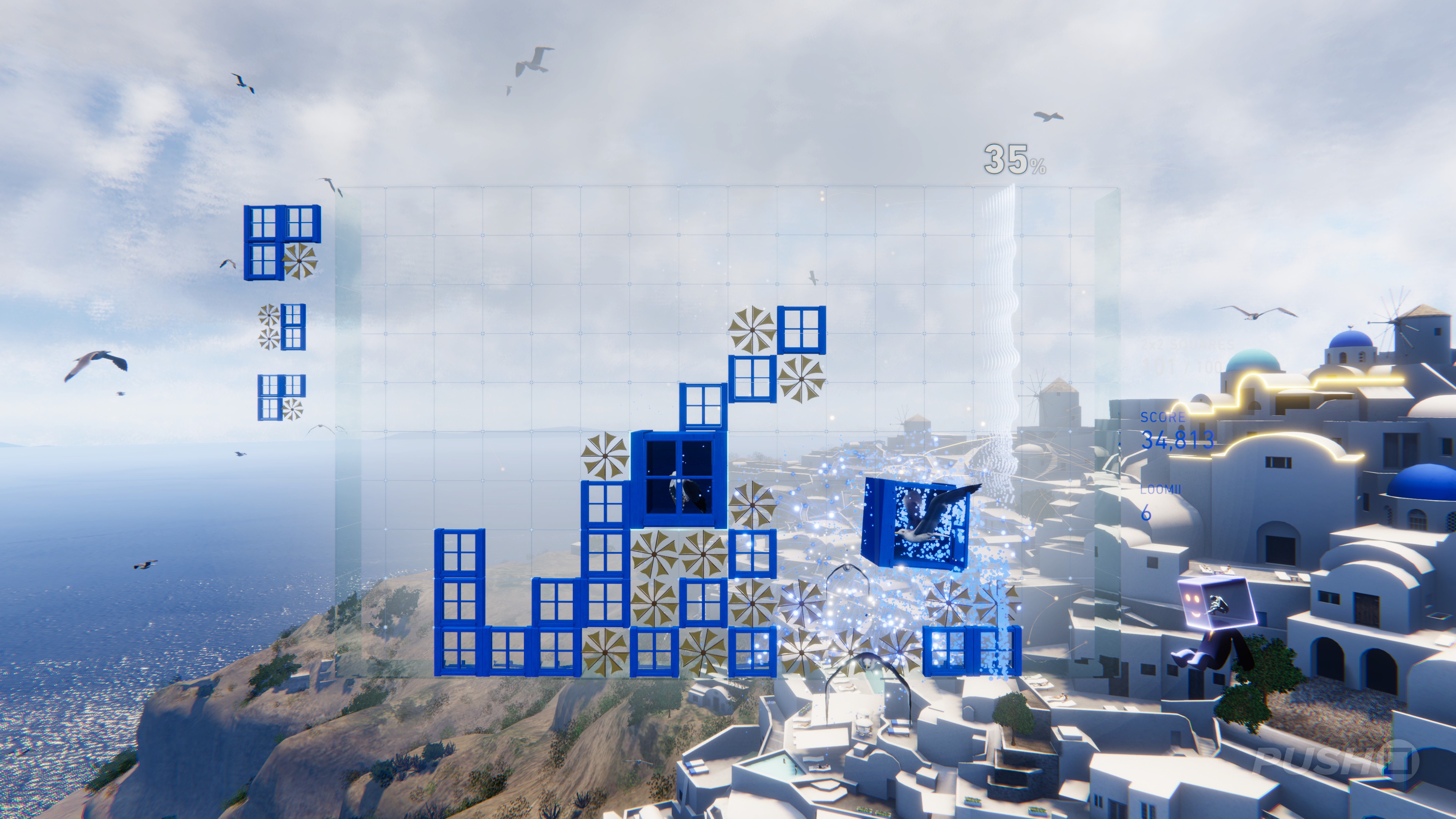
The multiplayer hub is also home to Leaderboard League, which houses yet more modes: Time Attack and Dig Down.
The former is a Lumines staple, challenging you to clear as many squares as possible within certain time limits. It’s a great challenge, and a decent way to practice playing at speed.
Dig Down is a new spin on an old mode that turns it into a battle for survival. As you clear the playfield, the speed gradually increases and a new row of blocks will spawn at the very bottom. Desperately fighting to keep some open space on the playfield is fast-paced, intense, and fun.
The icing on the cake is full PSVR2 support, and it’s typically great stuff from Enhance. Playing in virtual reality is a different experience, because the 3D, animated backdrops of each stage really come into their own, adding scale and depth that isn’t possible on a TV screen.
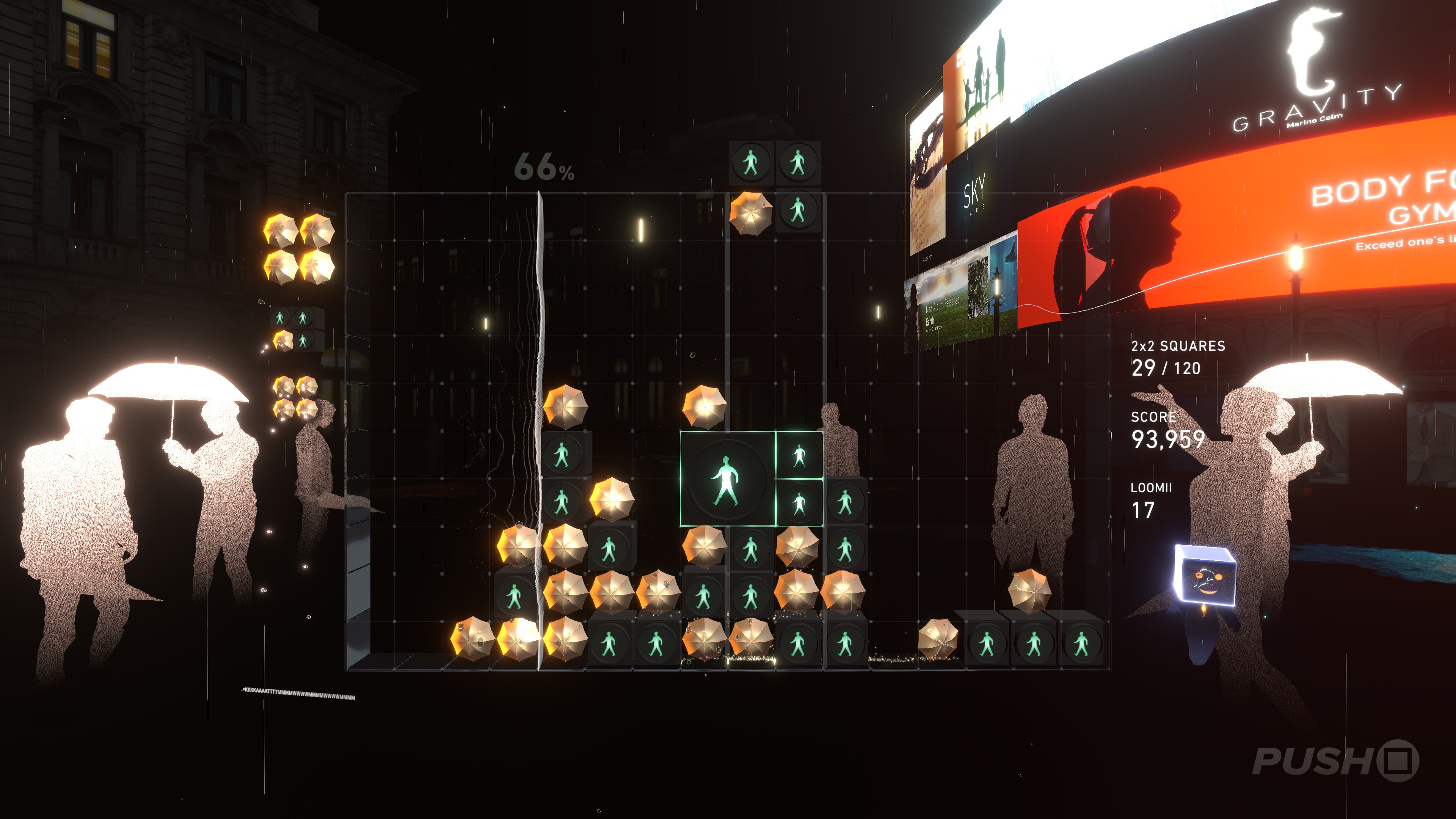
If you have PSVR2 available to you, it’s absolutely worth playing through Journey mode and really losing yourself in the sights and sounds. We’d recommend playing with a DualSense over the PSVR2 Sense controllers, though; this is a game best played with access to a d-pad.
It’s difficult to find fault with the game, frankly, though there are one or two small things to consider.
Firstly, it came as somewhat of a surprise to learn it doesn’t support HDR.
A game so rich with colour and contrast seems built for the technology, so it’s a small disappointment it couldn’t be implemented. It’s still a wonderfully vibrant game without HDR, however, so we aren’t too worried about it.
Secondly, the game’s frame rate is deliciously smooth, running at 60 frames-per-second 99 per cent of the time. There are some rare drops, though, and in our experience, they come when a Burst is complete and the board fills with a ton of blocks.

It’s infrequent and is only there for a split second, but it stands out in a game that’s otherwise very well optimised.