


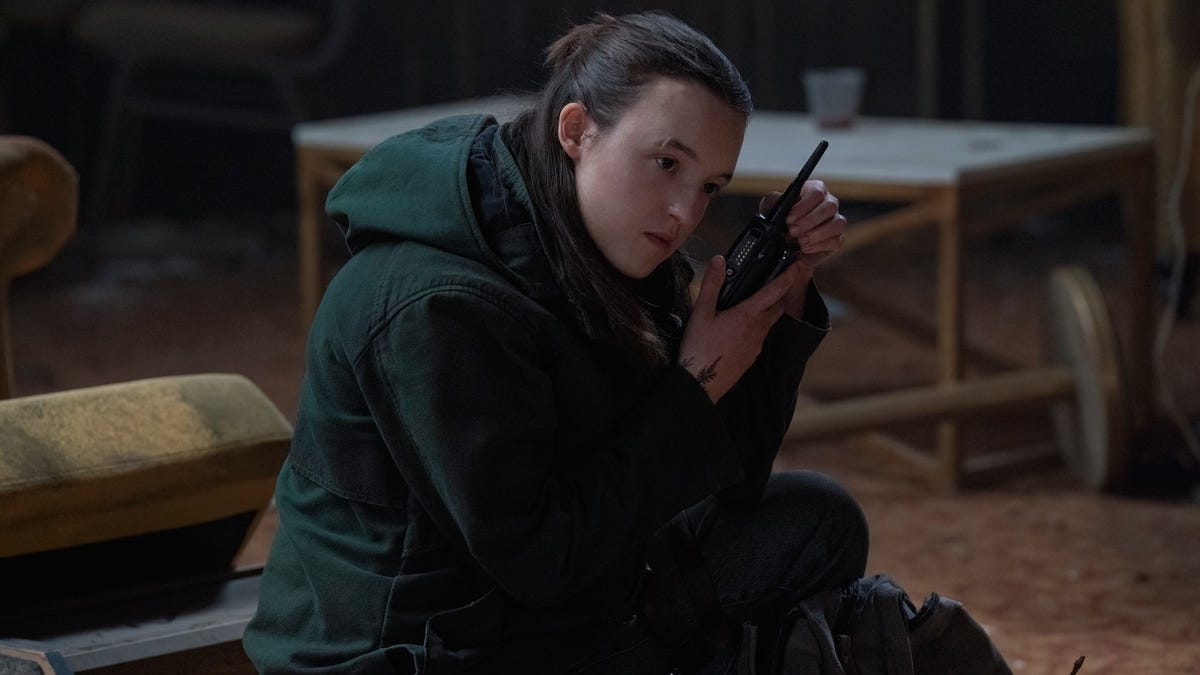
We made it, everybody. We’ve reached the end of HBO’s The Last of Us. Wait, sorry, I’m getting word in my earpiece that…we’re only halfway done with it because this show’s going for four seasons. At this point, I’m mostly feeling deflated. Last week’s episode was such a catastrophic bummer that it cemented for me that the show fundamentally misunderstands The Last of Us Part II, the game this season and those that are still yet to come are adapting. But you know how your mother would tell you not to play ball in the house because you might accidentally break the priceless vase on display in the living room? Well, if you’ve already broken the vase, you might as well keep playing ball, so we’ll probably be doing this song and dance into 2029. For now, we’re on the season two finale, which essentially wraps up Ellie’s side of this condensed revenge story and reveals the premise of season three. Most game fans probably assumed this was where the season would end and, if nothing else, it’s still a bold cliffhanger to leave off on.
Guilty as charged
After last week’s flashback-heavy episode, we open on Jesse (Young Mazino) tending to wounds the Seraphites have inflicted on Dina (Isabela Merced), which means we get a real heinous scene of him doing some amateur surgeon’s work to remove the arrow she took to the knee. He douses it in alcohol and offers her a sip to dull the pain, but she staunchly refuses without explaining why. They made Jesse an asshole in this show, but he’s still a smart guy. The gears start turning in his head about why she might turn down a swig right now. Nevertheless, he takes that motherfucker out with no anesthetic, booze, or supportive bedside girlfriend to help Dina through it.
Speaking of the absent girlfriend, Ellie (Bella Ramsey) finally returns to their theater base of operations. Now that she’s back, all her concern is on Dina, but Jesse is still wondering where the hell she’s been this whole time. Dina is resting backstage, and even though we only see these details for a few minutes, I once again want to shout out the set designers who recreated this little safe haven, which is covered in old show posters and graffiti from bands and artists that performed there before the cordyceps took over. I’m sure Joel would have loved to have seen it.
Dina stirs awake and Ellie checks her wound. Jesse’s effort to wrap the injury leaves a lot to be desired, but it should heal in time. Ellie asks if the baby’s alright, and Dina says it’s okay.
“How do you know?” Ellie asks.
“I just do,” Dina replies.
The one who is not okay in the room is Ellie, who is bleeding through the back of her shirt. Dina helps her undress and starts to clean the scratches on her back. As she does, she asks what happened while they were separated. Ellie says she found Nora (Tati Gabrielle), and she knew where Abby (Kaitlyn Dever) was, but only said two words: “Whale” and “Wheel.” Ellie says she doesn’t know what it meant. It could have been nonsense. She was infected, and it was already starting to affect her cognitive state.
“I made her talk,” Ellie whispers. “I thought it would be harder to do, but it wasn’t. It was easy. I just kept hurting her.”
Dina asks if Ellie killed her, but she says she just “left her,” meaning that somewhere in this timeline, Nora is wandering the depths of a Seattle hospital with broken legs and an infected mind. I thought the show couldn’t possibly concoct a worse fate for her than what happens in the game, but they found a way. It takes commitment to put down a character like showrunners Craig Mazin and Neil Druckmann have done for Nora across both video games and television. Personally, I think when you already know that people are wary of the way you treat one of the few Black women in your franchise as if she doesn’t deserve the same dignity as everyone else, maybe you should do better by her when given a second chance, rather than worse. But that’s just me. I’m not the one being paid a bunch of money to butcher this story on HBO Max every Sunday at 9 p.m. Eastern. So what do I know?
Maybe this is just part of the contrived sadism the show has attached to Ellie. She thinks violence is easy and it comes naturally to her, so I guess she would beat a woman nearly to death until the fungal infection made her lose her mind. Meanwhile the game version is so traumatized by what she’s done in this moment, she’s practically speechless by the time she reaches the theater. God, I knew this shit was going to happen. Mazin has repeatedly insisted that Ellie is an inherently violent individual, something he’s communicated both in interviews and by having Catherine O’Hara’s Gail, the therapist who tells you what the story is about, say that she’s always been a sadist, probably. Now, when we get to moments like the post-Nora debrief which used to convey that Ellie is Not Cut Out For This Shit, the framing instead becomes “Ellie likes violence and feels bad about how much she likes violence.”
Before The Last of Us Part II came out, a lot of Naughty Dog’s promotion for the game was kind of vague and even deceptive in an effort to keep its biggest twists under wraps, and some of the messaging it used to talk about the game’s themes have irrevocably set a precedent for how the game’s story is talked about years later. When the game was first revealed in 2016, the studio said the story would be “about hate,” which paints a much more destructive and myopic picture of Ellie’s journey than the one driven by love and grief she actually experiences through the course of the game.
One of the most annoying things about being a Last of Us fan is that its creators love to talk about the series in ways that erase its emotional complexity, making it sound more cynical and underhanded when the actual story it’s telling is anything but. I can’t count how many times I’ve heard people reductively parroting notions that The Last of Us Part II is just about “hate” and “guilting the player” for taking part in horrifying actions when they literally have no choice but to do so, rather than cracking the text open and dissecting that nuance. Mazin’s openly-expressed belief that Ellie is an intrinsically bloodthirsty person similarly bleeds into how a lot of the public perceives her as a character, seeing her as a violent ruffian rather than a grieving daughter who was only ever taught to express her pain by inflicting it on those who made her feel it in the first place. Discussing these games as a fan means having to fight against these notions, but they’re born from a game built on subtext, and thus willingly opens itself to those interpretations.
Its willingness to dwell in ambiguity only makes it a more fascinating text to unpack, or it would, if we lived in a world where discussing video games wasn’t a volatile experience in which you constantly run the risk of being targeted for performative online dunks, or running up against rabid console tribalism. Now, the Last of Us show has decided to lean into the most boring interpretation of what this story is about without an ounce of subtlety, nuance, or even sympathy for Ellie’s plight. She is a sadist who does terrible things not simply because she’s grieving her father figure, but because this is just who she is. Mazin has deemed it so, and here we are, and this vision of her will no doubt weave itself into the fabric of how we talk about Ellie Williams, even in the game.
This story only has any thematic weight if Ellie’s violent outbursts are rooted in pain, not pleasure. Yeah, what we’re seeing in the show is her acting from a mix of those things but, in the game at least, the most affecting moments of Ellie’s Seattle revenge tour happen when she has to confront how she is not built for acts of violent excess in the same way Joel was. She never has been. Back in Part I, she was sick to her stomach when she committed her first kill to save Joel, and the entire point of Part II was that we see her cut off parts of herself to do what she feels she must, only to find that she’s unable to recognize herself when it’s all over. In the show, she is instead mesmerized by carnage, only to decide she doesn’t like that she feels that way, actually. But all this self-reflection is fleeting, because she’s only killed one person on her list, and there’s a lot more work to do. How many Joels is Nora’s life worth to Ellie? One-fifth?
While Ellie is wrestling with these feelings, Dina is about to see things with more clarity than ever. At first, she says that Nora may have deserved this fate worse than death, to which Ellie says “Maybe she didn’t,” before telling her girlfriend everything. She tearfully recounts Joel’s massacre of the Fireflies at the base in Salt Lake City, how the group was going to use her immunity to create a cure, and how Joel killed Abby’s father to save her. Dina puts it all together and asks Ellie if she knew who Abby’s group was. She says she didn’t, but she did know what Joel did. Dina sits with that for a moment, then flatly says the group needs to go home.
So I guess this is how the show gets Dina, who’s been pretty revenge-hungry thus far, back onto the track she’s on in the games. Without spoiling scenes in the late game for the uninitiated, some major points of conflict at the end of Part II require her to be less on-board with Ellie’s vendetta, so the fact that she’s been egging her girlfriend on to track down Abby was an odd choice. I wasn’t sure how the show would handle it down the line, but it seems the way HBO’s show has course-corrected was by having her condemn Joel’s actions. Dina had her own relationship with the old man in the show, so I imagine that in a later season she’ll interrogate how she feels about him in light of this new information, but having her more or less get off the ride when she learns what Joel has done sets up a contrast between her and Ellie that I’m curious to see how the show handles.
The shame of it, though, is that this is just one more thing that undermines one of the core foundations of the source material, and I have to get at least one more jab in on this topic before we end the season. In The Last of Us Part II, when you look at what is actually expressed in dialogue, you see that characters are often lacking important information about each other. This lack of communication is an important part of its storytelling, but the show is instead having characters tell everyone everything. In Part II, Joel and Ellie don’t know who Abby’s father was. It’s strongly implied that no one other than Joel, Ellie, and Tommy knew about what happened in Salt Lake City, not even Dina. The more the show bridges these gaps of communication, the more senseless this entire tit-for-tat feels. To be clear, it was senseless in the game, but it was in a tragic, “these people are so blinded by their emotions that they can’t fathom another path forward” sort of way. This time around, everyone knows exactly what’s happening and chooses to partake in violence anyway. We don’t have any mystery or lack of communication to fall back on as a we struggle to understand why the characters keep making these self-destructive decisions. Everyone is just knowingly the worst version of themselves this time around, and I guess Mazin thinks that’s the point, which is the kind of boring interpretation that makes the show such an inferior version of this story.
Family matters
We now begin our third day in Seattle. Ellie and Jesse are packing up to get going in the theater lobby. The plan is to find Tommy (Gabriel Luna) somewhere in the city and then head back to Jackson. However, Jesse is a lot less talkative this morning. Dina limps into the lobby, and after a brief scolding for being on her feet, she gives Ellie a bracelet for good luck.
“I’m not sure it’s been working for you,” Ellie jokes.
“I’m alive,” Dina replies.
Jesse is clearly uncomfortable watching his ex (or are they technically still together now? I’m not sure) give Ellie a prized possession, and says he can go alone if Dina wants Ellie to stay. Ellie says they’ll be safer together. Jesse relents and says they should be back by sundown. The tension is radiating off him, but the pair leaves Dina in the safety of the theater.
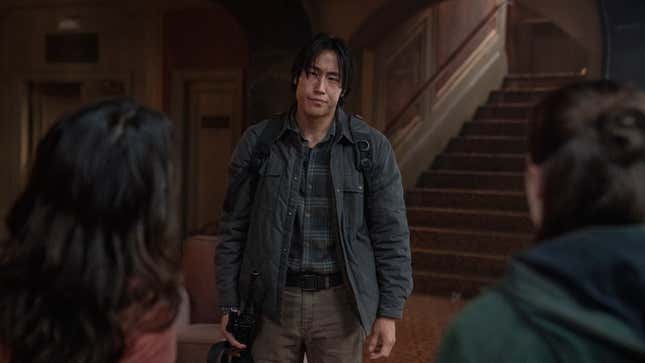
Ellie and Jesse awkwardly walk through the remains of Seattle. She finally breaks the silence by asking how he found Ellie and Dina’s theater base. He recounts his two days of tracking, giving a shoutout to the horse Shimmer who’s still vibing in the record store the girls left her at, but he’s clearly pissed. Ellie assumes it’s because he and Tommy had to cross state lines to come find them, but no, there’s something else on his mind. Why do Ellie and Dina look at each other differently? Why did Dina turn down a free drink for the first time in her life? He’s putting it all together. Dina and Ellie are no longer just gals being pals, and his (now ex?) girlfriend is pregnant.
“None of this has to change things between us,” Ellie says.
“Everything changing doesn’t have to change things?” Jesse asks. “Well, how about this for something new: I’m gonna be a father, which means I can’t die. But because of you, we’re stuck in a warzone. So how about we skip the apologies and just go find Tommy so I can get us and my kid the fuck out of Seattle?”
Wow, okay. Judgey, much? I mean, you’re right, Jesse. This is a no good, very bad situation, and Ellie has put your kid in danger and won’t even tell you she was torturing a woman last night. But god, I miss kindhearted Jesse. I miss Ellie’s golden retriever best friend who, when finding out Dina was pregnant, firmly but gently told Ellie it was time to get the fuck out of Seattle. Now that the show has created a messy cheating love triangle out of these three, I’m once again reflecting on how The Last of Us Part II could have very easily made this storyline a dramatic, angry one, and instead it was one of the brighter spots in a dark tale. Meanwhile, in the show, the whole thing feels like it’s regressed to a rote and predictable earlier draft of the story that’s much less refreshing and compelling than the one we already know. Justice for Jesse. This is character assassination of the goodest boy in all of Jackson. Well, actually, that’s Abby’s job. Sorry, sorry. That’s actually not for another 35 minutes.
As the two move further into the city, they see more art praising the Seraphite prophet on the buildings, but she looks notably different than in images we’ve seen previously. This art depicts a Black woman, whereas others have typically portrayed the prophet as white. Ellie wonders aloud if there’s “more than one of her.” Jesse says it’s possible, but ushers her forward as rain starts pouring down. I’m curious what the show might be doing here, as this is a divergence from Part II. Could the Seraphites be a kind of polytheistic group in the show that follows multiple prophets? Could they believe the Prophet was reincarnated into a different woman at some point? All we can do is theorize, but we haven’t seen much of the Seraphites this season so we don’t have much to go on. Which is by design, and feels pretty in-line with Part II, which didn’t tell you much about the group during Ellie’s three days in Seattle. We’ll pick this thread back up next season, I’m sure.
The pair takes shelter but before they can catch their breath, they hear the popping sound of gunfire nearby as a W.L.F. squad corners a lone Seraphite. Ellie and Jesse watch in horror as the wolves strip and drag him away. Just as Ellie nearly gets out from cover to intervene, Jesse pulls her back. Once the coast is clear, Ellie walks away in a huff. As Jesse follows, he points out that they were outnumbered and would have lost that fight.
“He was a fucking kid!” Ellie shouts.
“Ellie, these people [are] shooting each other, lynching each other, ripping each other’s guts out,” Jesse says. “Even the kids? I’m not dying out here. Not for any of them. This is not our war.”
Who the fuck is this man? I touched on it in episode five, but what is with this show putting all of Ellie’s unlikable traits on other characters so she keeps getting to be the hero? Jesse turns from a selfless guardian into a selfish asshole who will watch a kid get tortured to save himself while Ellie is suddenly very concerned about a war that, in the game, she seemed largely indifferent to. It’s as if The Last of Us’ second season is so concerned with us liking Ellie and feeling like we can root for her that it’s lost sight of anything else.
So Jesse gets to be the belligerent asshole and Dina gets to be the revenge-driven one in the relationship. Ellie? She’s just bee-bopping through spouting cool space facts, and so when she tortures Nora, it feels like tonal whiplash. I don’t recognize Jesse. Most of the time, I don’t recognize Ellie. But really, the more I watch this show, the more I hardly recognize anyone, and I don’t have any faith in the series to figure these characters and their relationships out, even if it’s going to go on for two more seasons.
Will the circle be unbroken?
We shift away from the Jackson crew to check in on Isaac (Jeffrey Wright), who we haven’t seen in a few episodes. Sergeant Park (Hettienne Park) updates the W.L.F. boss that the incoming storm will get worse as the day goes on, but even so, the group is still preparing some kind of operation. She also lets him know the rank and file is a little nervous about whatever’s going on, but Isaac’s only concerned about one person: Abby. From the sound of it, she and most of her crew have all disappeared over the past few days. We’ve seen what happened to Nora, Manny is still around, but Owen and Mel are gone without a trace. Again, Isaac isn’t concerned with them. He’s nervous that they’re going into whatever operation they’re planning without Abby. Park is clearly exhausted by this lane of thinking and asks why he cares so much about the girl.
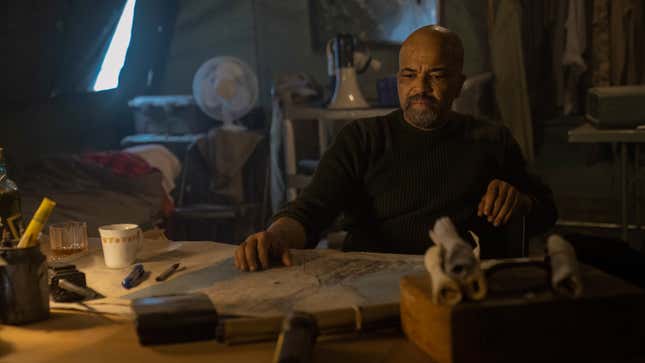
She starts off asking why one “great” soldier is so important when they have an army, and then gets into a weird aside where she exasperatedly asks Isaac if he’s harboring feelings for the girl when he’s at least 30 years her senior. I don’t know if this line is supposed to be a joke, but it’s not funny, even though Isaac laughs at it. She acknowledges it’s an out-of-pocket question, but says he “wouldn’t be the first old man” to make decisions based on such inappropriate impulses. As much as it’s a stupid thing for Park to say, it’s also a stupid thing for the writers room to nonchalantly whip out in a humorous fashion given The Last of Us’ history of old men preying on young women with the character of David. Why write this non-joke into your script if you don’t want viewers to possibly view his fixation on Abby as potentially untoward? Isaac’s following speech focuses on the preservation of his militia, in a very similar way to how David’s preoccupation with Ellie in season one was born from the cannibal’s warped views on longevity, and if you’re not trying to make this direct connection, why even gesture at it? Yeah, I don’t imagine anyone considered the optics of this obviously flippant, throwaway line, but Christ, if you’re that desperate for a joke or moment to cut the tension, this was the best you could come up with? Amateur shit.
Isaac sits Park down and tells her why he cares so much about one soldier. He says there’s a very strong chance that the W.L.F. leadership will be dead by tomorrow morning. If that happens, who can lead the militia in their stead? He wanted it to be Abby. It was “supposed” to be her.
“Well she’s fucked off, Isaac,” Park says as she leaves. “So maybe it wasn’t.”
We go back to the Jackson crew as Ellie and Jesse reach the rendezvous point in a bookstore, and Tommy isn’t here. The place is in bad shape like most places are in this city, but Ellie gravitates to the children’s books section. She picks up an old Sesame Street book, the Grover classic The Monster at the End of This Book, and picks it up for the bun in the oven as Jesse says she picked a good one. As the quiet creeps in on the two, Ellie tries to break the silence by clarifying what happened, but Jesse says they have enough problems for the moment, so he wants to bury the issue.
He says he loves Dina, but not in the same way Ellie does. He remembers a group that passed through Jackson, and how there was a girl he fell hard for. She asked him to leave with her to Mexico, but he declined because he’d found purpose and community in Jackson, and he was taught to put others first. People look to him to become the “next Maria” and lead the town, and he couldn’t abandon them for a girl he’d known for two weeks, even if she made him feel things he’d never felt before.
Ellie immediately sees through this story. It’s not about him pointing out how he’s felt love and knows that he and Dina aren’t the real deal; it’s about how she’s putting her own needs and wants ahead of everyone else’s.
“Okay, got it,” Ellie says. “So you’re Saint Jesse of Wyoming, and everyone else is a fucking asshole.”
“You can make fun of me all you want,” Jesse responds. “But let me ask you this, Ellie: If I go with that girl to Mexico, who saves your ass in Seattle?”
Before she can reply, they hear W.L.F. radio chatter about a sniper taking out a squad and assume it’s gotta be Tommy. The two head out to higher ground to get a better look, and Ellie sees a Ferris wheel in the distance. She finally puts Nora’s final words together: Abby is in the aquarium at the edge of the city. Immediately, her focus shifts away from Tommy as she starts trying to figure out how to reach Abby’s apparent hiding spot. Jesse is confused and says that Tommy’s got the W.L.F. pinned down in the opposite direction. Ellie starts coming up with justifications for her plan. They don’t know if that’s actually Tommy. If it is him, he’s got the group pinned down. Either way, he would want her to go after Abby to avenge Joel. Ellie doesn’t understand why Jesse is so against this. He voted to go after Abby’s crew back in Jackson, right?
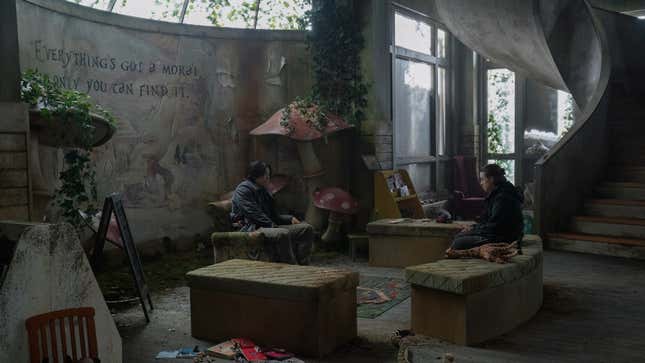
No, actually. He didn’t. He believed this vendetta was selfish and “wasn’t in the best interest of the community.” That sets Ellie off.
“Fuck the community!” she screams. “All you do is talk about the fucking community, you hypocrite. You think you’re good and I’m bad? You let a kid die today, Jesse. Because why? He wasn’t in your community? Let me tell you about my community. My community was beaten to death in front of me while I was forced to fucking watch. So don’t look at me like you’re better than me, or like you’d do anything differently if you were in my shoes, because you’re not, and you wouldn’t.”
Jesse takes a beat, then tells Ellie he hopes she makes it to the aquarium as he leaves. While this scene does exemplify the show’s typicalal “no subtext allowed” approach to writing that I find so irksome, the storyline of Ellie feeling ostracized by the people of Jackson while constantly being told that she must make compromises for them even as they are incapable of extending the same to her is one of the few embellishments The Last of Us makes that resonates with me. It’s easy to write off Ellie’s revenge tour as a selfish crusade that puts everyone else in harm’s way, but when she’s also one of the few out queer people in a town that mostly coddles bigotry and she’s being constantly belittled and kept from doing things she wants to do like working on the patrol team, why would she feel any kinship to this community? Now, when she’s so close to her goal that she can almost taste it, Jesse wants her to consider the people of Jackson? Why should she do that? They’re hundreds of miles away, and the only people who came to save her and Dina were the ones who already cared about her. Ellie’s disillusionment with her neighbors is one of the few additions to the story that The Last of Us manages to pull off.
Ellie reaches the harbor from which she can use a boat to reach the aquarium and finds several Wolves meeting up on vessels heading somewhere off the coast. Isaac is here leading the charge, but it’s unclear where they’re going or what they’re doing. Game fans have the advantage of knowing what’s going on, but the W.L.F. storyline feels underbaked in this season, which is one of the real issues with the show dividing the game’s storyline into multiple seasons. During this section of the game, you get a sense that there’s an untold story happening in the background, and you can learn more about it through notes you can find in the environment and ambient dialogue from enemies. The show doesn’t have those same storytelling tools, so I wouldn’t be surprised if newcomers felt a little disoriented every time we hopped over to Isaac.
Once the W.L.F. forces make their way wherever they’re going, Ellie finds one of the spare boats and starts to make her way to the aquarium. The storm is hitting hard, though, and the tide is not on her side. A giant tidal wave knocks her out of the boat and into the sea. (Good thing you learned how to swim, queen.) As she washes up onto the shore, Ellie hears Seraphites whistling as a group of them descends upon her. She’s too weak to get onto her feet and run, so the cultists grab her and carry her to a noose hanging from a tree in the woods. She screams that she’s not a Wolf and that she’s not from here, but they don’t listen. As they wrap the noose around her neck and start to hoist her upward, a horn sounds off in the distance. The lead Scar says to leave her, their village is in danger, so I guess that’s what the W.L.F. operation is targeting? This concludes our latest little exposition detour, as Ellie gets right back into the boat to the aquarium.
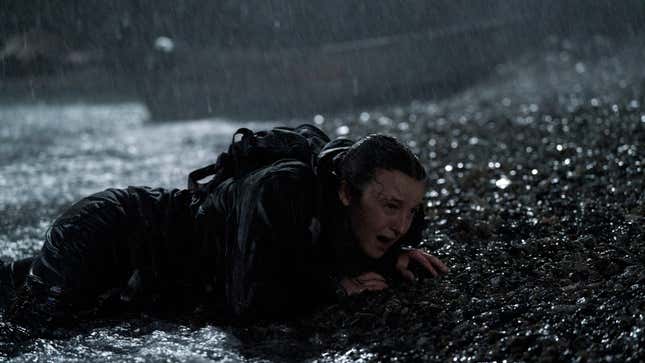
She manages to reach the building and finds a broken window through which to enter. Inside, she finds several makeshift beds. Whatever Abby’s doing here, she’s not alone. As Ellie makes her way deeper into the aquarium, she finds a ton of medical supplies, including bloody bandages and surgical equipment. Was Abby injured? Is that why she’s been missing in action as the W.L.F. undergoes a huge, all-hands-on-deck mission? Who’s to say?
Quick sidenote: When Ellie infiltrates the aquarium in the game, she’s attacked by a guard dog named Alice. The W.L.F. used trained canines in their war against the Seraphites, but that element has been notably absent from the show. Between this and sparing Shimmer from her explosive fate, The Last of Us has been toning down the animal murder.
Ellie keeps walking through the desolate aquarium and eventually finds fresh footsteps. She follows them and soon finds their source: Abby’s friends Owen (Spencer Lord) and Mel (Ariela Barer). The two are arguing about something, though it’s not clear what. Owen wants to go somewhere behind enemy lines, even in the midst of the battle Isaac has just initiated. He says he doesn’t have a choice because “it’s Abby.” Mel says he does have a choice and so does she, and the Abby of it all is why she’s not going along with whatever the plan is. Owen says he’ll do it on his own, and if Mel’s still here when they get back, she can “keep going with [them].” Either way, Owen’s leaving. Mel let’s out a hearty “fuck you, Owen” before realizing that Ellie is there. Sure seems like there’s a whole other story that’s been going on while we’ve been hanging out with Ellie, huh? I wonder if we’ll ever get any further insight into whatever this is. Perhaps in a season entirely dedicated to the other side of what’s going on in Seattle? Maybe in a couple years it might premiere on HBO Max (or whatever it’s called by then)? That would be something!
Ellie holds the two at gunpoint and tells them to put their hands up. When she asks where Abby is, Owen realizes who she is and points out that he was the one who kept her alive. Ellie isn’t swayed by this, so he says they don’t know where Abby went. But, of course, they were just talking about her, so Ellie knows that’s not true. She spots a map on the table and decides to pull out an old Joel Miller standard: She tells Mel to bring her the map and point to where Abby is, saying that next she’s going to ask Owen the same question, and the answers had better match. Owen looks at Mel and says that Ellie will kill them either way, so there’s no reason to comply. Ellie says she won’t because she’s “not like” them. When she crosses state lines to torture and kill someone who killed somebody important to her, it’s very different than when they do it, of course.
Owen stops Mel from grabbing the map by saying he’ll do it. He slowly turns to the table, but instead of picking up the map, he grabs a handgun stowed under it. Ellie is quick with her trigger finger and shoots him right in the throat. The bullet goes straight through him, and hits Mel in the neck as well. She falls onto her back and, instead of cursing Ellie, she asks for her help. Not to save her life, but someone else’s. She opens her jacket to reveal her pregnant belly, and asks if Ellie has a knife to cut the baby out of her before she dies. Ellie is in shock and doesn’t know what to do. Mel tells her she just needs to make one incision. That isn’t enough direction, and Ellie panics. She doesn’t know how deep or which direction to cut. As Mel starts to become delirious, she asks Ellie if the baby is out. But she hasn’t even made one cut. Mel finally drifts off, and Ellie realizes it’s too late. She sits there until, eventually, Tommy and Jesse find her. Tommy attempts to comfort her, but she’s in shock and doesn’t speak. Finally they leave and head back to the theater.
Why can’t this show stop giving the audience outs to not turn against its leads? The death of Mel, specifically, feels like the show bending over backward to teach Ellie a lesson without laying blame at her feet. Mel’s death here is an accident. She’s an innocent bystander who dies because Owen and Ellie made choices, and she was, quite literally, caught in the crossfire. In Part II, by contrast, Mel “shot first.” Well, she tried to stab Ellie, but that doesn’t have the same ring to it. Ellie reacts in self-defense and stabs her right back, but she did it fully knowing she was about to send Mel to an early grave. The gut punch Ellie feels upon learning that she’s pregnant is a moment of dramatic irony, because the game’s shifting perspectives had already revealed her pregnancy to the player way back in the opening hours. So when you’re slamming the square button to fight back, you know that Mel isn’t the only one about to reach her untimely end. Here, she doesn’t even get that moment of agency to fight to protect herself. She’s just collateral damage. It’s a small but important distinction. At this point in the show, Mel’s only real trait is a clear distaste for Abby’s violence, and now, when she finally shows up again, she’s just an unintended victim of Owen pulling a gun on Ellie. Sure, season three will fill in those gaps, but the end result will be the same. Mel died not because she was fighting back, but because she was an inch too far to the left.
Then there’s the matter of her pregnancy. Again, in the game players already knew about this by the time Ellie reached the aquarium, while the show kept it secret until the end. It’s hard not to see this last-minute reveal as a knife being twisted for shock value.
The other side of the coin
The group makes it back to the theater and Ellie is still in shock, so much so that she doesn’t even look at Dina as she enters the building. Some time passes, and Tommy and Jesse are mapping out their route home on the stage. The storm is still pretty rough, so they’ll stay overnight and hope the sun is out when they wake up. Ellie finally joins the group, and Tommy reassures her that Mel and Owen played their part in Joel’s death, and they made the choices that brought them to that fateful end. Ellie can only fixate on what she didn’t get to do.
“But Abby gets to live,” she says.
“Yeah,” Tommy responds. “Are you able to make your peace with that?”
“I guess I’ll have to,” she says, defeated.
She looks to Jesse, who won’t even look up at her. Tommy realizes they might have something to talk about and walks to the lobby to pack. After some awkward silence, Ellie thanks Jesse for coming back for her, even though he had no reason to after the way they clashed.
“Maybe I didn’t want to,” he says. “Maybe Tommy made me.”
“Did he?” Ellie asks.
After a second of contemplation, Jesse drops the act and says, “No.”
“Because you’re a good person,” Ellie responds.
“Yeah,” Jesse agrees. “But also the thought did occur, that if I were out there somewhere, lost and in trouble, you’d set the world on fire to save me.”
Ellie says she would, and the two finally see one another, even if just for a moment. Jesse acknowledges that Ellie’s vendetta isn’t entirely selfish, and that when it comes to defending the people she cares about, dead or alive, you won’t find someone more loyal in all of Jackson. It’s good that they finally had this moment of connection after all this drama. But damn, I miss Ellie and Jesse being bros, and I miss her giving him shit for being a sap in these final moments. But most of all, I miss that dopey good ol’ boy with a heart of gold saying his friends “can’t get out of their own damn way.”
All that understanding is short-lived, as the two hear some ruckus in the lobby, grab their guns, and book it to the entrance. The second Jesse opens the door, bam. A gunshot rings out in the lobby, and he is on the floor. We don’t even see that it was Abby who fired it until after we get a gnarly shot of him with his face blown open. He’s gone. It was instant. The Last of Us Part II tends to draw out death. It’s either long and torturous like it was for Joel or Nora, or it’s short like Owen’s and Mel’s, but in any case, the game typically lingers on the fallout for a bit. Jesse’s death, by contrast, happens so fast that you can’t even process it before you have to deal with the situation at hand. The show follows suit, and it’s recreated practically shot for shot. But that’s hardly the most disorienting (complimentary) thing that happens in these final minutes.
“Stand up,” Abby growls forcefully from the other side of the desk Ellie has taken cover behind.
She repeats herself: “Stand. Up. Hands in the air or I shoot this one, too.”
Ellie can see Tommy on the ground with a pistol aimed right at his head. He tells Ellie to just run, but she tosses her gun where Abby can see it and crawls out from cover. Abby recognizes her immediately. Ellie asks her to let Tommy go, to which Abby replies that he killed her friends. Ellie says no, she did.
“I was looking for you,” Ellie says. “I didn’t mean to hurt them. I know why you killed Joel. He did what he did to save me, I’m the one that you want. Just let him go.”
Hm. Okay. We’re almost at the end. I gotta get another little quibble in before the curtains close. I mean, come on, we’ve been through seven episodes of me complaining together. You can’t take one last gripe? This line from Ellie is slightly altered to account for the fact that she knows more about Abby in the show than in the game, and it means we miss one of the most important subtle interactions in all of the story. As I mentioned earlier, Ellie doesn’t know anything about Abby’s father in Part II. She assumes that Abby killed Joel because he took away any chance of the Fireflies developing a cure, so she cites that in this high-stakes moment. The original line is almost identical to the one in the show, but instead, Ellie says “there’s no cure because of me” and suggests that killing her would be the extension of Abby’s presumed vendetta. Then, we get some incredible, subtle acting from Abby actor Laura Bailey, who hears what Ellie’s saying, has a brief moment of angry disbelief on her face, and then scoffs under her breath before picking right back up where she left off. In just a few seconds, you see Abby realize that, after everything, these fuckers have no idea how much pain she’s been through over the past five years. But they’re not worth the breath it would take to explain herself. They don’t deserve to know the man her father was and what he meant to her. All that matters right now is that Ellie pays for what she’s done.
Abby still views herself as the righteous one here, as she points out that she let Ellie live when she did not have to do that. It turns out that Ellie wasn’t deserving of her mercy, that she squandered it by killing her friends. Part of me has wondered if all the exposition-heavy dialogue in this show, such as Dever’s villain monologue in episode two before she murdered the shit out of Joel, was written to give its actors more words to say in front of a camera. When you’ve got big names like Kaitlyn Dever, Catherine O’Hara, and Pedro Pascal in your cast, you don’t want them to not talk, right? But all these elongated exchanges have also robbed actors like Dever of those subtle moments. Hell, she led an entire film with next to no dialogue in 2023’s No One Will Save You, and was great in it, so she has the chops to pull off that kind of acting. Communicating something through body language and expression is just as powerful as a poetic piece of dialogue (or in this show’s case, the most literal, unpoetic dialogue a person can fathom), but this show rarely, if ever, understands that.
Anyway, Abby says that Ellie wasted the chance she was given when the ex-Fireflies spared her, and points her gun right at Ellie. We hear a bullet fire and Ellie shouts before a hard cut to black. But wait. That’s the season finale? You expect us to wait for two years, probably, to find out what happened? Well, about that. You will probably have to wait even longer.
We do have one more scene this season, however: a flashback. We see Abby lying down on a comfy couch with an unfinished book resting on her stomach. She’s in a deep sleep before Manny (Danny Ramirez) loudly enters the room and wakes her up. He says Isaac wants to see them, and she stirs awake. She gets up and walks out of this cozy living space and into a giant football stadium. The entire field has been repurposed for agriculture, manufacturing, and housing. Abby takes a second to look at the whole operation before heading to Isaac’s, but the camera lingers over the field as bold white text flashes on the screen: Seattle, Day One.
Alright, TV newbies, welcome to the second divisive twist of The Last of Us Part II. In the game, the player goes through Ellie’s three days in Seattle, killing Abby’s friends and mostly ignoring the war between the W.L.F. and the Seraphites. Meanwhile, Abby has been kind of an enigma the whole time. Every time Ellie finds a new lead, Abby has already come and gone. When Abby finally shows up at the theater for another round of vengeance, it’s clear that a lot of the story happening in this game has happened off-screen. That’s because you’re about to see an entirely different perspective on the last three days, and you’re going to play as Abby when you do it.
As you can imagine, this shit drove some players nuts at the time, and you’ll still find angry people online complaining about it to this day. For all my problems with this season, I have to commend the show for actually going for it. HBO has taken the coward’s route in adapting this story for so long, it’s almost surprising that it’s ending here and, from the sound of it, season three will be entirely about Abby and what she’s been doing these past three days. It’s very likely we won’t see Ellie again until next season’s finale after we’ve followed Dever’s character for several episodes. Despite some ham-fisted attempts by the show to build sympathy for Abby early on, it seems like swaths of TV newbies still demand blood. Will viewers complain for an entire season as Dever takes on the lead role? I’d like to think they won’t. I hope that new audiences are more open to her than the worst people you’ve ever met were when the game launched.
Despite all the golf club swings I’ve taken at this show, I’m looking forward to examining it further as HBO rolls out the next two seasons. The Last of Us Part II is one of my favorite games of all time, but I genuinely fucking hated The Last of Us’ second season. I don’t expect my feelings to improve in season three. At this point, the rot of Mazin’s poor creative decisions runs too deep for the show to be salvaged and reach the highs of the games. But if nothing else, it’s been a rewarding ride. Thank you for joining me on this seven-week journey. I think I’m due for a replay of The Last of Us Part II to wash off this stink. This shit was ass, HBO. I’ll see you in the ring again next time.
[Update: 5/26/25, 8:30 a.m.] This article originally cited a misheard line from Mel, and the relevant text has now been removed. We regret the error.
