


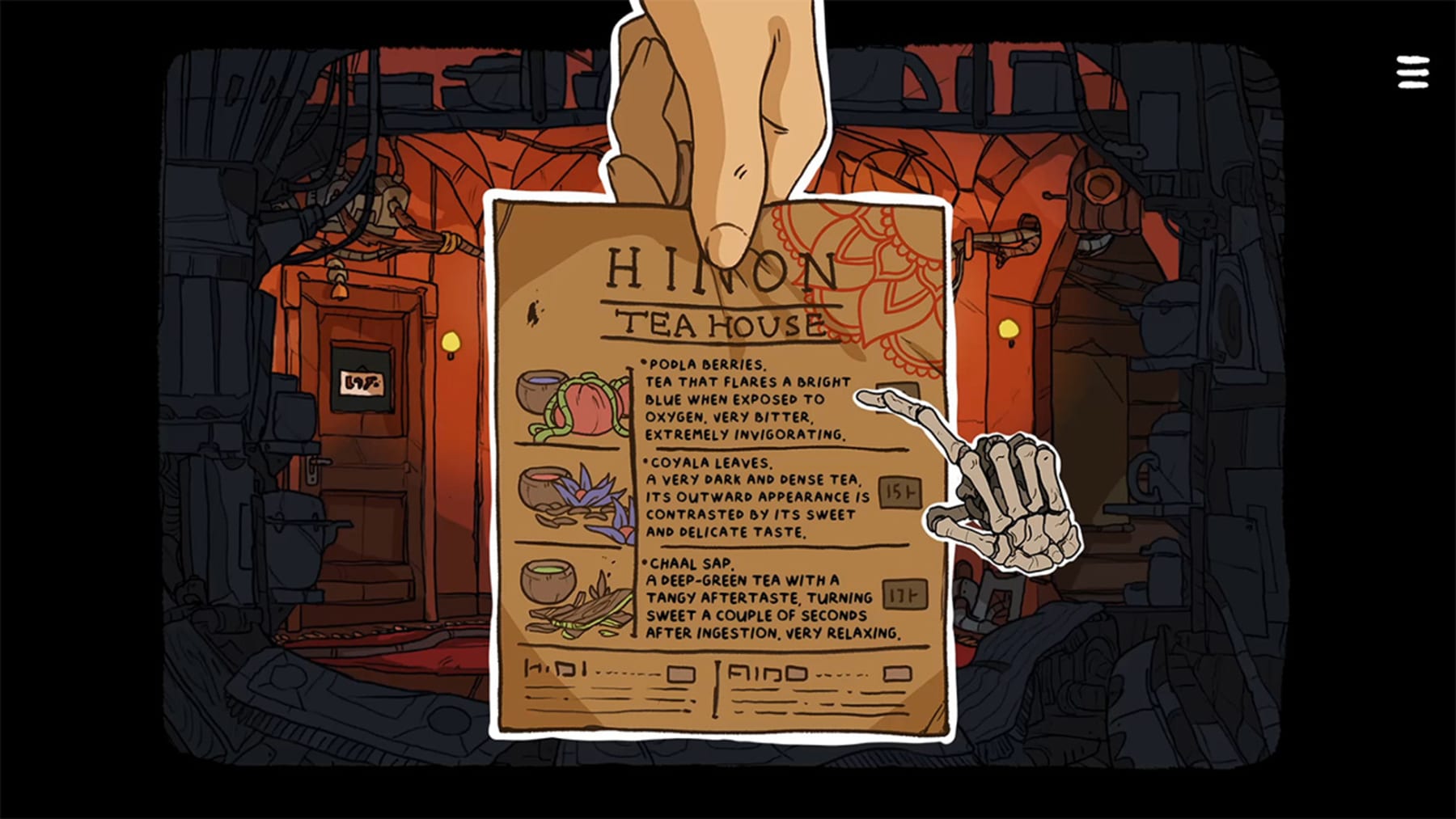
I’ve come to appreciate two aspects of visual novels. First, a low-pressure gaming experience is sometimes exactly what I need. Second, their typically indie developers are able to bring their vision to fruition unfettered. That’s certainly the case with Tmesis Studio’s Universe for Sale.
Set on Jupiter, this bedtime story (more on that in a bit) tells mainly of a guy who’s removed all of his skin (and seemingly muscles and tendons) in order to achieve enlightenment and a woman who is able to create mini-universes over cups of tea. Does this make her a god? She’d like to think not.
Along with this, we’ve got robots, talking orangutans, and business owners who keep their buildings under tarps so the acid rain doesn’t melt them away.
And here you thought visual novels were all about falling in love with one of the customers of your inherited patisserie.
I won’t provide many story details, mainly because it’s too bizarre to wrap up in a paragraph or two. Basically, our floating-skull skeleton (the nameless Master) and our universe builder (Lila) have an undefined past together. They also have a present, as the Master takes a strong interest in Lila’s unique ability.
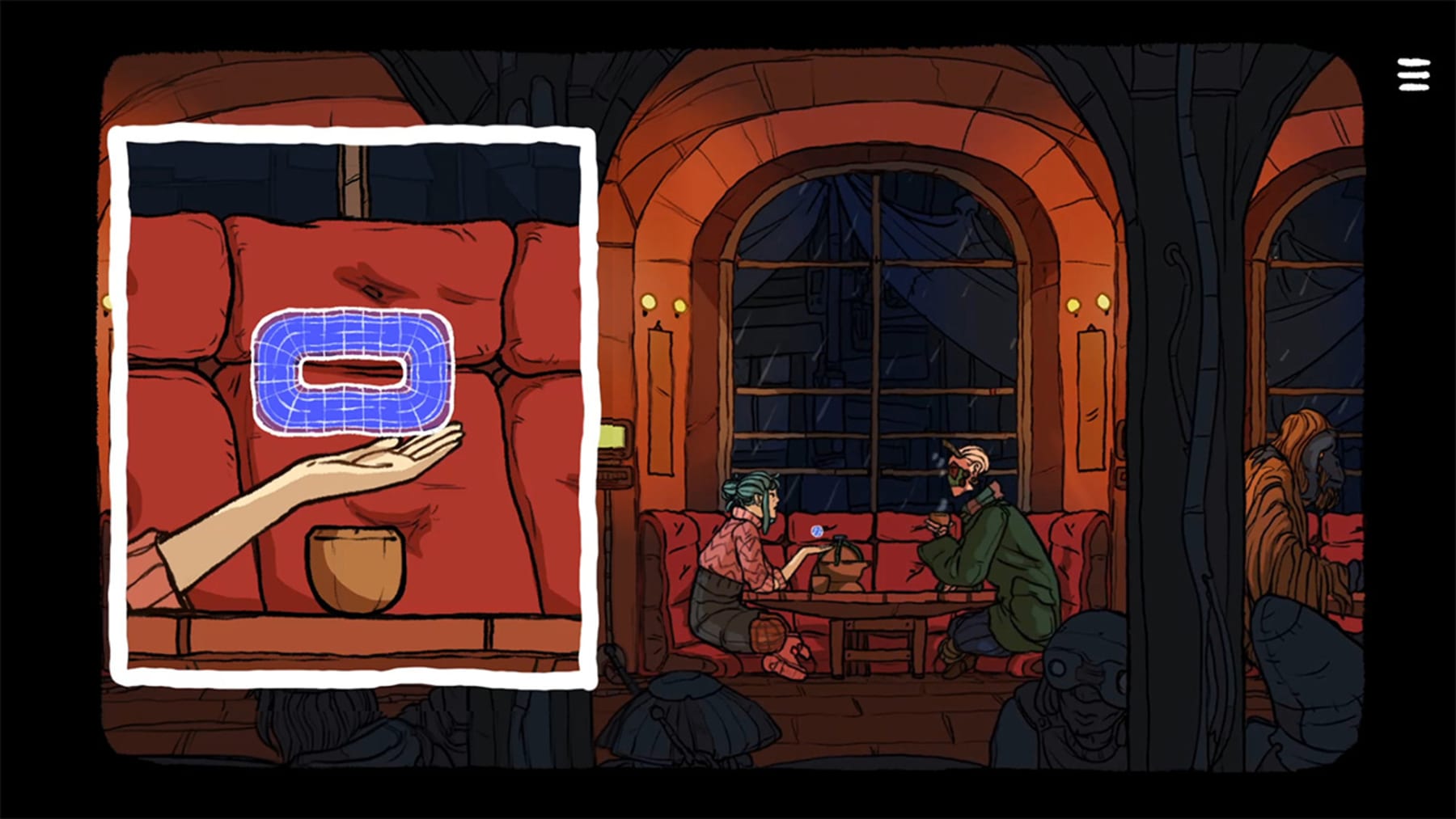
He’s not the only one, either. So, playing as the two of them in turn, you’ll wander through the slums of Jupiter piecing together the story of these two and their surroundings, completing light puzzles and various mini-games along the way.
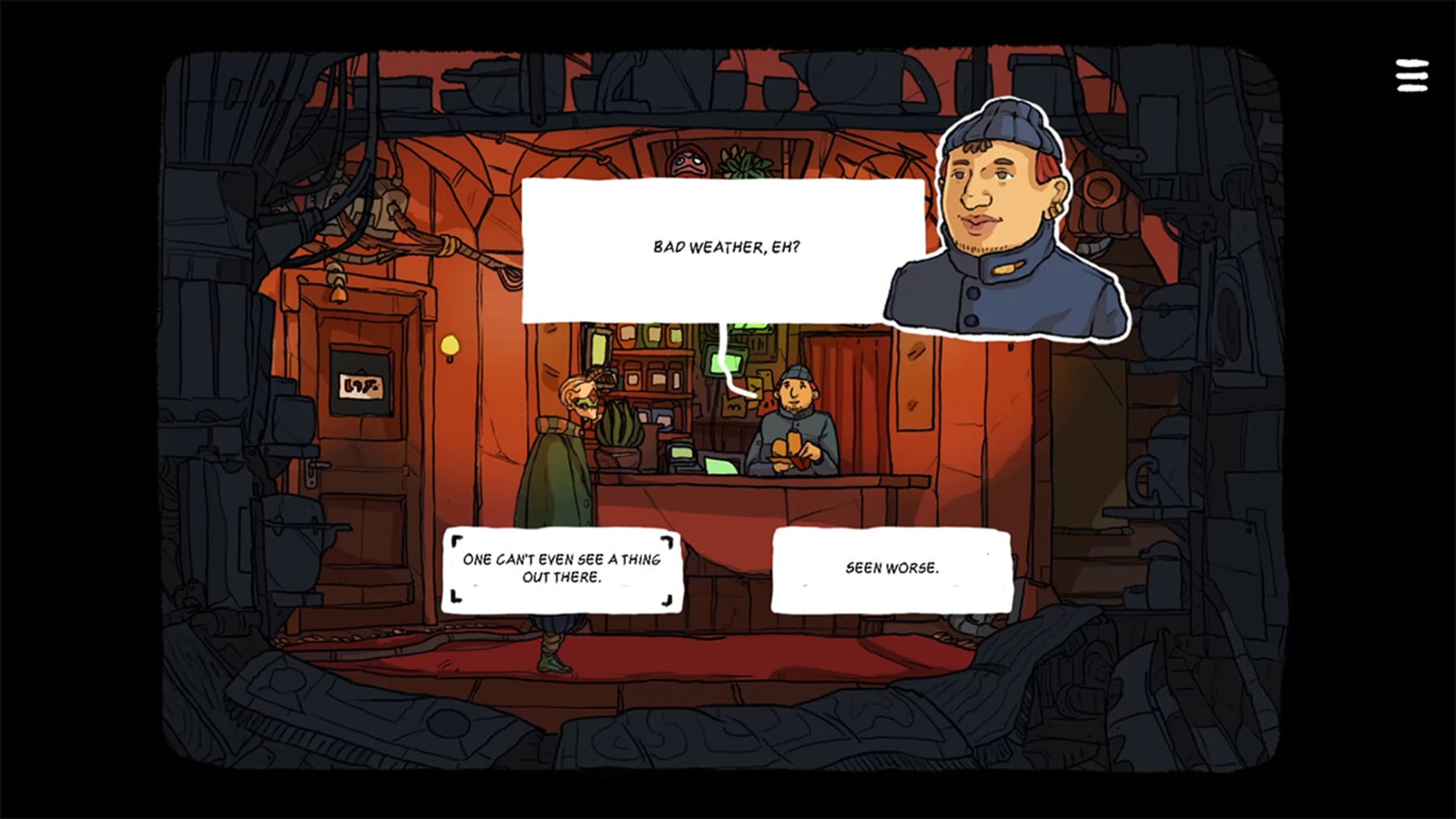
Universe for Sale plays out like a point-and-click adventure game. You’ll use the L-stick to move a cursor around the screen. The cursor changes when you can interact with an item/person or move to a different location. There is no inventory to manage, so exploration is key. There’s plenty to discover and, as with point-and-click adventures, this can become frustrating. The game doesn’t always provide a clear indicator of where to go or what to do, so I often found myself wandering aimlessly with hopes of discovering something I’d previously missed. Most often, the missed trigger was a bit of dialogue. You’re given options on how to reply during conversations, and getting to the right statement is important. In other words, scour every location, exhaust every conversation.
Is this a fun way to play a game? Not always, but visual novels rely on two factors to hold your interest: the visuals and the novel. Starting with the latter, the story presented in Universe for Sale is certainly unique and intriguing. A sense of despondence hangs over the environment, but we’re given some hope in Lila and the Master as they seek something bigger than their circumstances seem willing to provide them. The narrative arc is purposely disjointed, requiring you to connect the dots which often appear out of order.
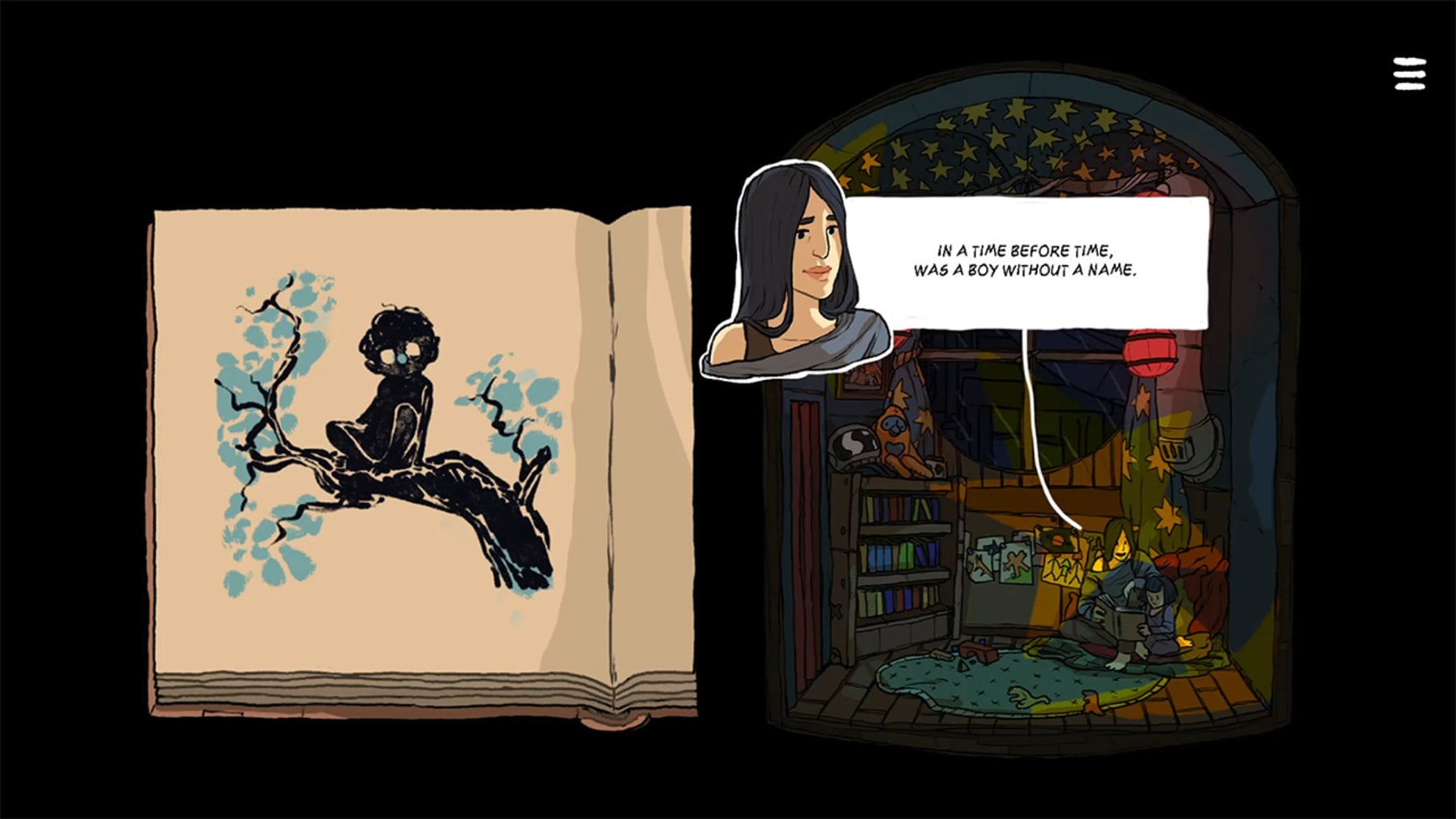
There’s also the bedtime story element I mentioned earlier. Universe for Sale doesn’t actually begin on Jupiter, it begins with a mother reading a book to her child. Whether these narrative elements are related or it’s a Princess Bride kind of thing I’ll leave for you to discover.
The visuals are what really carry the game. The hand drawn artwork is simultaneously striking and oppressive. The muted colors and darkened. Stormy skies reflect the bleakness of the locale, but stark splashes of color clearly indicate there is life here. It gives off the vibe of gathering with others around a fireplace, and the cozy (albeit creepy) soundtrack from Guglielmo Diana adds nicely to the atmosphere.
These elements come together to make Universe for Sale a worthwhile experience. I believe the story and the game’s themes will appeal mostly to fans of sci-fi from the Amazing Stories and Weird Tales eras. Its modern devices and approachable mini-games, however, should keep visual novel fans entertained even if the story is a bit more challenging than the common fare. Just be prepared to occasionally get lost in more ways than one.
