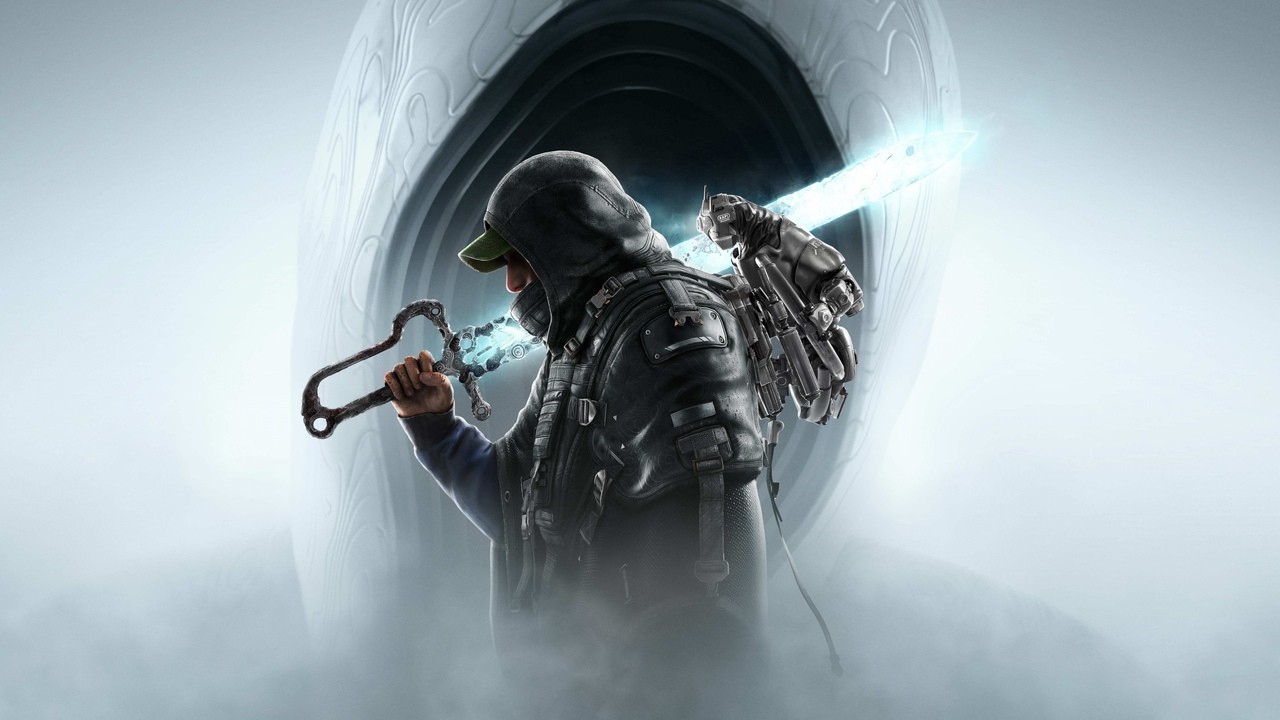
Hell Is Us may be one of the most unique games of 2025. Part Soulslike, part adventure game, part detective simulator, this gargantuan puzzler is dense, immaculately detailed, and devilishly dark. You won’t play anything else like it this generation.
You play as Remy, a sociopath that has snuck his way into the war torn country of Hadea – except this isn’t his first time here. Remy was born in Hadea and smuggled out as a child, but he’s made his return in search of his parents with very little information to go on.
Simply knowing that he came from a village called Jova and that his father was the blacksmith there, Remy starts digging around and asking questions. This is when Hell Is Us begins to unfurl its very large yarn, and it needs you to start taking notes – literally.
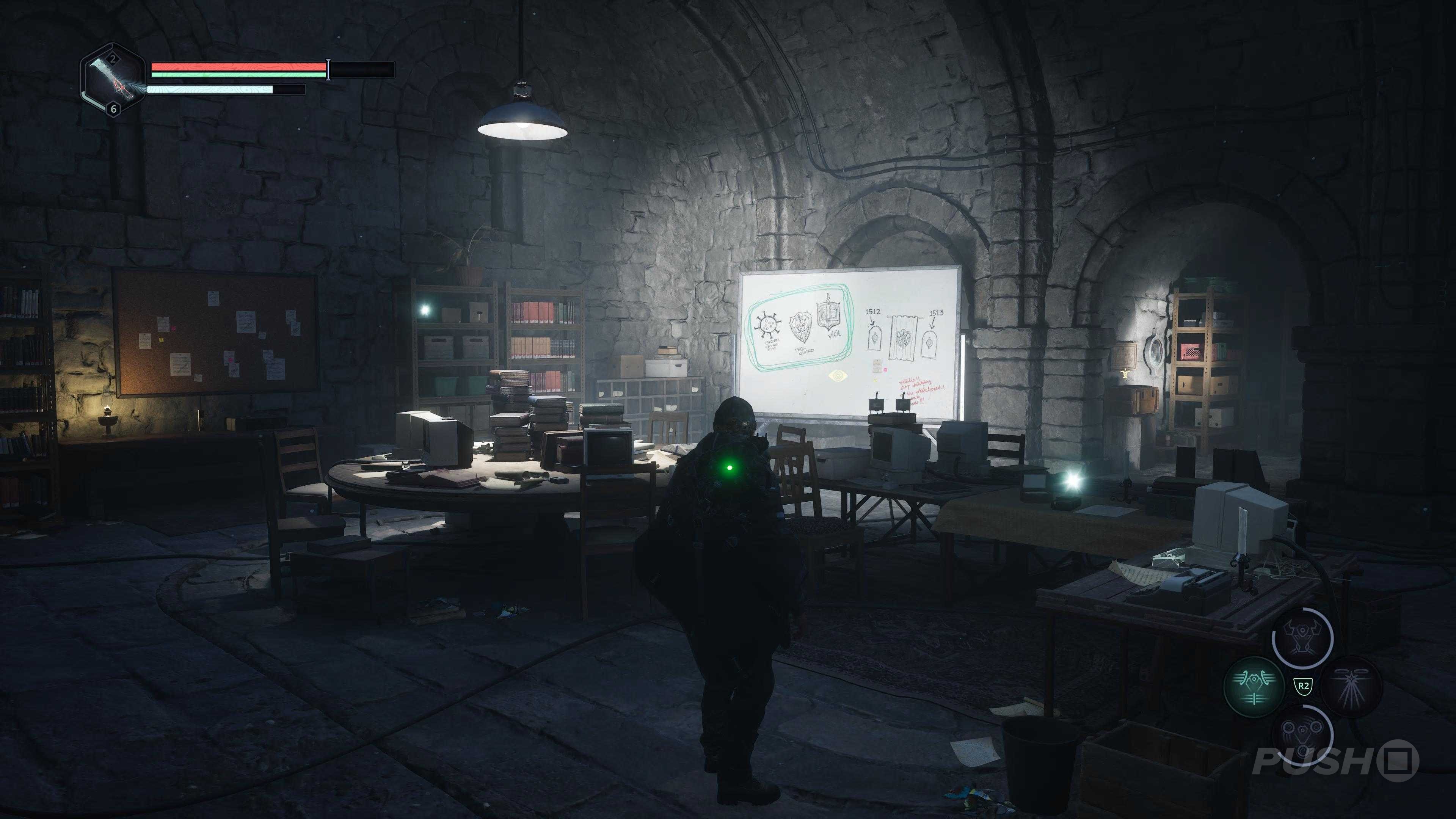
Hell Is Us does not feature a traditional map or marker system. Instead, almost everything you need to navigate its world is in the environmental details. Small specifics in discarded notes, descriptions from surviving characters, and visual design – all of it is diegetic and brilliantly immersive.
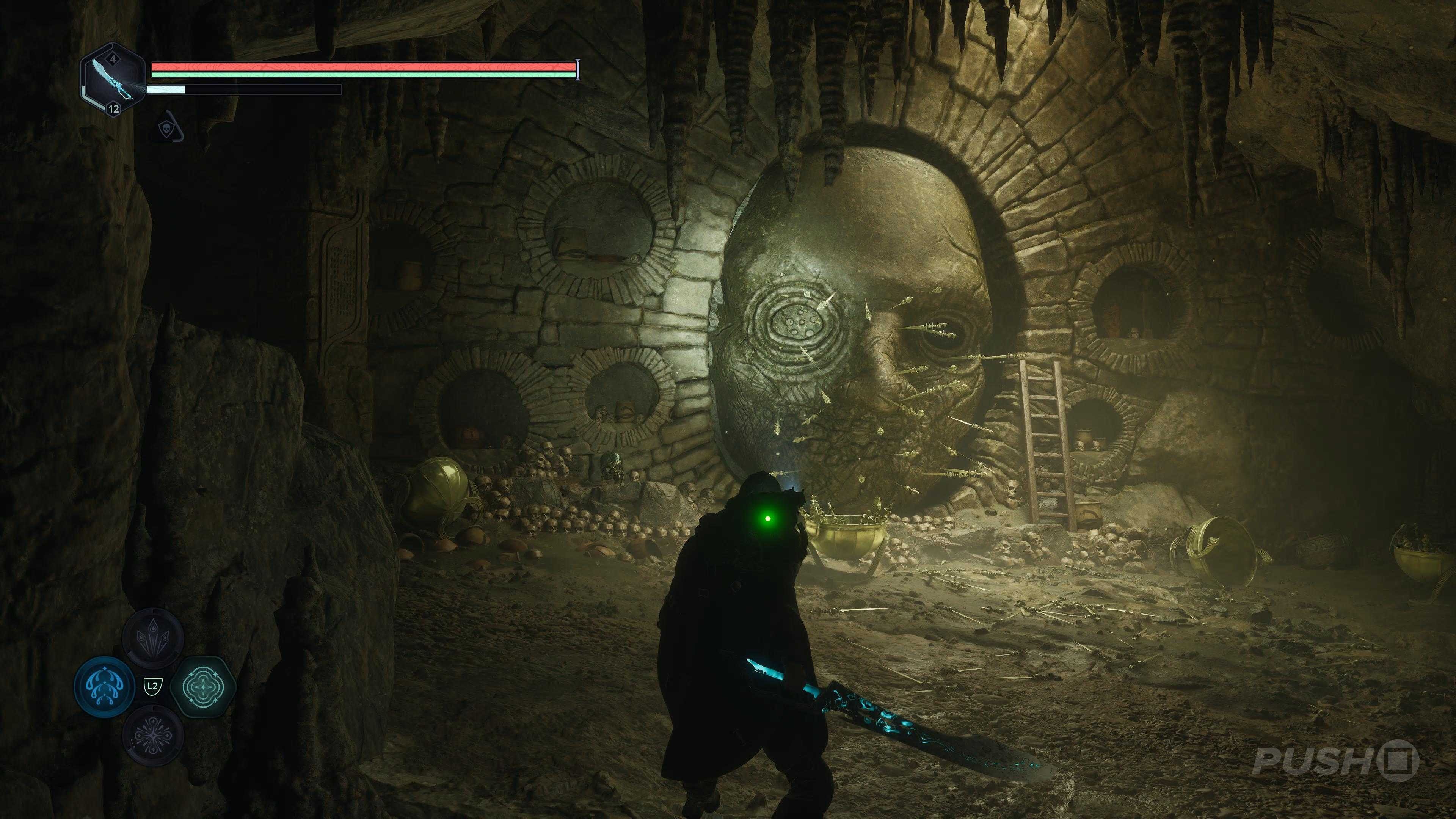
A datapad will keep note of the big main quest descriptors to point you in the right direction, but the game’s Good Deeds (its version of side quests) are entirely down to your memory and attention to detail.
You can mark specific pieces of evidence in your datapad, but we opted to scribble down our findings in an actual notepad. By the time we were done with the game we had pages filled with ramblings of ancient royal feuds and symbol scribblings.
That may make you think that Hell Is Us is a hardcore game, and in some respects it maybe is. However, Rogue Factor has masterfully designed its world so that across over 30 hours with the game, we never once felt the absence of a traditional map or quest system.
If a character describes a landmark that you must go to, they’ll give you all the details you need to figure it out. In addition, a compass and audio and visual cues are there to help, making discovery and exploration feel very natural – we never once got lost. And while a notepad really did help us, we don’t think it’s mandatory.
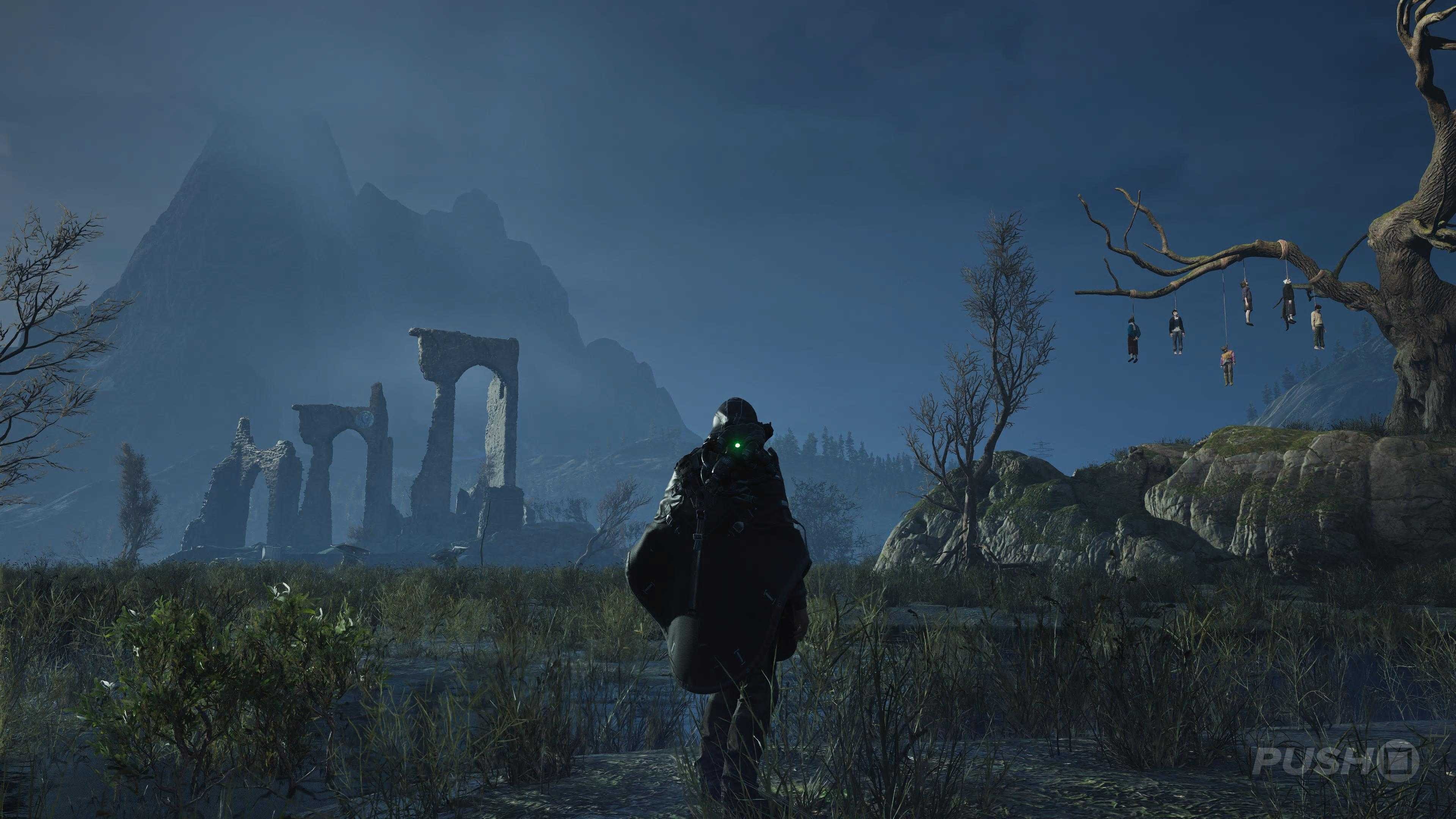
We’re huge fans of this approach, but it could have been a complete bust if the world itself was well designed but narratively dull. However, Hadea may go down as one of the most interesting video game worlds in recent memory.
Comprised of a dozen or so open levels, varying from expansive fields to claustrophobic libraries, Hadea is a country steeped in religious feuds and ravaged by a bloody civil war. It’s an oppressively dark setting at times, with some streets littered with corpses of children and horrendous visions of genocide around every corner. And there are ghoulish creatures too just to make matters worse.
So much of the world’s narrative centres around a religious divide between Palomists and Sabinians. It appears fairly surface level to start – the Palomists hate the Sabinians and the Sabinians hate the Palomists – and we don’t really know why.
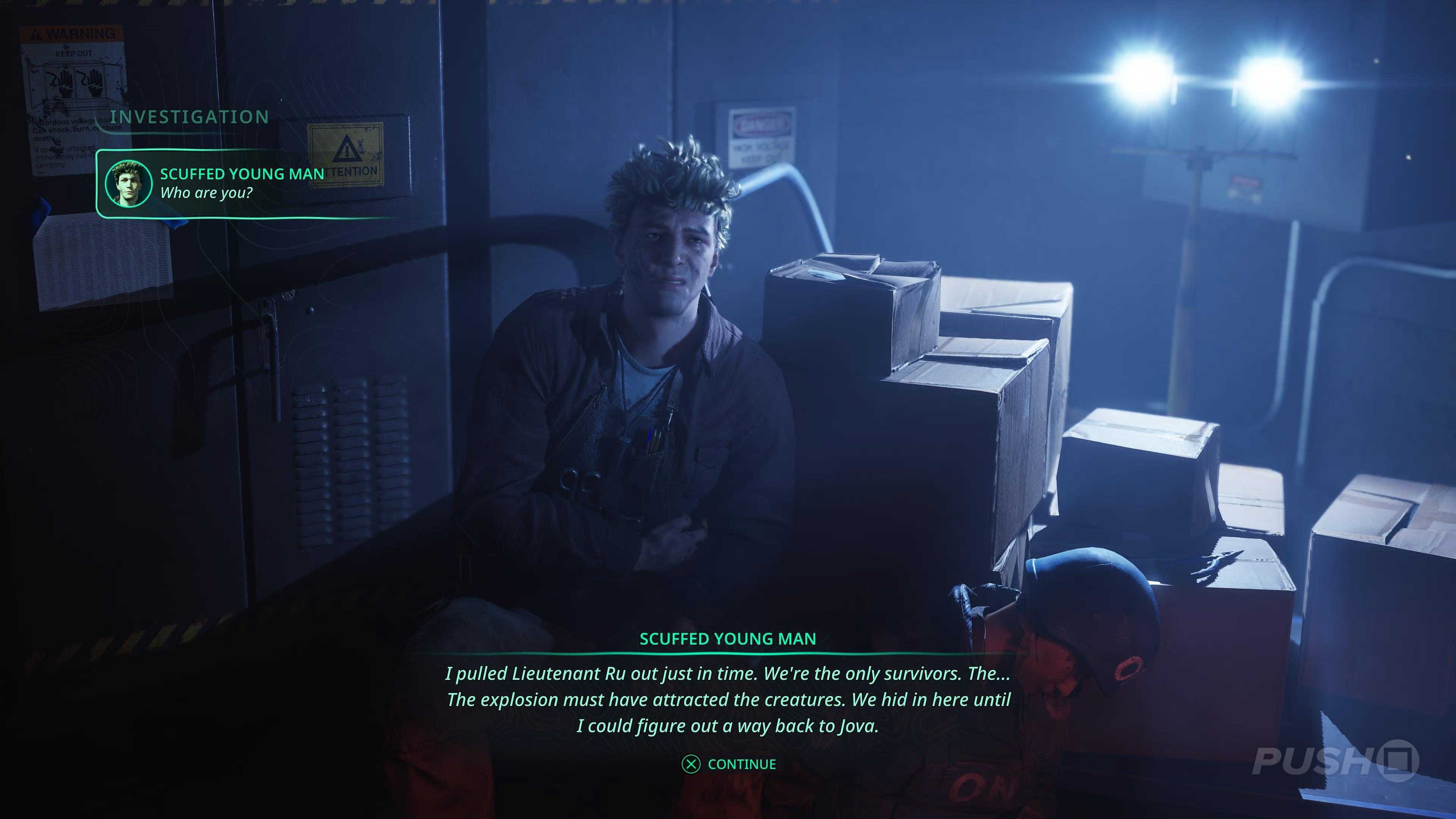
You’ll meet a variety of characters from both sides, gaining more context along the way. Quite often these people will have vital information to help you on your quest, but you can also help them by finding items, whether those be keys, medication, or even just clearing the way for them.
Sometimes an item for a person in one level can be found in another, and it’s then that you should be making mental or physical notes so as to complete your good deeds. These often have small gameplay rewards, but more often than not it’s an opportunity to learn a little bit more about Hadea and its ongoing conflict.
However, Hell Is Us and its central narrative aren’t so interested in the details of its current war so much as it is the history that got them there in the first place. Quite quickly you are exploring deep cave systems and reading through ancient scripts detailing inquisitions, massacres, and royal betrayals. The way the game steadily broadens and delves deeper into its conspiriacies is spectacularly entertaining.
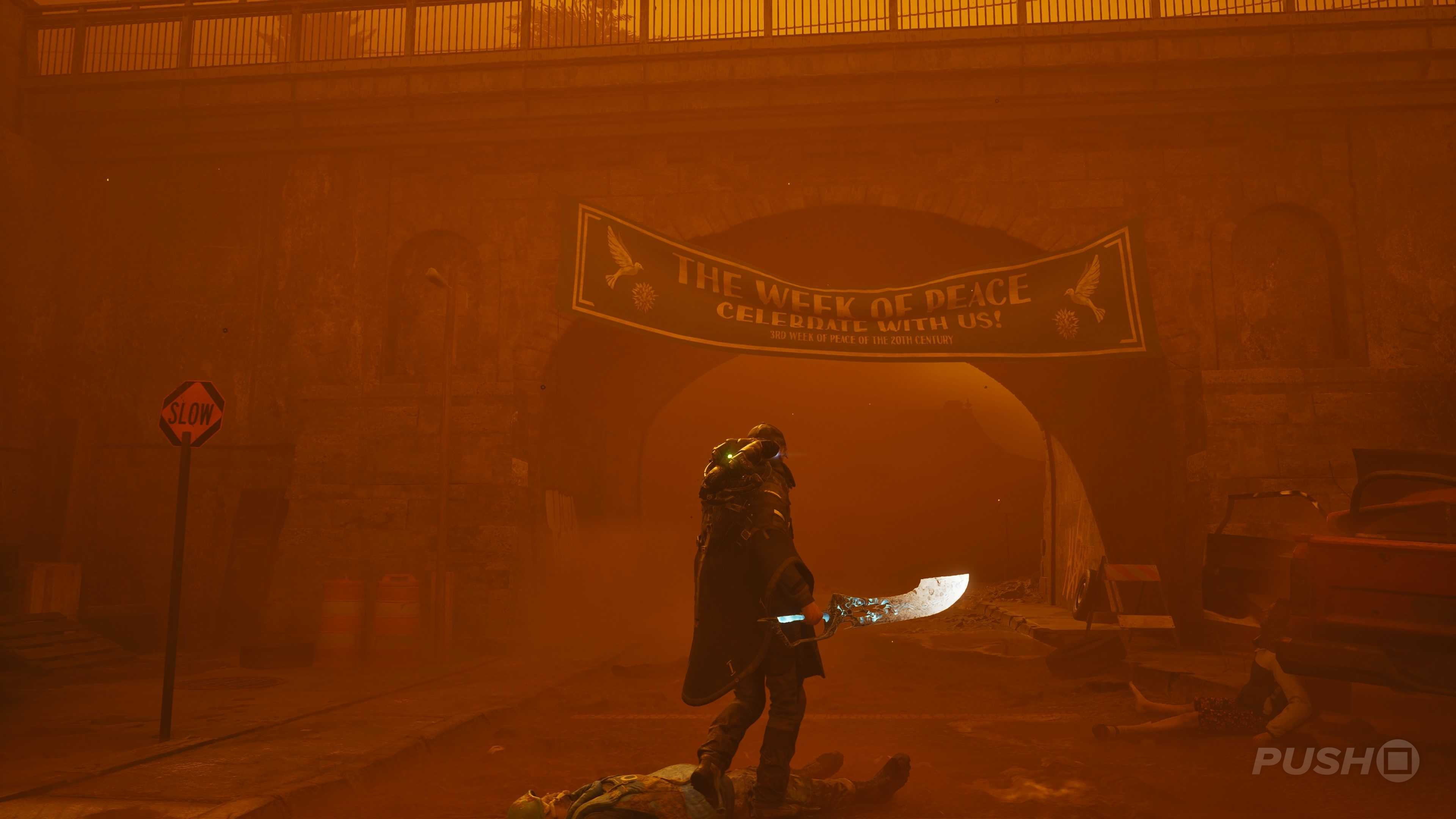
Through its notes, speaking with NPCs, and studying the environment, the game begins to form an ancient narrative that despite being literally old news, is endlessly enthralling. The game nails the aesthetic of abandoned medieval churches, caves, and towers, so from a visual point of view it’s incredibly cool.
However, by paying attention to its story, which is a byproduct of its hands off design, uncovering these locations or solving ancient mysteries feels incredible. It’s like the best sort of moments from the Indiana Jones movies or Uncharted games, where you’re uncovering things that have not been seen for hundreds of years, whilst slotting in another puzzle piece in the jigsaw that is Hadea.
Narratively then Hell Is Us is an absolute doozy, but in a weird sort of way. Everything interesting about it has already happened. This isn’t really the kind of game with expansive cutscenes or gripping character arcs, and Remy as a sociopathic protagonist is a bit dull. But there’s something enchanting about piecing together another part of Hadea’s history by discovering an old letter or a knight’s corpse. A moment somewhat similar to Silent Hill 2’s never-ending staircase had us sitting on the edge of our seat with anticipation.
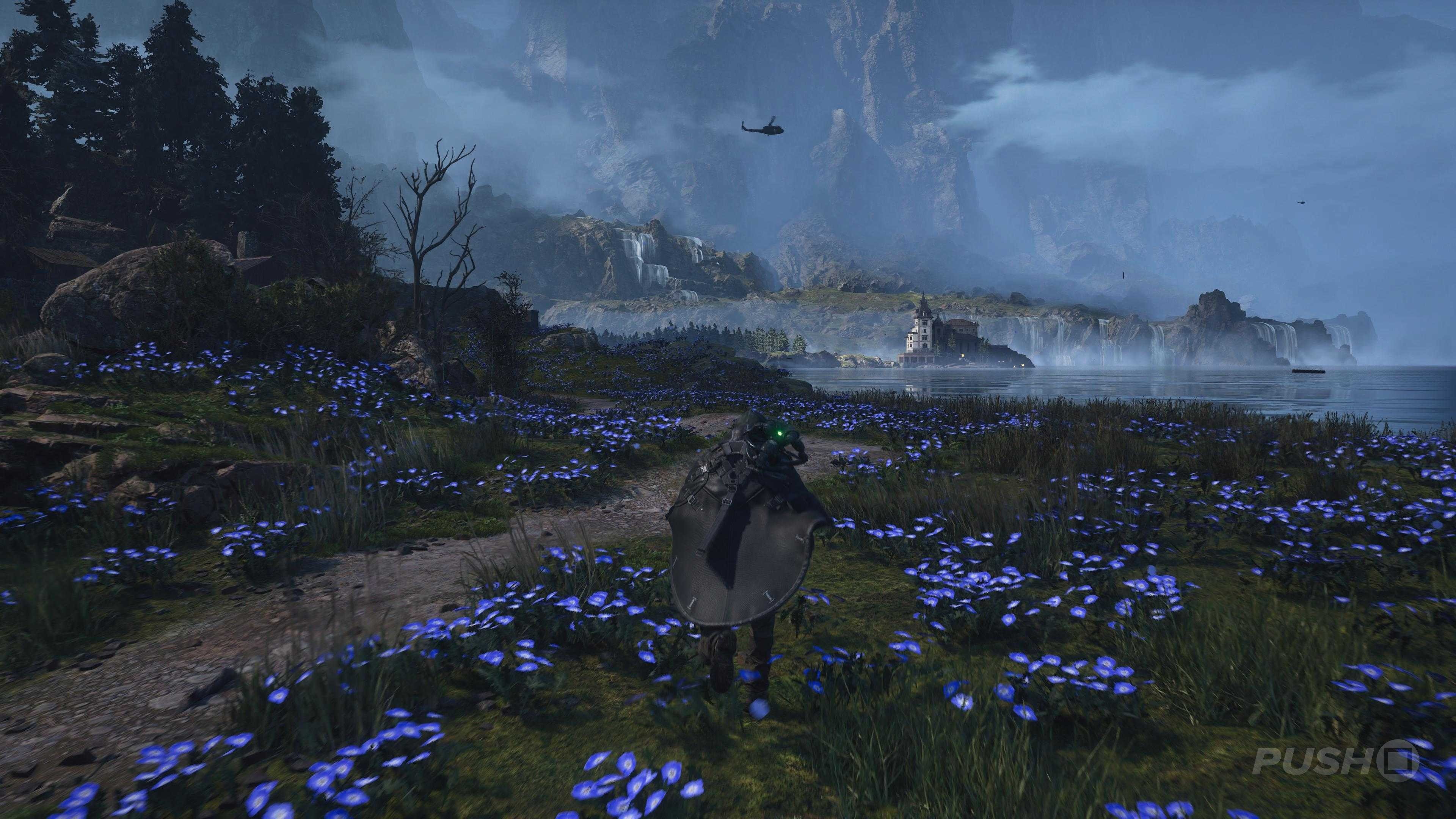
It’s not all letter reading and Hadean sightseeing of course. Hell Is Us is split by an affinity for puzzles and combat. Puzzles are almost entirely about opening new doors to explore even further. You’ll be piecing together parts of historical knowledge to make up door codes, matching up artifacts to certain positions and finding vital keys to open new pathways.
It’s almost like a Resident Evil game with its approach to level design, with tight mazes that you’ll gradually open up. There are a few puzzles in here that had us racking our brain – thankfully we had the ol’ notepad to fall back on – but nothing ever feels impenetrable.
Something we reckon people will struggle more with, however, is combat. Made up of melee weapons, you’ll take on the pale nightmares wandering Hadea with swords, polearms, axes, and greatswords, each of which can be levelled up, upgraded, and applied with a sort of elemental damage type. Skills can be applied to these weapons, and the same can be said for your little drone Kapi.
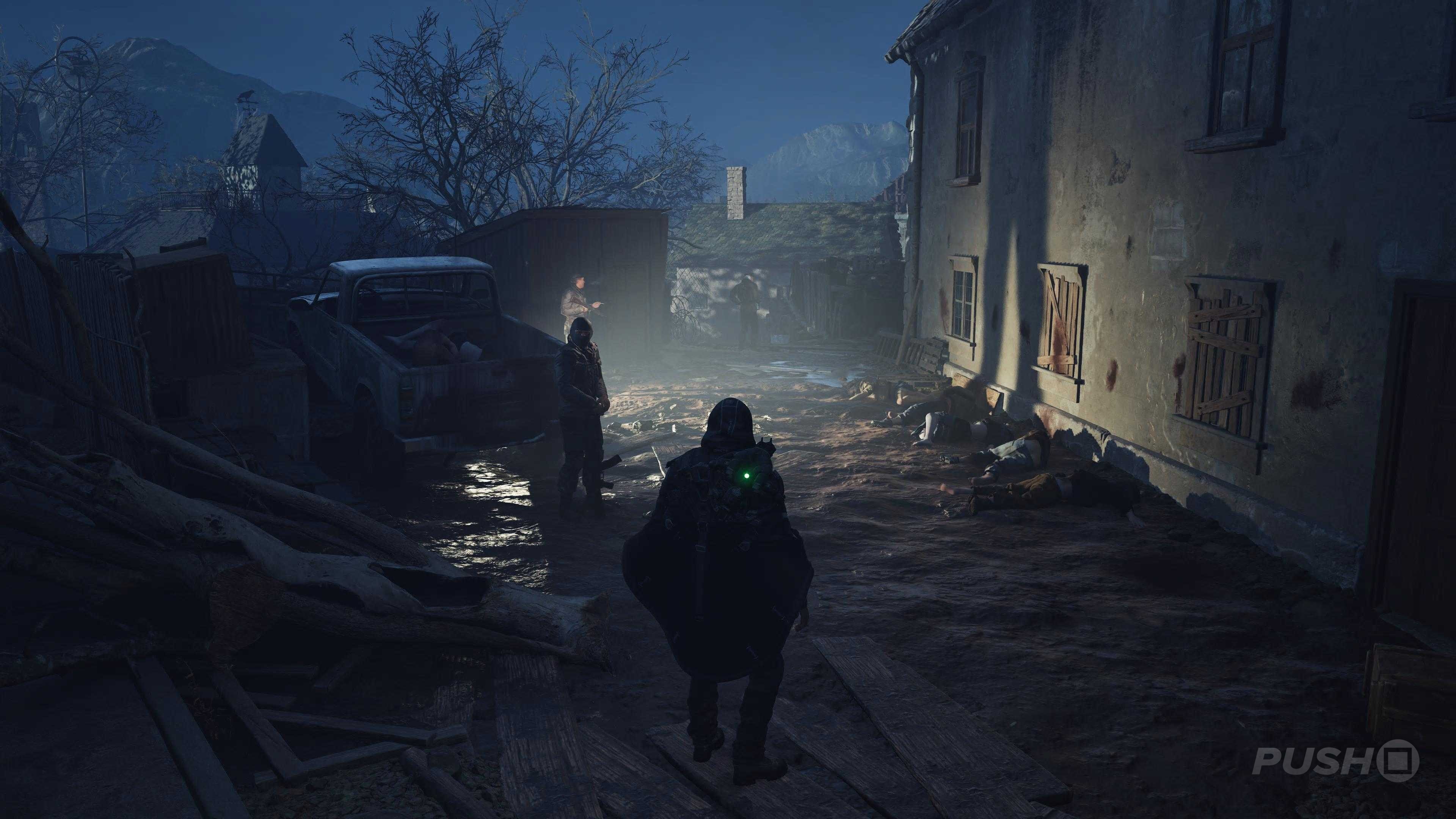
Enemy variety isn’t all that, but the game does throw tougher and tougher challenges your way as you delve deeper into the game. Most creatures will eventually host these sorts of colourful spirits called the Haze, which need to be killed first before damage can be done to the main target. However, if you aren’t quick enough, the Haze will respawn.
We played on the hard difficulty, so combat can be brutal at times, especially when multiple enemies are attacking at once, however, we personally enjoyed the challenge. There is a nice mechanic that allows you to gain back health from damage done to enemies if you time a tap of R1 right. It means you can completely turn around fights if you are tactical and play things slow.
However, thankfully the game is fairly forgiving when it comes to death. If you die in a level any enemy you killed will remain dead, and there’s no penalty for death. The only instance where enemies will respawn is if you actually leave one level to another, however, once you figure out how to close the mysterious timeloops, you can then freely explore these cleared levels.
There is an option of Performance and Quality mode on both PS5 and PS5 Pro. The base PS5 was largely smooth sailing on Performance, with some framerate hiccups when transitioning between major areas. On the PS5 Pro the game ran near flawlessly, with the tiniest bit of pop-in. However, it didn’t spoil an otherwise incredibly sharp looking game that effectively utilises PSSR. We also noted some subtle but nice DualSense haptic implementations.