


We’re in an Atelier renaissance, it would seem. We were introduced to Atelier Yumia: The Alchemist of Memories & the Envisioned Land back in March. This November, we’ll be reintroduced to Atelier Ryza via the DX releases of her trilogy. Between the two, say hello to Atelier Resleriana: The Red Alchemist & the White Guardian.
Of course, you don’t need to play any of the other series to pick up Resleriana’s adventure. It does incorporate characters from other Atelier games, but not in a way that requires you to know their backstories. In fact, this game is based around the now defunct Atelier Resleriana: Forgotten Alchemy and the Polar Night Liberator mobile game. The Red Alchemist is more of an adaptation, though, not a mobile port—different story, same universe.
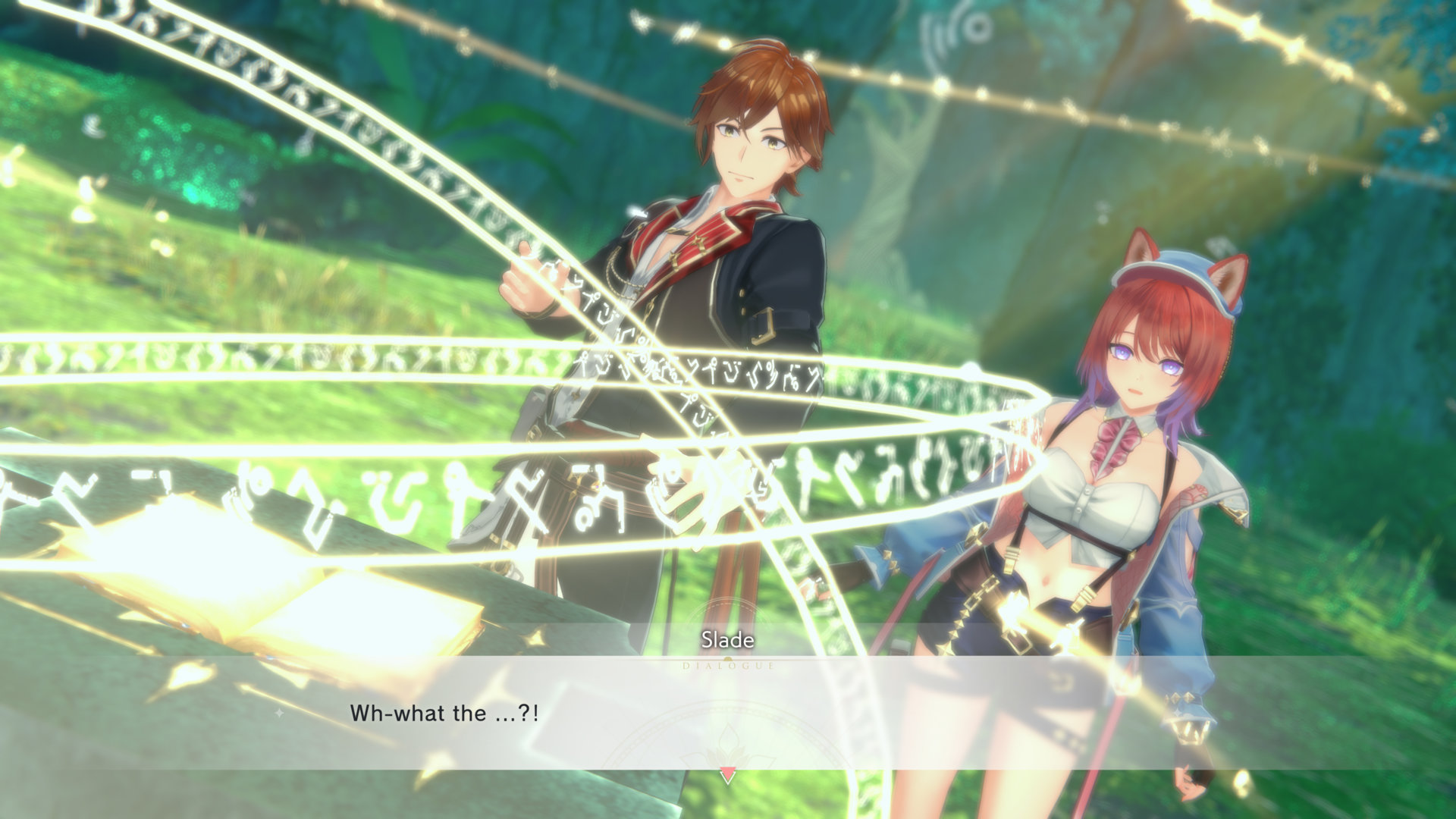
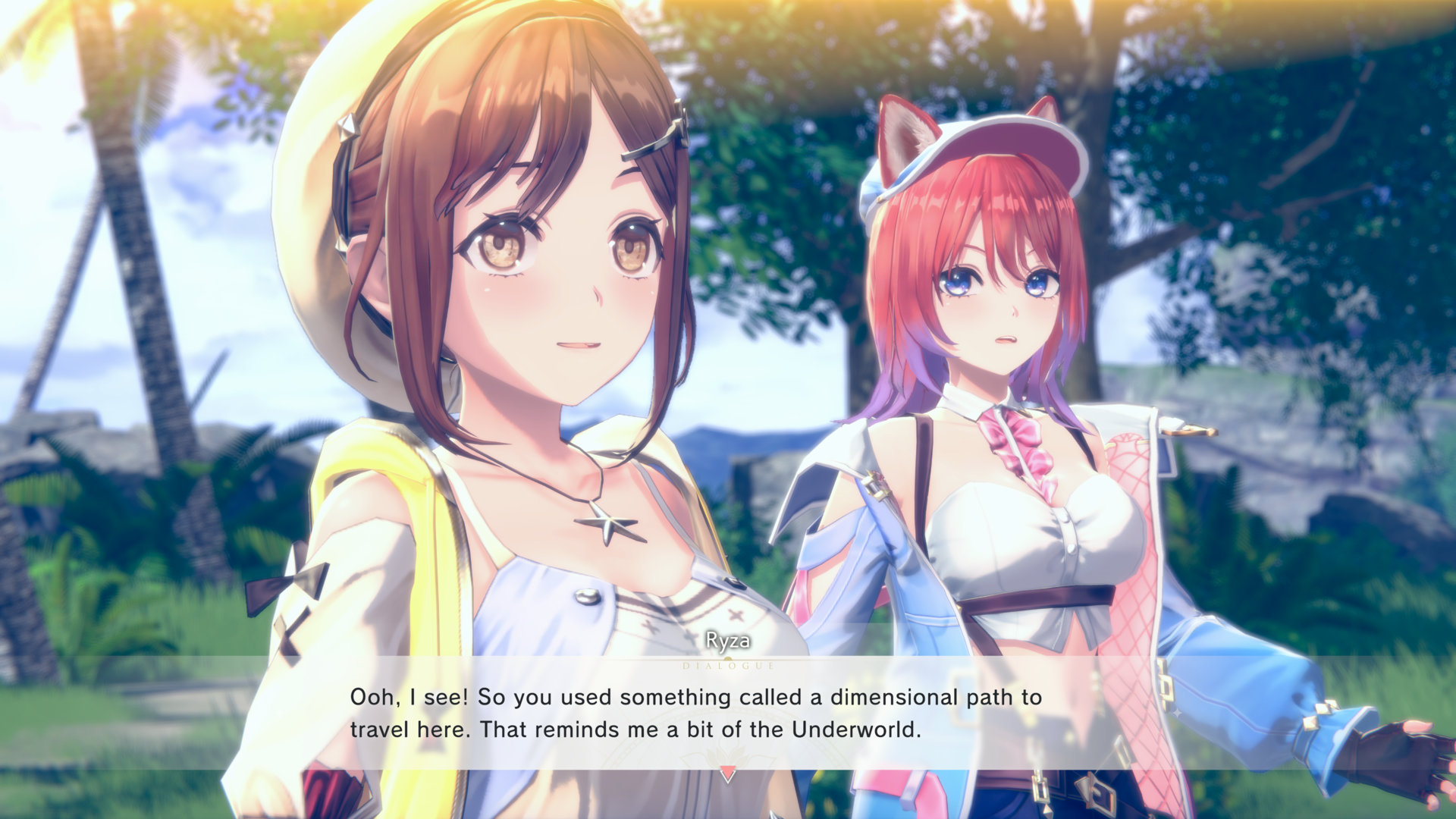
And the same assets, it would seem. If you’ve played Yumia or any of the Ryza games, the visuals here will disappoint. The backdrops are flat and muddy, and the colors seemed washed out throughout the game.
The battle animations are somewhat rudimentary, too. The characters look as good as ever, however, and the cutscenes are fine.
I mention that up front because it’s a weird hump to have to get over, especially after exploring the vividly open world of Yumia. On the other hand, that approach came with many functional and technological frustrations (especially on the Switch), and those are gone here.
So, what’s going on in the Envisioned Land? Well, the game is centered around the town of Hallfein. A recent disaster left it empty and in ruins, but it’s now being rebuilt. Two characters—Rias Eidreise and Slade Clauslyter—return to be part of that. In a cool twist, you can start the game as either character, and your selection will affect the story somewhat.
The two quickly discover a mysterious atelier in an unexplored cave, and we find that Rias has a penchant for alchemy. Great, because this atelier is not only used for crafting items, but for accessing dimensional paths that provide crafting materials, characters from previous Atelier games, and (of course) plot development.
Beyond the initial setup, the Atelier games differ from another based on how they approach their three core components: exploration, combat, and synthesis. All three are much simpler than what we’ve seen in recent years, so let’s break them down individually.
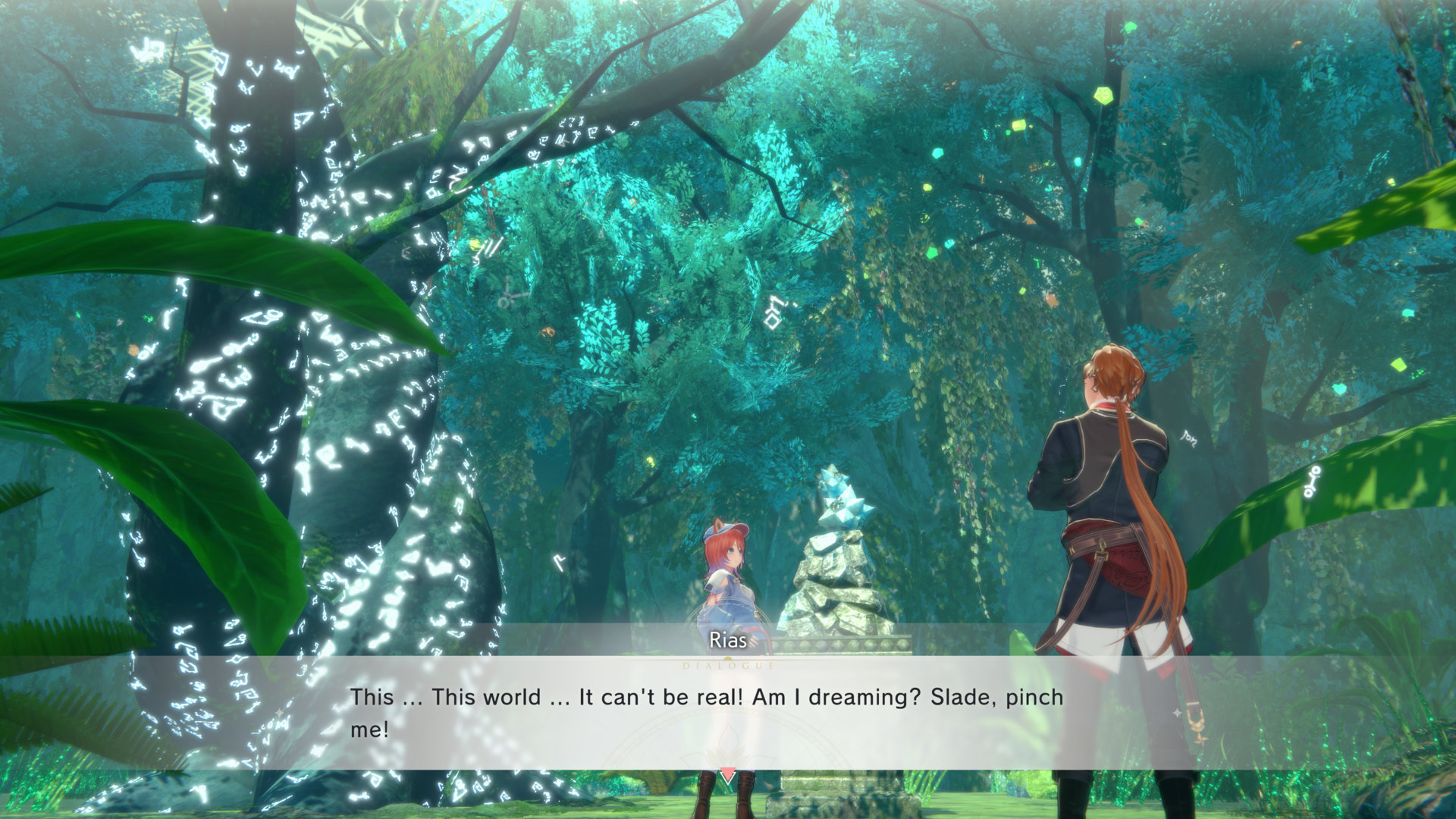
Exploration is definitely flatter here. There are no ponds to swim in, crags to climb, or distant items to shoot. Your party is basically on flat ground throughout, with simple obstructions serving to prevent access to areas you shouldn’t yet reach. This makes the world less fun to explore, but it also streamlines the game. One of my main frustrations with Yumia was the odd complexity of figuring out how to get from point A to point B, or determining if it was even possible yet. That’s not an issue here; the environment doesn’t interfere with your ability to focus on the task at hand. That’s a definite plus.
Oh, and farming items has also been simplified. You don’t need to be holding the right tool to gather the materials, you just need to have it. And as the tools are upgraded, you’ll get access to better items and new areas.
Combat returns to a straight-up turn-based system that I prefer, but others won’t. As with the Ryza games, your party characters and enemies will take turns attacking, using an item, or using a skill. General attacks don’t do much damage, but they help you acquire action points that can then be used for weakness-targeting skills. A timeline is displayed on the side, and it incorporates special field effects that can add buffs or debuffs to turns. It’s important to make sure these land appropriately, so you’ll want to take actions that move the buffs to your turns and the debuffs to the enemy turns. It can be very tricky to properly manipulate the timelines, but it makes for some fun, strategic choices. Fans who were thrown by Yumia’s more action-oriented approach will be happy here.
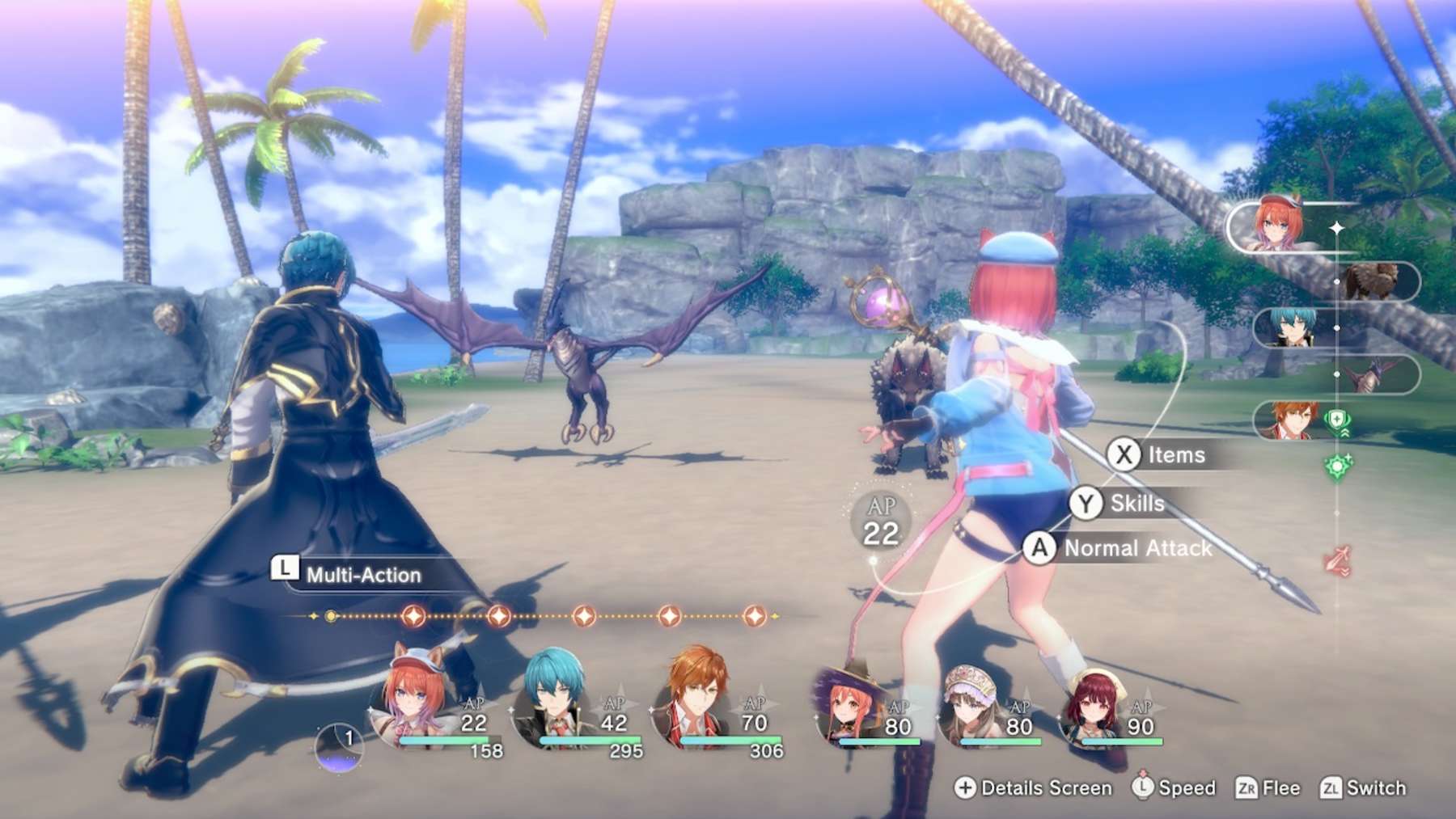
That said, combat is generally the same throughout the game, and the bosses seem to be bosses in “spongevity” only. They’re not all that much more powerful, they just take longer to defeat. You’ll definitely want to have mastered the field effect, multi-action, and united attack components to work through them efficiently.
That leaves item synthesis, which has also been simplified from the recent console Atelier entries. The system holds your hand much tighter than the recent games, using a color-coding sequence to help you craft better items.
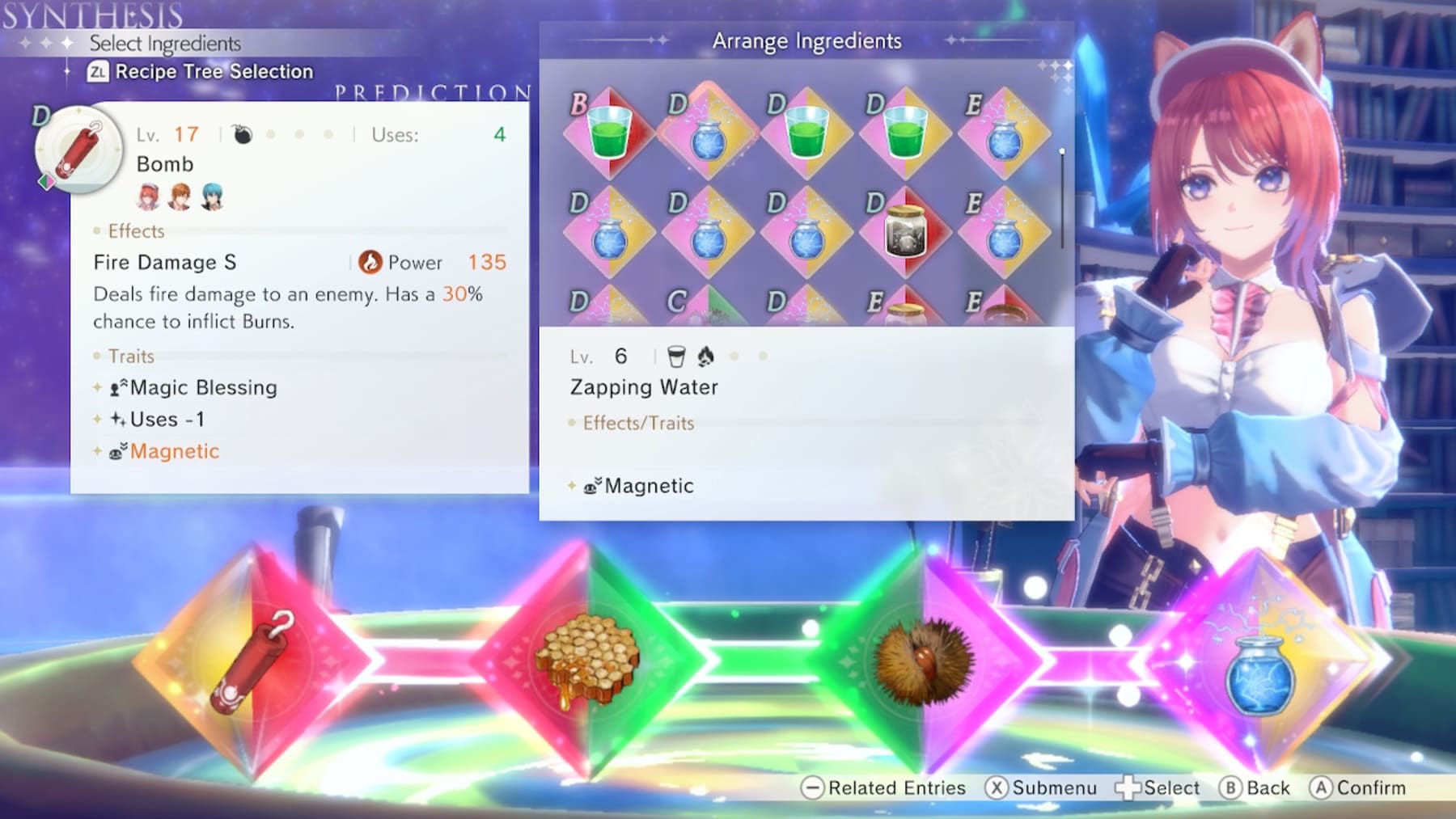
The general path remains: learn a recipe, gather the ingredients, then pass along the varied effects and bonuses that most ingredients provide. Some ingredients may have a higher grade, but don’t have the innate skill that you want for, say, a weapon or farming implement. There is a lot to craft, and many ways to do it, so synthesis can take over entire gaming sessions. I’ve also liked that about this series; if I didn’t feel like entering into combat with any given gaming session, I could wile away the hours just crafting better items for my party. That feeling carries over just fine in Atelier Resleriana, even if the synthesis system isn’t as rewarding as in the past.
So, despite being born from a mobile game, Atelier Resleriana: The Red Alchemist & the White Guardian is a perfectly fine entry in the series. I’d rather play it here than on a phone with in-app purchases, but I do think the $60 asking price is about $20 too high. The simplified visuals and gameplay components are a step back from the other recent games available at the same price (or less). But Atelier fans will find a lot to enjoy, especially if they felt alienated by the bigger changes in Yumia.
